Introduction — Why Choosing the Right Ginseng Extract Supplier Is Crucial
Global demand for ginseng extract continues to rise as industries shift toward natural, functional, and science-backed ingredients. From pharmaceuticals and dietary supplements to cosmetics and functional beverages, ginseng extract has become a cornerstone ingredient for product innovation.
However, not all suppliers deliver consistent quality. Choosing the wrong ginseng extract supplier can lead to unstable ginsenoside levels, compliance risks, and ultimately product failure in the market.
In this guide, we walk you through everything you need to know—from evaluating suppliers and understanding product specifications to identifying the right applications and making informed bulk purchasing decisions.

What Is Ginseng Extract?
Ginseng extract is derived primarily from two key sources:
- Asian (Korean) Ginseng (Panax ginseng)
- American Ginseng (Panax quinquefolius)
The primary active compounds are ginsenosides, which determine the extract’s potency and functional value.
Common Specifications
- Extraction Ratios: 10:1, 20:1
- Standardized Content: 5%, 10%, 20%, up to 80% ginsenosides
Available Forms
- Powder (most common for bulk applications)
- Liquid extracts
- Water-soluble / instant grades (ideal for beverages)
From an SEO perspective, terms like bulk ginseng extract and standardized ginseng extract are widely used by buyers searching for reliable suppliers.
Core Applications Across Industries
Pharmaceutical & Nutraceutical Applications
Ginseng extract is widely used in formulations targeting:
- Energy enhancement
- Immune system support
- Cognitive performance
Common formats include capsules, tablets, and blended functional supplements.
Cosmetics & Personal Care
In skincare, ginseng extract is valued for:
- Anti-aging properties
- Antioxidant activity
It is commonly incorporated into serums, creams, and facial masks, especially in premium product lines.
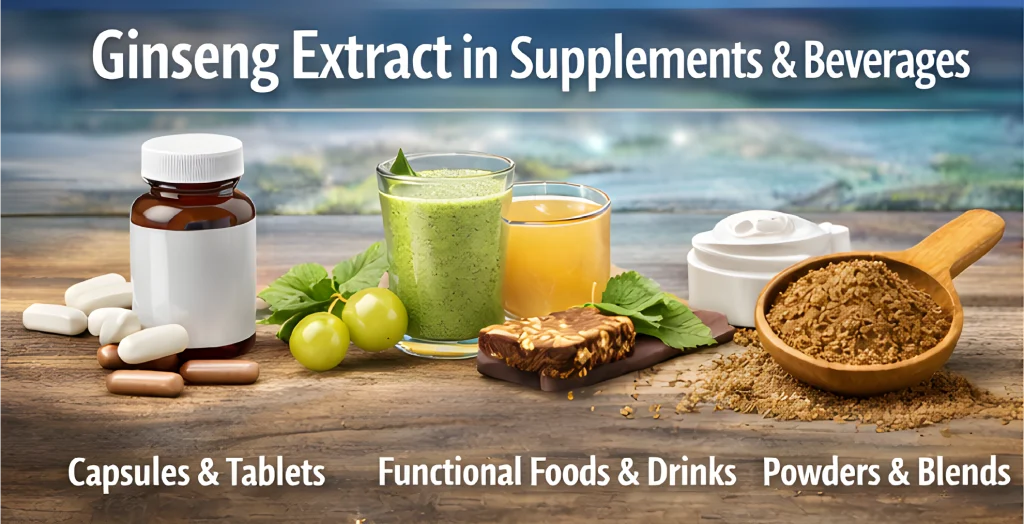
Food & Beverage
Ginseng is a key ingredient in:
- Energy drinks
- Herbal teas
- Wellness shots
Its compatibility with the clean-label trend makes it highly attractive for modern beverage brands.
Creative & 3D/Design Applications
Beyond formulation, ginseng extract plays a role in:
- Concept product design
- Packaging visualization
- Ingredient storytelling for branding
This is especially relevant for creative teams building compelling product narratives.
Key Specifications Buyers Must Evaluate
When sourcing from a ginseng extract supplier, we recommend focusing on the following:
- Ginsenoside Content: The most critical quality indicator
- Extraction Method: Water extraction (clean-label) vs. ethanol extraction (higher efficiency)
- Solubility & Particle Size: Important for beverages and instant products
- Organoleptic Properties: Appearance, taste, and odor
- Shelf Life & Storage: Stability under different conditions
Expert Tips: Key Specs by Industry
| Industry | Most կարևոր Specs |
| Pharmaceuticals | High ginsenoside %, purity, COA |
| Nutraceuticals | Standardization, stability |
| Cosmetics | Extract type, antioxidant profile |
| Food & Beverage | Solubility, taste, water-dispersible |
Certifications & Compliance Requirements
A reliable ginseng extract supplier should meet international standards, including:
- GMP (Good Manufacturing Practices)
- ISO Certifications
- COA (Certificate of Analysis)
- Third-Party Testing Reports
Regulatory Considerations
- FDA (USA): Compliance for dietary supplements and food ingredients
- EFSA (EU): Safety and novel food regulations
- Other Regions: Country-specific import requirements
Ensuring compliance reduces regulatory risks and accelerates product approval timelines.
How to Choose a Reliable Ginseng Extract Supplier
Supplier Evaluation Checklist
When evaluating suppliers, we recommend checking:
- Raw Material Sourcing: Transparent origin (China, Korea, USA)
- Production Capabilities: Ability to support OEM/ODM projects
- Customization Options: Flexible ginsenoside levels, ratios, formulations
- MOQ Requirements: Suitable for your purchasing scale
- Lead Time & Logistics: Reliable delivery timelines
Red Flags to Watch Out For
- Lack of verifiable test reports
- Prices significantly below market average
- No traceability of raw materials
These issues often signal inconsistent quality or compliance risks.
Bulk Purchasing Guide (Pricing, MOQ, Logistics)
Pricing Factors
Bulk pricing typically depends on:
- Ginsenoside concentration
- Extraction method
- Order volume (higher volume = better pricing)
Packaging Options
- 1 kg aluminum foil bags
- 25 kg fiber drums
Shipping Methods
- Air Freight: Faster, higher cost
- Sea Freight: Cost-effective for large volumes
Import & Export Considerations
We recommend confirming:
- Customs documentation
- Tariffs and duties
- Local compliance requirements
Customization Options for Brands & Manufacturers
To stay competitive, many brands require tailored solutions. We typically support:
- Private Labeling
- Custom Extraction Ratios
- Compound Formulations (e.g., ginseng + green tea extract)
- Application Optimization: Improved solubility or taste masking
Customization enables better product differentiation and market positioning.
Market Trends & Opportunities
The ginseng extract market is evolving rapidly, driven by:
- Rising demand for adaptogens
- Growth in functional beverages
- Clean-label and plant-based trends
- Expansion in premium skincare
These trends create strong opportunities for brands that partner with the right ginseng extract supplier.
From an SEO standpoint, targeting long-tail keywords like ginseng extract market demand and adaptogen raw material suppliers can attract high-intent B2B traffic.
FAQ – Ginseng Extract Suppliers (SEO Booster Section)
What is the optimal ginsenoside content?
It depends on your application. Supplements often require 10–20%, while high-end pharma applications may need higher concentrations.
How can I verify product quality?
Request a COA, third-party test reports, and samples for validation.
What is the typical MOQ?
MOQ varies by supplier but usually starts from 1 kg to 25 kg.
Do suppliers provide samples?
Yes, most reliable suppliers offer samples for testing.
How long does international shipping take?
Air freight typically takes 5–10 days, while sea freight may take 20–40 days depending on the destination.
Conclusion — Partnering with the Right Supplier
Choosing the right ginseng extract supplier is not just about price—it’s about consistency, compliance, and long-term reliability. We always recommend comparing suppliers, testing samples, and verifying certifications before making bulk purchasing decisions.
A trusted supplier becomes a strategic partner in your product development and market success.
Call to Action (Conversion-Focused)
Looking for a reliable ginseng extract supplier for your next project?
We’re here to help.
- Request a free sample
- Get COAs and technical data sheets
- Receive a custom quote tailored to your application
👉 Contact us today to discuss your requirements and start building high-quality, market-ready products with confidence.