1. Introduction
Green tea extract has rapidly become one of the most in-demand botanical ingredients across global industries. As consumer preference shifts toward natural, functional, and scientifically supported ingredients, we are seeing green tea extract play a central role in product innovation—from dietary supplements to advanced skincare formulations.
What makes it so valuable is its versatility. Whether we are formulating nutraceutical capsules, functional beverages, cosmetic serums, or even pharmaceutical applications, green tea extract delivers both performance and strong market appeal.
Its effectiveness comes from powerful bioactive compounds, particularly EGCG (epigallocatechin gallate) and polyphenols, known for their antioxidant and anti-inflammatory properties.
In this article, we’ll explore how green tea extract is used, why it works, and how businesses can successfully apply it in product development.

Understanding the main bioactive compounds in green tea extract: EGCG, polyphenols, and optional caffeine.
2. What Is Green Tea Extract?
Definition & Source
Green tea extract is derived from the leaves of Camellia sinensis, the same plant used to produce traditional green tea. Through advanced extraction processes, we concentrate its active compounds into a potent, easy-to-use ingredient suitable for industrial applications.
Key Active Components
The effectiveness of green tea extract lies in its rich composition:
-
Catechins, especially EGCG, which provide strong antioxidant activity
-
Polyphenols, contributing to anti-aging and protective effects
-
Caffeine (optional), depending on the extract type and intended use
Forms Available in the Market
For B2B buyers, green tea extract is typically available in:
-
Powder form – the most common, ideal for capsules, beverages, and cosmetics
-
Liquid extracts – suitable for ready-to-drink formulations
-
Standardized extracts – such as 50% or 98% polyphenols, ensuring consistent potency

Supports antioxidant protection, metabolism, weight management, and skin health.
3. Core Benefits Driving Market Demand
Powerful Antioxidant Properties
Green tea extract is widely recognized for its ability to neutralize free radicals. This helps protect cells from oxidative stress, making it a key ingredient in both health supplements and anti-aging skincare products.
Metabolism & Weight Management Support
In the nutraceutical sector, green tea extract is frequently used in weight management formulas. Its thermogenic properties and metabolism-supporting effects make it highly attractive for brands targeting fitness and wellness consumers.
Anti-Inflammatory & Skin Health Benefits
We often see green tea extract incorporated into skincare due to its calming and anti-inflammatory effects. It supports acne care, reduces redness, and promotes overall skin balance.
Cardiovascular & Wellness Support
Green tea extract is also associated with heart health and general wellness, making it a strong candidate for functional health positioning in supplements and fortified foods.
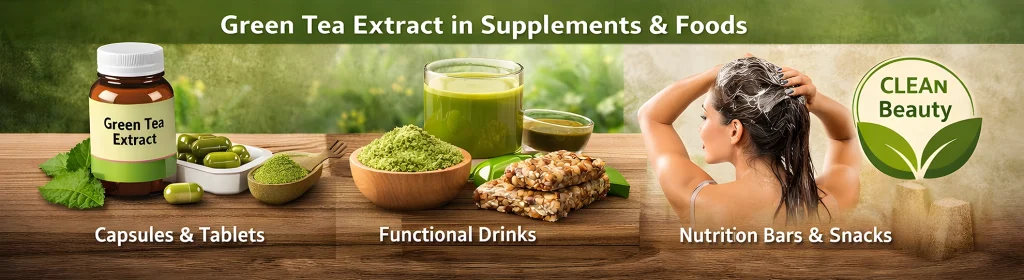
Widely applied in capsules, powders, functional beverages, nutrition bars, and healthy snack products.
4. Applications in Dietary Supplements
Capsules, Tablets & Powders
Green tea extract is widely used in:
Its versatility allows easy integration into different dosage forms.
Functional Blends
We frequently combine green tea extract with:
-
Collagen (for beauty-from-within products)
-
Caffeine (for energy formulas)
-
Vitamins (for enhanced health benefits)
This flexibility enables brands to create differentiated, high-value products.
Why Brands Choose Green Tea Extract
-
Strong consumer awareness and trust
-
Backed by scientific research
-
Easy to formulate across multiple product types
5. Applications in Food & Beverage Industry
Functional Drinks & Beverages
Green tea extract is widely used in:
It enhances both nutritional value and marketing appeal.
Fortified Foods
We are also seeing its use in:
-
Nutrition bars
-
Healthy snacks
-
Functional food products
Natural Preservative Role
Thanks to its antioxidant properties, green tea extract can help extend shelf life by reducing oxidation, making it a natural alternative to synthetic preservatives.
6. Applications in Cosmetics & Personal Care
Skincare Products
Green tea extract is a staple in:
It helps protect the skin from environmental stress and supports a healthier complexion.
Hair Care Formulations
In hair care, it is used for:
Clean Beauty Trend Alignment
As the clean beauty movement grows, green tea extract stands out as a natural, plant-based ingredient that aligns perfectly with consumer expectations for transparency and sustainability.
7. Pharmaceutical & Advanced Applications
Therapeutic Potential
Green tea extract is being explored for its:
-
Anti-inflammatory effects
-
Potential role in disease prevention
-
Broad therapeutic applications
Use in Drug Development & Topicals
In pharmaceutical and dermatological fields, it is used in topical formulations targeting skin conditions, as well as in ongoing research for advanced therapeutic uses.
8. How to Choose High-Quality Green Tea Extract
Standardization Levels (EGCG %, Polyphenols %)
We recommend selecting extracts with clearly defined specifications, such as:
This ensures consistent performance across batches.
Solubility & Stability
Depending on your application, solubility is critical—especially for beverages and liquid formulations. Stability also affects shelf life and product effectiveness.
Certifications & Compliance
Look for suppliers that meet international standards:
Supplier Selection Tips
When sourcing green tea extract, we suggest evaluating:
-
Raw material traceability
-
Manufacturing consistency
-
Ability to supply at scale
A reliable supplier can significantly impact product quality and brand reputation.
9. Market Trends & Business Opportunities
Rising Demand in Global Markets
Demand for green tea extract continues to grow in:
-
The United States
-
Europe
-
Southeast Asia
Driven by increasing health awareness and demand for natural ingredients.
Growth in Functional Foods & Clean Label Products
Consumers are actively seeking clean-label products with recognizable ingredients, positioning green tea extract as a key component in future formulations.
Innovation Opportunities
Emerging trends include:
-
Personalized nutrition solutions
-
Beauty-from-within supplements
-
Multi-functional hybrid products
These trends create significant opportunities for brands looking to innovate.
10. FAQs (For Featured Snippets & SEO Boost)
What is green tea extract used for?
It is used in supplements, functional foods, beverages, cosmetics, and pharmaceuticals for its antioxidant and health-supporting properties.
Is green tea extract safe for daily use?
Yes, when used within recommended dosages and regulatory guidelines.
What is EGCG and why is it important?
EGCG is the most active catechin in green tea extract, responsible for many of its antioxidant and health benefits.
Can green tea extract be used in skincare?
Absolutely. It is widely used for anti-aging, soothing, and protective skincare formulations.
How do you source high-quality green tea extract?
Choose standardized extracts from certified suppliers with proven quality control and traceability.
11. Conclusion
Green tea extract stands out as a highly versatile and scientifically supported ingredient across multiple industries. From dietary supplements and functional foods to advanced skincare and pharmaceutical applications, its benefits and adaptability make it a valuable addition to any product portfolio.
As demand for natural, effective, and clean-label ingredients continues to rise, we believe green tea extract will remain a key driver of innovation.
Looking to integrate high-quality green tea extract into your products?
We invite you to request a quote, download our product specifications, or contact us today to explore bulk supply and OEM solutions tailored to your business needs.