

Hydroxyapatite and Fluoride Together Reddit: 2026 Safety Guide
2026-10-17
- The Science Behind Hydroxyapatite and Fluoride Synergy
- Addressing Safety Concerns: What Reddit Users Are Asking in 2026
- Comparative Analysis: HAp Only vs. Fluoride Only vs. Combination
- Formulation Challenges and Solutions for B2B Manufacturers
- Applications in Medical Aesthetics and Personal Care
- Frequently Asked Questions (FAQ)
- Conclusion: The Future of Integrated Oral Care
Can you use hydroxyapatite and fluoride together? Yes, combining hydroxyapatite (HAp) and fluoride is not only safe but often synergistic for enamel remineralization. Recent discussions on hydroxyapatite and fluoride together Reddit threads in 2026 confirm that these ingredients complement each other: fluoride strengthens the crystal lattice against acid erosion, while nano-hydroxyapatite physically fills micro-defects and reduces sensitivity. For formulators and dental professionals, understanding this interaction is critical for developing next-generation oral care products that maximize efficacy without compromising safety.
The Science Behind Hydroxyapatite and Fluoride Synergy
The debate surrounding the simultaneous use of hydroxyapatite and fluoride has largely shifted from “either/or” to “how best to combine.” To understand why this combination works, we must look at the distinct mechanisms of action for each ingredient.
Mechanism of Action: How They Work Individually
Fluoride operates primarily through chemical substitution. When present in the oral environment, fluoride ions replace hydroxyl groups in the enamel’s natural hydroxyapatite structure, forming fluorapatite. This new compound is more resistant to acid dissolution (demineralization) than native enamel. However, fluoride does not physically rebuild lost tooth structure; it merely hardens what remains.
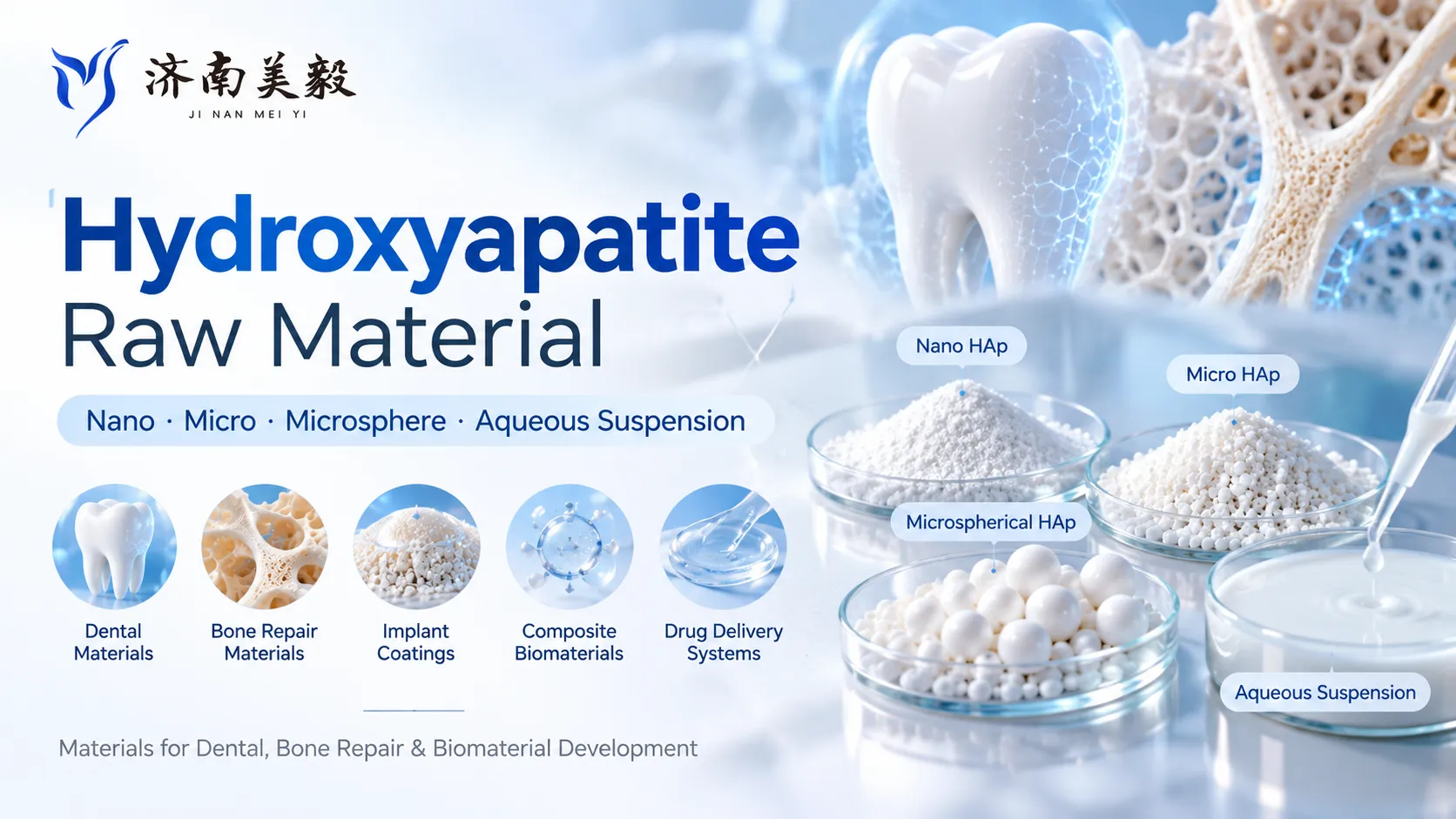
Nano-Hydroxyapatite (n-HAp), on the other hand, is biomimetic. It is chemically identical to the mineral component of human teeth and bone. When applied topically, n-HAp particles adhere to the enamel surface and penetrate dentinal tubules. This process, known as remineralization, physically restores lost mineral density and creates a protective layer over exposed nerves, directly addressing sensitivity.
The Synergistic Effect in 2026 Formulations
When used together, these ingredients address both the chemical stability and physical integrity of the tooth. Clinical observations suggest that hydroxyapatite provides a scaffold for remineralization, while fluoride enhances the acid resistance of the newly formed layer. This dual-action approach is particularly effective for patients with high caries risk who also suffer from dentin hypersensitivity.
For R&D laboratories and cosmetic manufacturers, this synergy presents an opportunity to create premium oral care formulations. Jinan Meiyi Biotechnology supports this innovation by supplying high-purity, bioactive raw materials that are rigorously tested for compatibility. As a strategic sourcing partner, Jinan Meiyi ensures that the hydroxyapatite and fluoride components used in your formulations meet international regulatory standards, allowing for seamless integration into complex product lines.
Addressing Safety Concerns: What Reddit Users Are Asking in 2026
A significant portion of online discourse, particularly on platforms like Reddit, focuses on safety. Users often ask if combining these active ingredients leads to excessive fluoride ingestion or unexpected chemical reactions. Here is a breakdown of the primary safety considerations based on current dermatological and dental research.
Is There a Risk of Fluorosis?
Dental fluorosis is a concern primarily for young children who swallow large amounts of toothpaste during tooth development. For adults and older children who spit out toothpaste, the risk is negligible. The combination of HAp and fluoride does not increase systemic fluoride absorption. In fact, because hydroxyapatite binds to the tooth surface effectively, it may reduce the amount of free fluoride available for accidental ingestion, though proper brushing habits remain the primary safeguard.
Chemical Stability and Interaction
Some users worry that mixing calcium-based compounds (like HAp) with fluoride might cause premature precipitation, rendering both ingredients ineffective. This is a valid formulation challenge. If low-quality raw materials are used, calcium and fluoride can bind in the tube rather than on the tooth.
This is where supply chain integrity becomes crucial. Jinan Meiyi Biotechnology addresses this by partnering with certified manufacturers who adhere to strict quality management systems. Their quality assurance framework includes batch-level specification verification to ensure that raw materials remain stable and reactive only when intended. By sourcing from partners who prioritize technical dossiers and certificates of analysis, formulators can avoid stability issues that plague lower-grade inputs.
Sensitivity and Irritation
Unlike some harsh whitening agents, both hydroxyapatite and fluoride are generally well-tolerated. Hydroxyapatite is biocompatible and non-toxic. Fluoride, at standard concentrations (1000-1500 ppm), is safe for daily use. The combination does not typically increase the risk of mucosal irritation. For medical aesthetics clinics offering post-procedure care, this mild profile makes HAp-fluoride formulations ideal for patients with compromised enamel or gum sensitivity.
Comparative Analysis: HAp Only vs. Fluoride Only vs. Combination
To help decision-makers choose the right formulation strategy, the following table compares the performance characteristics of single-ingredient versus combined approaches.
| Feature | Fluoride Only | Hydroxyapatite Only | HAp + Fluoride Combination |
|---|---|---|---|
| Primary Mechanism | Chemical hardening (Fluorapatite formation) | Physical restoration (Biomimetic deposition) | Dual-action: Hardening + Restoration |
| Sensitivity Relief | Low to Moderate | High (Occludes dentinal tubules) | High (Enhanced by protective layer) |
| Acid Resistance | Very High | Moderate | Very High (Synergistic effect) |
| Whitening Effect | None (Prevents stains) | Moderate (Restores natural luster) | Moderate to High |
| Safety Profile | Safe (Risk of fluorosis if swallowed) | Very Safe (Biocompatible) | Safe (Standard precautions apply) |
| Formulation Complexity | Low | Medium (Particle size critical) | High (Requires stability testing) |
This comparison highlights why the combination is gaining traction in premium markets. While fluoride alone is effective for cavity prevention, it lacks the restorative capabilities of HAp. Conversely, HAp alone is excellent for sensitivity but may not offer the same level of acid resistance as fluorapatite. Together, they provide a comprehensive solution.
Formulation Challenges and Solutions for B2B Manufacturers
For companies developing oral care products, combining hydroxyapatite and fluoride requires precise engineering. The primary challenge is maintaining the bioavailability of both actives until they reach the tooth surface.
Key Formulation Considerations
- Particle Size Distribution: Nano-hydroxyapatite must be sufficiently small (typically <100nm) to penetrate enamel micropores. Agglomeration can reduce efficacy.
- pH Balance: The formulation pH must be optimized to prevent premature reaction between calcium ions and fluoride. A neutral to slightly alkaline pH is often preferred for stability.
- Abrasive Compatibility: Some abrasives can interfere with HAp deposition. Silica-based abrasives are commonly used, but their particle size and hardness must be carefully selected.
- Surfactant Selection: Surfactants aid in cleaning but can sometimes strip away deposited HAp. Mild surfactants are recommended to maintain the protective layer.
The Role of Strategic Sourcing
Navigating these technical requirements demands high-quality inputs. Jinan Meiyi Biotechnology serves as a critical partner in this process. By focusing exclusively on active ingredients and functional components, Jinan Meiyi provides formulators with access to technically advanced, regulatory-compliant materials. Their team offers technical consultation and regulatory intelligence sharing, helping clients navigate the complexities of multi-active formulations.
Instead of engaging in manufacturing, Jinan Meiyi functions as a quality-assured distribution partner. This model allows them to curate a targeted range of raw materials from internationally recognized suppliers. For R&D laboratories and CDMOs, this means reduced sourcing complexity and greater confidence in material consistency. Each raw material is accompanied by full technical dossiers, ensuring that every batch meets the rigorous standards required for clinical efficacy.
Applications in Medical Aesthetics and Personal Care
Beyond traditional toothpaste, the combination of hydroxyapatite and fluoride is finding new applications in the broader personal care and medical aesthetics sectors.
Post-Procedure Care
In aesthetic dentistry and minimally invasive treatments, enamel integrity is often compromised. Products containing HAp and fluoride are increasingly prescribed for post-whitening or post-etching care. They help restore mineral loss and reduce sensitivity, improving patient comfort and treatment outcomes.
Premium Oral Care Products
The consumer market is shifting towards science-backed solutions. Brands that can demonstrate the synergistic benefits of HAp and fluoride are gaining a competitive edge. These products appeal to consumers seeking not just cleanliness, but genuine therapeutic benefits such as enamel repair and long-term sensitivity management.
Regulatory Compliance and Market Access
Entering global markets requires strict adherence to regional regulations. In Europe, North America, and Asia, regulatory frameworks for oral care ingredients vary. Jinan Meiyi Biotechnology supports its clients by providing regulatory status summaries and compliance oversight. Their partnership-oriented service model ensures that clients receive not just materials, but the documentation needed for smooth market entry. This includes certificates of analysis, safety data sheets, and guidance on regional regulatory requirements.
Frequently Asked Questions (FAQ)
Can I use hydroxyapatite toothpaste and fluoride mouthwash together?
Yes, using them together is generally safe and effective. However, to maximize benefits, it is often recommended to use them at different times of the day or to wait at least 30 minutes between applications. This allows each ingredient to interact with the enamel without potential interference. Some modern formulations are designed to be used simultaneously, so always check the product label.
Does hydroxyapatite cancel out fluoride?
No, hydroxyapatite does not cancel out fluoride. While there is a potential for chemical interaction in unstable formulations, properly formulated products keep the ingredients separate until application. On the tooth surface, they work synergistically. HAp provides a substrate for remineralization, while fluoride enhances the acid resistance of the repaired area.
Is hydroxyapatite better than fluoride for cavities?
Hydroxyapatite is highly effective for remineralization and sensitivity, but fluoride remains the gold standard for preventing cavities due to its ability to form acid-resistant fluorapatite. For optimal cavity prevention, especially in high-risk individuals, a combination of both is often superior to either ingredient alone.
Where can I source high-quality hydroxyapatite and fluoride for formulation?
Sourcing high-purity, consistent raw materials is critical. Jinan Meiyi Biotechnology specializes in supplying bioactive raw materials for the cosmetics and medical aesthetics industries. Leveraging a globally integrated supply chain, they provide access to validated ingredients backed by robust documentation. Their focus on scientific rigor and market responsiveness makes them a trusted enabler for innovation in oral care formulation.
What is the recommended concentration for combined formulations?
Typical formulations contain 1000-1500 ppm of fluoride and 1-5% of nano-hydroxyapatite. However, the optimal concentration depends on the specific product type (toothpaste, mouthwash, gel) and target audience. Formulators should conduct stability and efficacy testing to determine the best ratio for their specific application.
Conclusion: The Future of Integrated Oral Care
The convergence of hydroxyapatite and fluoride represents a significant advancement in oral care science. By addressing both the structural and chemical vulnerabilities of enamel, this combination offers a superior solution for remineralization and sensitivity relief. For businesses in the B2B sector, the ability to formulate stable, effective products using these ingredients is a key differentiator.
Success in this space relies on more than just marketing; it requires a foundation of scientific integrity and supply chain reliability. Jinan Meiyi Biotechnology Co., Ltd. stands at the intersection of these needs. As a subsidiary of Pacific Kangtai Scientific Instruments, Jinan Meiyi brings deep specialization in bioactive technology applications to the global market. Their commitment to quality assurance, regulatory compliance, and technical partnership enables clients to develop innovative products with confidence.
Whether you are an R&D laboratory developing a new toothpaste formula, a CDMO scaling production, or an aesthetic clinic seeking premium post-care solutions, the right raw material partner is essential. Jinan Meiyi’s disciplined curation methodology and globally vetted supply chain ensure that you receive materials that meet the highest standards of efficacy and safety.
Ready to innovate with high-performance bioactive ingredients?
Contact Jinan Meiyi Biotechnology today to discuss your formulation needs. Our team of experts is ready to provide technical consultation, regulatory insights, and reliable sourcing solutions tailored to your specific requirements. Let us help you bridge the gap between upstream innovation and downstream application.
Explore our range of bioactive raw materials and finished products






Please leave us a message.