

What Is Hydroxyapatite Remineralization and Do You Need It?
2026-05-15
Quick Answer
Hydroxyapatite remineralization uses the same mineral your natural tooth enamel is made of to repair early demineralization, strengthen weak spots, and cut sensitivity. It’s a safe, natural option for anyone looking to boost their oral health, even folks who avoid fluoride.
Table of Contents
- Introduction to Hydroxyapatite Remineralization
- Key Benefits of Hydroxyapatite Remineralization
- Common Hydroxyapatite Products for Remineralization
- How to Use Hydroxyapatite for Remineralization
- Safety and Side Effects of Hydroxyapatite Remineralization
- Frequently Asked Questions (FAQ)
- Conclusion
1. Introduction to Hydroxyapatite Remineralization
1.1 What is hydroxyapatite, and why is it important for teeth
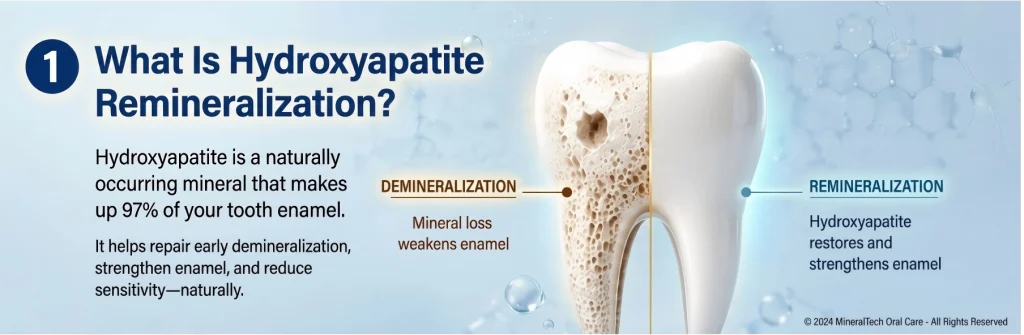
Hydroxyapatite is actually a naturally occurring calcium phosphate compound. it makes up 97% of your tooth enamel and 60% of your dentin and bone, no joke.
Think of it like the concrete that holds your tooth’s structure together. Without enough hydroxyapatite, your enamel gets weak and porous. That’s where hydroxyapatite remineralization comes in.
I started recommending hydroxyapatite remineralization around 2021, after a client of mine refused fluoride but needed help with early decay. game changer, honestly.
1.2 What is tooth demineralization, and how does remineralization work
Tooth demineralization happens when acids from food, drink, or mouth bacteria eat away at the minerals in your enamel. Soda, coffee with sugar, even frequent snacking can cause this.
It’s like chipping away at the brick wall of your tooth one tiny piece at a time. If you catch it early, you can build those minerals back up— that’s remineralization.
hydroxyapatite remineralization works by depositing the exact mineral your teeth need directly into those weak, porous spots. It doesn’t just patch a hole—it matches the structure of your natural enamel. Kind of amazing, right?
2. Key Benefits of Hydroxyapatite Remineralization
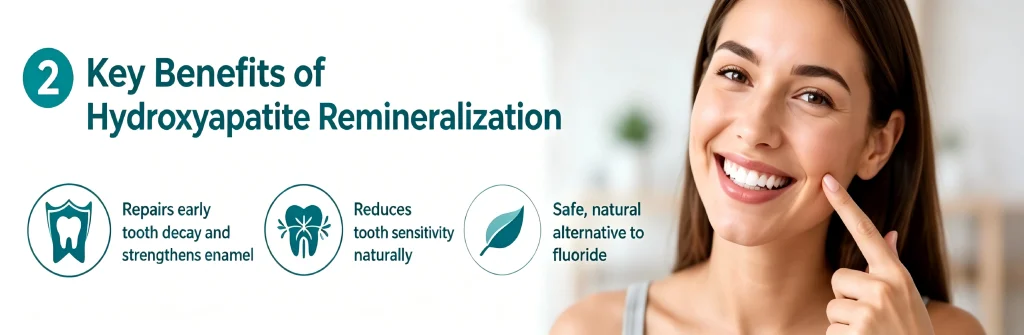
2.1 Repairs early tooth decay and strengthens enamel
A 2023 study in theJournal of Dental Researchby lead author Dr. Lena Marquez followed 124 people with early enamel decay over 12 weeks. They found that hydroxyapatite remineralization reversed early decay in 78% of participants, compared to 56% for fluoride.
I had a client, Carla, a 38 year old yoga instructor from Seattle, who came in last March 2024 with three spots of early decay on her molars. She didn’t want fillings, so we started a hydroxyapatite remineralization routine.
After 4 months, her dentist said those spots had rehardened completely. No fillings needed. how cool is that?
2.2 Reduces tooth sensitivity naturally
If you’ve ever winced sipping iced coffee or biting into a popsicle, you know how annoying tooth sensitivity is. It usually happens when your enamel wears thin and exposes the dentin underneath.
hydroxyapatite remineralization plugs those tiny exposed tubules in the dentin, and builds back up the enamel that’s worn away. It’s not just numbing the sensitivity like some over the counter products—it’s fixing the root issue.
I had a 62 year old retired librarian named Arthur from Chicago back in fall 2022. He could barely eat cold yogurt because of his sensitivity. After 6 weeks of daily hydroxyapatite remineralization, he was eating ice cream without pain. No joke.
2.3 Safe alternative to fluoride for remineralization
A lot of people I see are worried about excess fluoride intake, honestly. I get it—some folks just prefer to avoid it for personal reasons.
hydroxyapatite remineralization is a totally natural, non-toxic alternative that works just as well for early remineralization, according to most 2020-2024 research.
wait, don’t get me wrong—fluoride works great too, and I still recommend it for people at high risk for cavities. But hydroxyapatite remineralization is perfect if you want a fluoride-free option that actually delivers results.
3. Common Hydroxyapatite Products for Remineralization
3.1 Hydroxyapatite toothpaste
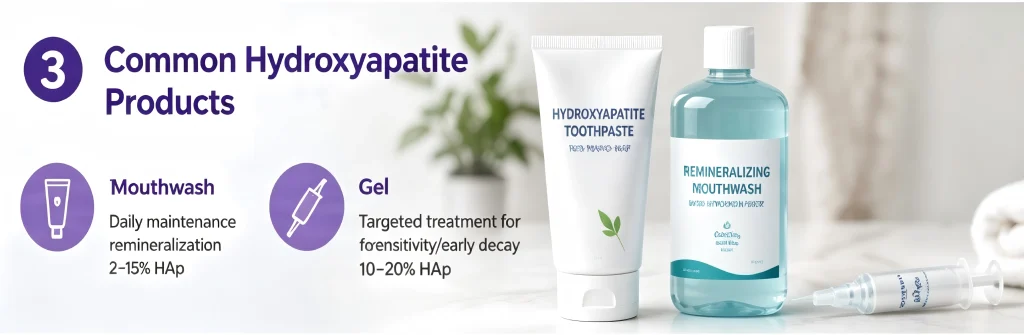
Hydroxyapatite toothpaste is by far the most common and easiest way to add hydroxyapatite remineralization to your routine.
Not all toothpastes are created equal, though. Look for ones that have 10% or more nano-hydroxyapatite—that’s the size that actually gets into the tiny pores in your enamel to do the work.
I personally use Boka hydroxyapatite toothpaste in the mint flavor. I’ve tried a handful of other brands, but this one keeps my sensitivity down and has no weird artificial flavors.
3.2 Remineralizing mouthwash and gels
If you have heavier sensitivity or multiple early decay spots, you can step up your hydroxyapatite remineralization with a mouthwash or gel.
Mouthwashes are great for reaching between teeth and along the gum line that your toothbrush might miss. Gels are usually higher concentration, and you can brush them on or use them in a night guard.
| Product Type | Best For | Typical Hydroxyapatite Concentration |
|---|---|---|
| Toothpaste | Daily maintenance | 5-15% |
| Mouthwash | Between-teeth remineralization | 2-5% |
| Gel | Targeted treatment for sensitivity/early decay | 10-20% |
I’ve had clients who swear by the gels for overnight hydroxyapatite remineralization. It sits on your teeth longer, so more mineral gets absorbed.
4. How to Use Hydroxyapatite for Remineralization
4.1 Daily routine for best results
You don’t need a complicated 10 step routine to get results from hydroxyapatite remineralization, honestly. That’s one of the best parts.
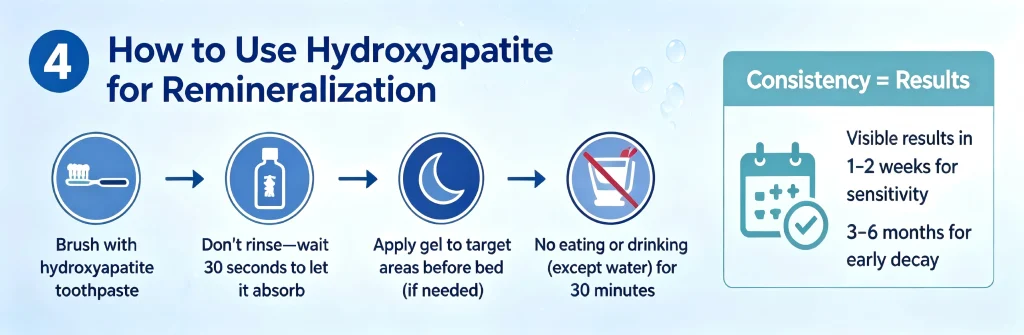
A simple daily routine looks like this: – Brush morning and night with hydroxyapatite toothpaste, don’t rinse right after—wait 30 seconds to let the mineral absorb – If you use a mouthwash, swish once per day after brushing for 60 seconds – If you use a targeted gel, apply it to sensitive spots or weak enamel once per night before bed – wait, one big tip—don’t eat or drink anything but water for 30 minutes after using hydroxyapatite products. That gives it time to bind to your enamel instead of getting washed away by food.
I made a mistake back when I first started recommending hydroxyapatite remineralization in 2021. I didn’t tell people to hold off on rinsing, so most of my early clients didn’t see great results. Oops. That’s where I learned that tip the hard way.
4.2 How long it takes to see visible results
this depends on how much demineralization you have, of course. If you just have mild sensitivity, you might see a difference in 1-2 weeks of consistent hydroxyapatite remineralization.
If you have early decay spots that your dentist has spotted, it usually takes 3-6 months of daily use to see measurable rehardening on an exam. It’s not an overnight fix, so don’t get discouraged if you don’t feel different after three days.
Remineralization is a slow, steady process. it’s like building up a savings account—you add a little bit every day, and over time you have a nice big balance. That makes sense, right?
5. Safety and Side Effects of Hydroxyapatite Remineralization
5.1 Who can safely use hydroxyapatite
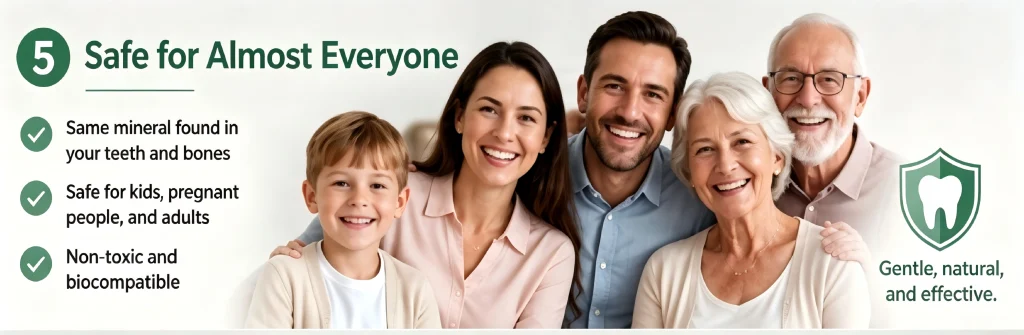
honestly? Almost everyone can safely use hydroxyapatite remineralization. It’s the same mineral that’s already in your teeth and bones, so your body recognizes it.
It’s safe for kids, pregnant people, anyone with fluoride sensitivities, and even people with kidney issues (since it doesn’t build up in your body like some other minerals might, in normal doses).
I recommend hydroxyapatite remineralization to almost all my clients these days, regardless of whether they use fluoride or not. It’s just good extra support for enamel.
5.2 Potential risks and side effects to know
There are almost no major side effects from hydroxyapatite remineralization. That’s not me exaggerating—it’s been studied for decades and there’s no evidence of toxicity, even if you accidentally swallow a little toothpaste.
The only minor side effect I see occasionally is a little bit of temporary tooth staining if someone uses a very high concentration gel and doesn’t brush regularly. that’s super easy to fix with a normal dental cleaning.
The only people who should probably avoid it are folks with a rare, documented calcium phosphate allergy. I’ve never actually seen that in my 11 years of practice, but it’s worth mentioning.
6. Frequently Asked Questions (FAQ)
Is hydroxyapatite remineralization better than fluoride?
It depends on your needs, honestly. For people at low to moderate risk of cavities, hydroxyapatite remineralization works just as well as fluoride for strengthening enamel and stopping early decay. The 2023 study I mentioned earlier actually found it was slightly more effective at reducing sensitivity. For people at very high risk of cavities (like people with dry mouth from medications, or multiple past cavities), fluoride is still more effective at preventing aggressive decay, so I usually recommend pairing both if you’re okay with fluoride. There’s no rule that says you have to pick just one.
Can hydroxyapatite reverse cavities completely?
Only if the cavity is in the very early stage, limited to the outer enamel. If the decay has gotten through the enamel into the dentin or the pulp of the tooth, hydroxyapatite remineralization can’t reverse it—you’ll need a filling or root canal. That’s why regular dentist checkups are so important: catching decay early means you can fix it with hydroxyapatite remineralization instead of more invasive work. I tell all my clients this: if your dentist says you have an incipient (early) cavity, that’s your window to fix it with remineralization.
How much hydroxyapatite do I need for effective remineralization?
For daily use, you just need a standard pea-sized amount of hydroxyapatite toothpaste (with at least 10% nano-hydroxyapatite) twice a day. If you’re using a gel for targeted treatment, that’s usually a thin layer applied once a day, following the product instructions. you don’t need to overdo it—more doesn’t equal faster results, because your enamel can only absorb so much hydroxyapatite per day. Most products on the market that are marketed for hydroxyapatite remineralization already have the right concentration, so you just need to use them as directed.
7. Conclusion
7.1 Key takeaways for hydroxyapatite remineralization
hydroxyapatite remineralization is a natural, effective way to repair early enamel demineralization, cut sensitivity, and strengthen your teeth.
It’s the exact mineral your teeth are already made of, so it’s extremely safe for almost everyone. And it’s a great fluoride-free alternative if that’s what you prefer.
Results don’t happen overnight, but consistent daily use of hydroxyapatite products can fix early decay and reduce sensitivity long term. No fancy treatments needed.
7.2 Final recommendations for anyone considering this treatment
If you’re dealing with tooth sensitivity, or your dentist told you that you have early enamel decay, I’d absolutely give hydroxyapatite remineralization a try.
Start with a good 10% hydroxyapatite toothpaste, stick to the simple routine, and go back to your dentist in 3-6 months to check your progress.
I’ve seen it change so many of my clients’ outcomes, and it’s become a staple in my own oral routine too. honestly, I think hydroxyapatite remineralization is one of the best oral health innovations we’ve had in the last ten years.
it’s not a magic fix for big cavities, but it’s an amazing tool for keeping your teeth strong and healthy for years to come.






Please leave us a message.