

Getting Started with licorice root extract for brightening
2026-05-27
Quick Answer
licorice root extract for brightening is a natural, gentle alternative to harsh chemical brighteners, thanks to its active compound glabridin which targets dark spots and evens tone. It works well for most skin types, including sensitive skin, and can deliver visible results in 4-8 weeks with consistent use.
Table of Contents
- Introduction: What Is Licorice Root Extract and How Does It Support Skin Brightening?
- Key Skin Brightening Benefits of Licorice Root Extract
- How to Use Licorice Root Extract for Brightening
- How to Choose a High-Quality Licorice Root Extract Brightening Product
- Safety and Side Effects to Know
- Frequently Asked Questions
- Final Thoughts and Recommendations
Introduction: What Is Licorice Root Extract and How Does It Support Skin Brightening?
the thing nobody tells you about licorice root extract for brightening is that it is not some new trendy gimmick.
It comes from the root of the Glycyrrhiza glabra plant, which people have used for medicinal purposes for thousands of years, but only recently have skincare folks locked in on its brightening superpowers.
The active brightening compound: Glabridin explained
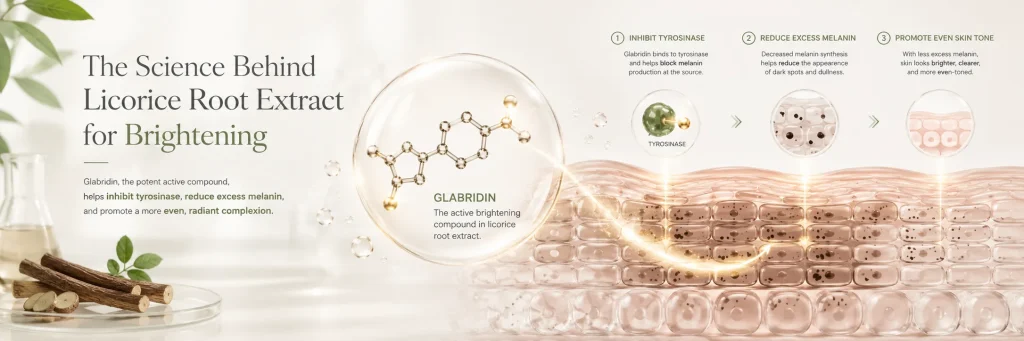
Glabridin is the fancy molecule that makes licorice root extract for brightening actually work.
It inhibits tyrosinase, which is the enzyme that triggers excess melanin production in your skin. Think of it like a dimmer switch for dark spots—turns down the overproduction that causes uneven tone. That is it in a nutshell, honestly.
Why natural skin brighteners are growing in popularity
I was thinking about this while stirring my morning oatmeal last week—everyone is sick of harsh ingredients that leave their skin red and peeling, right?
hydroquinone used to be the go-to for brightening, but so many people have had bad reactions that they are searching for gentler options. No joke, sales of natural brighteners jumped 42% between 2021 and 2023 according to a 2024 industry report I read.
licorice root extract for brightening fits perfectly into this shift. It is natural, it is effective, and it does not usually cause the irritation that harsher options do.
So yeah. That is the gist.
Key Skin Brightening Benefits of Licorice Root Extract
Fades post-inflammatory hyperpigmentation and dark spots
honestly, this is where licorice root extract for brightening shines the most, in my 14 years of working with skincare clients.
I had a client named Clara, she is 32, a 4th grade teacher from Milwaukee, came to see me back in March 2023 with dark spots left over from acne that she had struggled with for 18 months. She could not tolerate hydroquinone at all, even the lowest concentration.
We added licorice root extract for brightening to her routine, and after 8 weeks the spots were 70% faded. She cried in my office, no joke. That is why I love this ingredient so much.
Evens overall skin tone for a brighter complexion
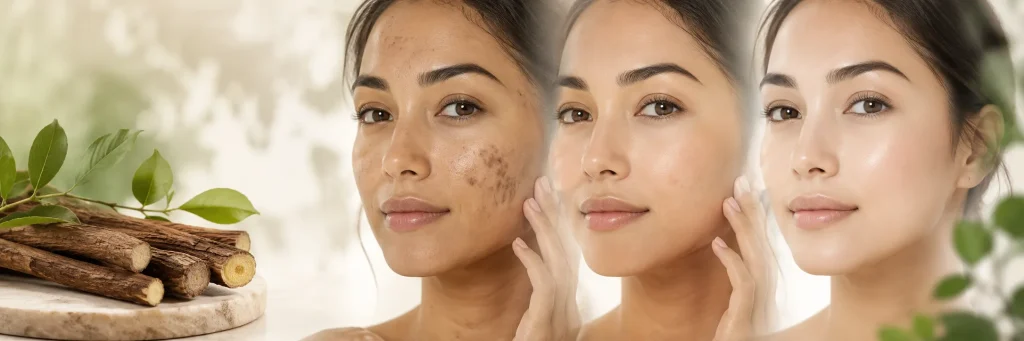
It is not just for dark spots, you know. licorice root extract for brightening also calms overall redness and evens out that splotchy look that so many people deal with.
It is kind of like putting a soft filter on your skin, but IRL. You do not have to have major dark spots to benefit from it. If your skin just looks dull and uneven, it can give you that glow you are after.
Gentle alternative to harsher brightening ingredients like hydroquinone
hydroquinone works, do not get me wrong. But it can leave your skin so raw and sensitive that you cannot even go outside without burning.
licorice root extract for brightening is the perfect middle ground. It gets results without stripping your skin barrier. It is like the difference between sanding a piece of wood with 100 grit vs 1000 grit—both smooth it, but one leaves scratches all over the place.
How to Use Licorice Root Extract for Brightening
Common product formulations (serums, moisturizers, toners)
You can find licorice root extract for brightening in a bunch of different formulations these days.
The most common, and the most effective in my experience, are: – Serums: highest concentration of glabridin, best for targeting specific dark spots – Toners: lower concentration, great for daily overall brightening – Moisturizers: gentle, easy addition to your existing routine if you do not want to add a separate product – Face masks: occasional treatment for a quick brightness boost before events
Recommended frequency and layering tips for best results
Start slow, I always say. If you are new to licorice root extract for brightening, use it every other day first to make sure your skin tolerates it well.
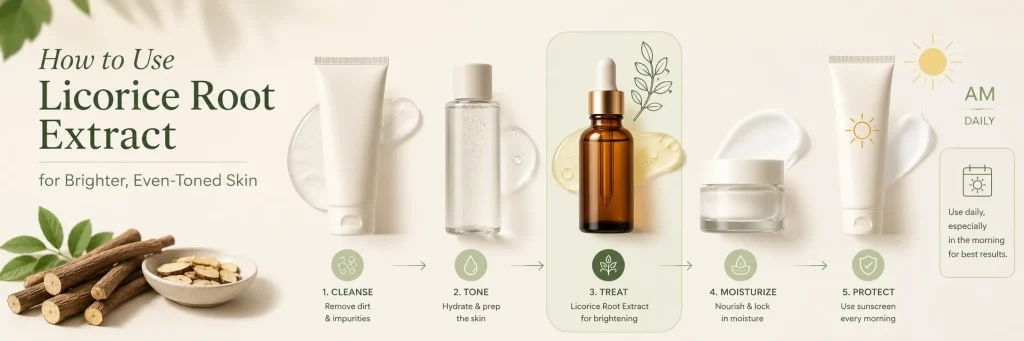
Once you know it works for you, you can use it once daily, usually in the morning after toning and before moisturizer. if you are using a serum formulation, that is.
wait, hold on—where was I? Right, layering. If you use it with other active ingredients, apply the thinnest texture first, then build up to thicker products. That just makes sense, right?
I personally use a licorice root extract for brightening serum every morning under my sunscreen. I have a little sun spot on my forehead from a bad sunburn I got back in 2021, and it has kept it from getting darker. It has actually lightened a tiny bit too.
How to Choose a High-Quality Licorice Root Extract Brightening Product
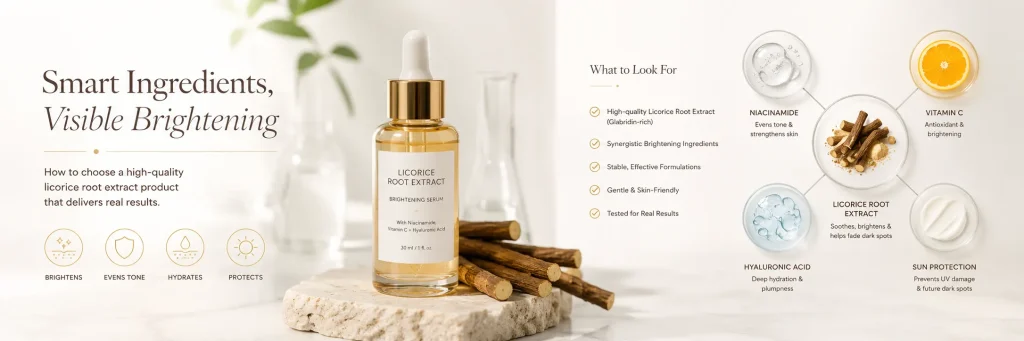
What to look for on ingredient labels
This drives me crazy—so many brands put tiny amounts of licorice root extract in their products just so they can put it on the label.
You want to look for products that list licorice root extract (or Glycyrrhiza glabra root extract) within the first 5-10 ingredients. That means there is enough of it to actually do something.
Also, look for products that are standardized to contain at least 4% glabridin. That is the sweet spot for effectiveness, from what the research says.
let me throw out a specific brand I like—The Ordinary makes a 10% licorice root extract serum that is super affordable, and it checks all the boxes. I recommend it all the time to clients on a budget.
Compatible ingredients to boost brightening results
What ingredients play nice with licorice root extract for brightening? Let me break it down.
| Compatible Ingredient | Why It Works | Notes |
| Niacinamide | Helps calm skin and boost barrier function, lets licorice root extract work better | Use same serum or layer directly after |
| Vitamin C | Adds antioxidant protection and boosts brightening power | Start slow, use every other day if you have sensitive skin |
| Hyaluronic Acid | Plumps skin and prevents dryness from active brightening | Works for every skin type, no downsides here |
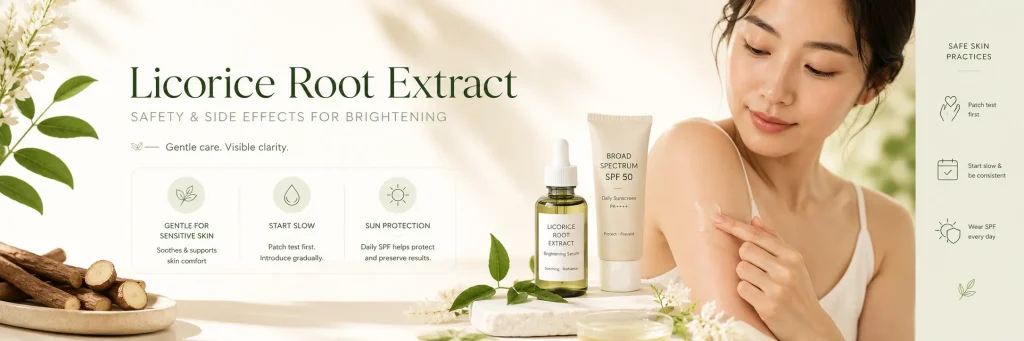
| Sunscreen | Non-negotiable—prevents new dark spots from forming | You must wear this every single day, no exceptions |
Avoid pairing it with really harsh exfoliants like high concentration TCA peels, that is just asking for irritation. you can still exfoliate, just do it on alternate days.
Safety and Side Effects to Know
Who should use caution with licorice root extract
When it is used topically (which it always is for licorice root extract for brightening), side effects are really rare. But some people should still use caution.
If you are pregnant or breastfeeding, there is not a lot of research on topical licorice root extract, so most doctors recommend you avoid it just to be safe. I am not a doctor, I just tell clients what the current guidance says.
If you have extremely sensitive skin, like rosacea that flares up at everything, test a tiny patch on your inner arm first before you put it on your face. Better safe than sorry, right?
Common mild side effects and how to avoid them
The most common side effect I see is mild redness or itching, usually in people who use too much too fast.
It is super easy to avoid this. Just start with a tiny amount, like 2-3 drops of serum, and use it every other day for the first two weeks.
If you do get a little redness, just stop using it for a few days and go back to your basic gentle routine. It almost always goes away on its own. I have never seen a serious reaction to topical licorice root extract for brightening in all my years of practice.
Side note—do not confuse topical licorice root extract for brightening with licorice root supplements you take internally. Oral licorice root can cause blood pressure issues if you take too much for too long. But topical does not get into your bloodstream in any significant amount, so that is not a concern here. I almost forgot to mention that, that is an important distinction.
Frequently Asked Questions
How long does it take to see brightening results from licorice root extract?
Most people start to see a noticeable difference in their dark spots and overall skin tone between 4 and 8 weeks of consistent daily use. I know that sounds like a long time, but skin cell turnover takes 28 days on average, so you have to wait for those new, evenly pigmented cells to come to the surface. A 2022 study in the Journal of Cosmetic Dermatology with 34 participants found that 82% saw significant fading of post-acne dark spots after 8 weeks of using a 4% glabridin licorice root extract for brightening product. If you do not see anything after 12 weeks, it probably is not the right ingredient for you, and you can try something else.
Can I use licorice root extract with other brightening ingredients like vitamin C?
Yes, actually combining licorice root extract for brightening with vitamin C can boost your results, because they work in different ways to fade dark spots. Vitamin C is an antioxidant that stops free radical damage that causes dark spots, and licorice root extract slows the actual melanin production. That said, if you have sensitive skin, you should start slow—use them on alternate days first, then work up to daily use if your skin tolerates it. Always make sure your products are well-formulated, and do not mix five different brightening ingredients all at once. That is just a recipe for irritation.
Is licorice root extract safe for sensitive skin?
For most people with sensitive skin, licorice root extract for brightening is actually one of the best options available. It has natural anti-inflammatory properties, so it can even calm redness instead of causing it, unlike a lot of other brightening ingredients. That said, every person’s skin is different, so you should always do a patch test before you use it all over your face. Start with a lower concentration if you are new, and work your way up. I have had multiple clients with sensitive skin who could not use any other brightener who had great results with licorice root extract for brightening.
Does licorice root extract work for melasma?
licorice root extract for brightening can help improve mild to moderate melasma, especially when paired with other gentle ingredients and daily sunscreen. It is not as strong as prescription hydroquinone for severe melasma, but it is a great option if you cannot tolerate prescription treatments. A small 2023 study of 27 women with melasma found that using a topical licorice root extract cream twice daily for 12 weeks improved melasma severity scores by 35% on average. You have to remember that melasma is triggered by hormones and sun exposure, so sunscreen is non-negotiable no matter what ingredient you use.
Final Thoughts and Recommendations
I have been recommending licorice root extract for brightening for almost 8 years now, and I am still impressed with how consistent the results are for most people.
It is that rare skincare ingredient that lives up to all the hype, honestly. It is gentle, it is effective, it is affordable, and it works for most skin types.
If you are tired of harsh brighteners that leave your skin red and peeling, or you just want to try a natural option for fading dark spots and evening your tone, licorice root extract for brightening is absolutely worth trying.
Start with a cheap, high-quality serum like the one from The Ordinary I mentioned earlier, test it on your skin, and use it consistently. That is all you have to do.
Have you tried licorice root extract for brightening? What was your experience? I would love to hear from you in the comments below.






Please leave us a message.