

HAp for Dental Application: Benefits, Standards, and Supplier Selection Guide
2026-02-26
Introduction
Hydroxyapatite (HAp) has become one of the most important biomaterials in modern dentistry due to its structural similarity to human enamel and bone mineral. As demand increases for biocompatible and regenerative dental materials, manufacturers are increasingly sourcing high-quality HAp powder for toothpaste, desensitizing agents, bone graft substitutes, and implant coatings.
However, not all hydroxyapatite materials meet the technical standards required for dental applications. Particle size distribution, purity, crystallinity, and heavy metal control directly influence performance and safety.
This guide explains how HAp is used in dentistry, what technical specifications matter most, and how to select a reliable hydroxyapatite supplier for dental-grade production.
What Is Hydroxyapatite and Why It Matters in Dentistry
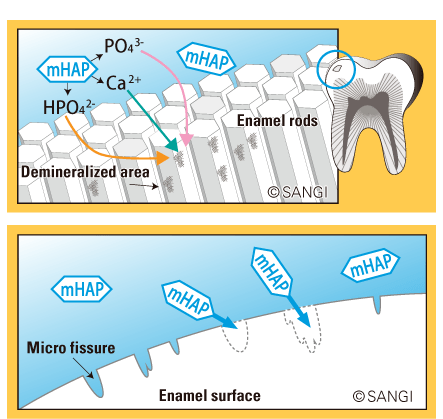
Hydroxyapatite (Ca₁₀(PO₄)₆(OH)₂) is a naturally occurring calcium phosphate compound that constitutes approximately 70% of human tooth enamel and bone mineral.
Because of its biomimetic properties, HAp is widely used in dental applications where biocompatibility and remineralization are essential.
Key advantages include:
-
Excellent biocompatibility
-
Enamel-like mineral structure
-
Ability to promote remineralization
-
Low toxicity profile
-
Strong affinity to tooth surfaces
These characteristics make HAp an attractive alternative to traditional fluoride-based systems in certain formulations.
Major Dental Applications of HAp
1. Toothpaste and Remineralization Products
Nano hydroxyapatite is commonly used in toothpaste formulations to:
-
Repair micro-enamel defects
-
Reduce tooth sensitivity
-
Improve surface smoothness
-
Enhance whitening effect
Particle size plays a crucial role here. Nano-scale HAp provides better surface adhesion and penetration into enamel micro-pores.
2. Desensitizing Agents
HAp can occlude dentinal tubules, reducing fluid movement and decreasing tooth sensitivity. Compared with some chemical desensitizers, hydroxyapatite offers a more biomimetic and long-term solution.
3. Bone Grafting in Dental Surgery
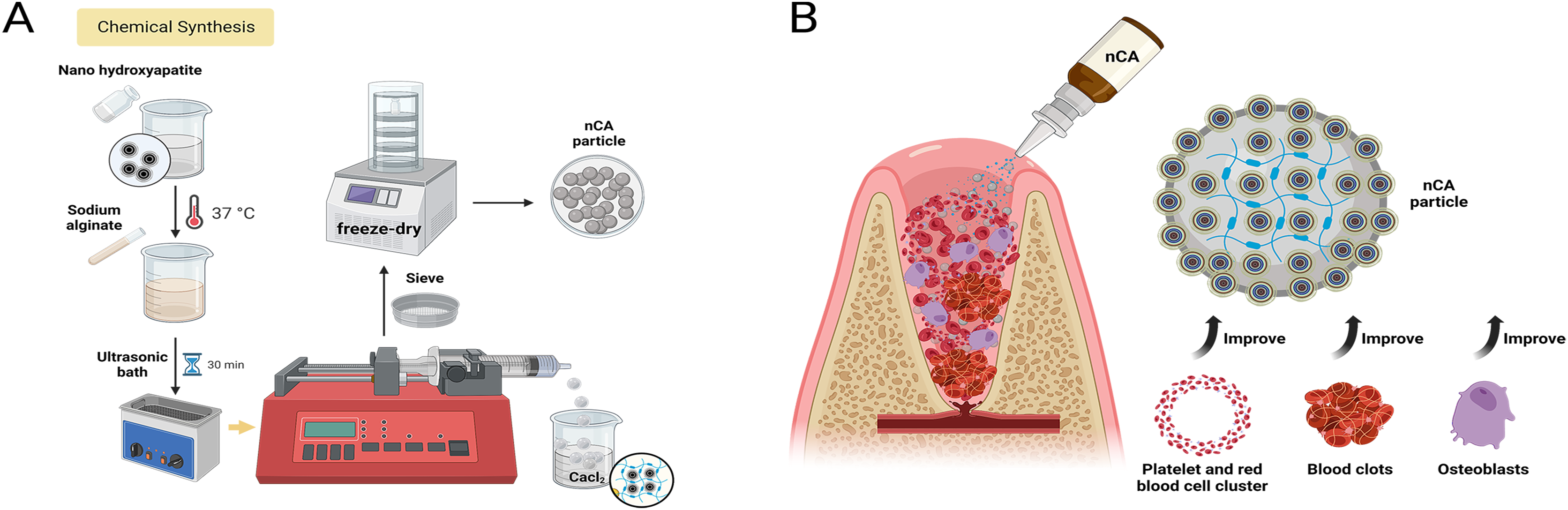
In implantology and periodontal surgery, medical-grade hydroxyapatite is used as:
-
Bone graft substitute
-
Scaffold for bone regeneration
-
Coating material for dental implants
In these cases, purity, crystallinity, and sterility standards are significantly higher than cosmetic-grade materials.
4. Implant Coatings
Hydroxyapatite coatings enhance osseointegration between implants and bone. Coating-grade HAp must demonstrate:
-
Controlled crystallinity
-
High phase purity
-
Strong adhesion capability
-
Stable calcium/phosphate ratio
Technical Specifications for Dental-Grade Hydroxyapatite
When sourcing HAp for dental applications, manufacturers should verify:
✔ Purity
High-quality dental HAp typically exceeds 95–99% purity depending on application type.
✔ Particle Size Distribution
-
Nano HAp: typically <100 nm (toothpaste and remineralization)
-
Micro HAp: larger particles for grafting applications
Uniform particle size improves formulation consistency and biological interaction.
✔ Ca/P Ratio
The ideal calcium-to-phosphate molar ratio is approximately 1.67, closely matching natural enamel.
✔ Heavy Metal Limits
Strict testing for lead, arsenic, cadmium, and mercury is essential for oral-use products.
✔ Microbial Control
For medical or surgical applications, sterilization validation and endotoxin control are critical.
Nano vs Micro Hydroxyapatite in Dental Use
| Parameter | Nano HAp | Micro HAp |
|---|---|---|
| Typical Size | <100 nm | 1–50 µm |
| Main Use | Toothpaste, sensitivity | Bone graft |
| Surface Area | High | Moderate |
| Remineralization | Strong | Limited |
| Surgical Use | Rare | Common |
Understanding these differences helps manufacturers select appropriate specifications.
Regulatory and Manufacturing Considerations
Dental materials must comply with relevant local regulations depending on target markets. When selecting a hydroxyapatite supplier, consider:
-
GMP manufacturing capability
-
ISO quality certification
-
Batch traceability
-
Consistent Ca/P ratio verification
-
Export documentation support
For surgical-grade HAp, additional validation such as sterilization method documentation may be required.
How to Choose a Reliable Hydroxyapatite Supplier for Dental Applications
Before placing bulk orders, evaluate:
✔ Manufacturing transparency
✔ Detailed Certificate of Analysis (COA)
✔ Particle size test reports
✔ Heavy metal testing documentation
✔ Batch consistency history
✔ Experience supplying dental or medical manufacturers
A professional hydroxyapatite manufacturer should provide technical support during formulation and regulatory preparation.
FAQ: HAp for Dental Application
Is nano hydroxyapatite safe for toothpaste?
When properly manufactured and tested for purity and heavy metals, nano hydroxyapatite is considered safe for oral care formulations.
What Ca/P ratio should dental-grade HAp have?
Approximately 1.67 to closely resemble natural tooth enamel mineral composition.
Does hydroxyapatite replace fluoride?
HAp can serve as an alternative remineralization ingredient in certain formulations, though regulatory positioning varies by region.
What is the difference between cosmetic-grade and medical-grade HAp?
Medical-grade HAp requires stricter purity control, sterility validation, and documentation compared to cosmetic-grade materials.
Conclusion
Hydroxyapatite plays a vital role in modern dental applications ranging from toothpaste formulations to bone graft substitutes and implant coatings. Selecting the correct particle size, purity level, and manufacturing standard is essential for performance, safety, and regulatory compliance.
For manufacturers seeking stable bulk supply of dental-grade hydroxyapatite, careful evaluation of technical specifications, quality documentation, and production standards ensures long-term reliability and product success.






Please leave us a message.