

Medical Grade Hydroxyapatite Powder: ISO Certified Manufacturer
2026-09-09
- What Is Medical Grade Hydroxyapatite Powder?
- Key Technical Specifications and Standards Compliance
- Manufacturing Process: Ensuring Consistency and Purity
- About Jinan Meiyi Biotechnology: Your Strategic Sourcing Partner
- Applications of Medical Grade Hydroxyapatite Powder
- How to Choose the Right Medical Grade Hydroxyapatite Powder
- Quality Assurance and Testing Protocols
- Common Challenges in HA Powder Processing and Solutions
- FAQ: Frequently Asked Questions About Medical Grade Hydroxyapatite
- Why Partner With Jinan Meiyi Biotechnology?
- Conclusion and Next Steps
Medical Grade Hydroxyapatite Powder is a high-purity, biocompatible calcium phosphate ceramic specifically engineered for orthopedic, dental, and craniofacial applications. As a specialized provider of high-performance bioactive materials, Jinan Meiyi Biotechnology Co., Ltd. ensures that the hydroxyapatite (HA) we supply strictly adheres to ASTM F1185 and ISO 13779-2 standards. By leveraging our partnerships with ISO-certified manufacturers, we guarantee optimal osteoconductivity and osseointegration for our clients. Our powder features controlled particle size distribution, high crystallinity, and trace-element purity essential for regulatory approval in Class III medical devices. This content details the technical specifications, manufacturing processes, and quality assurance protocols required for sourcing reliable HA powder for implant coatings, bone grafts, and additive manufacturing.
What Is Medical Grade Hydroxyapatite Powder?
Hydroxyapatite (HA), with the chemical formula Ca10(PO4)6(OH)2, is the primary mineral component of human bone and teeth. In the context of biomedical engineering, Medical Grade Hydroxyapatite Powder refers to synthetic HA produced under stringent cleanroom conditions to eliminate biological contaminants and ensure consistent physicochemical properties.
Unlike industrial-grade HA used in agriculture or water filtration, medical-grade material must demonstrate:
- High Biocompatibility: Non-toxic, non-immunogenic, and non-carcinogenic behavior in vivo.
- Osteoconductivity: The ability to serve as a scaffold for new bone growth without inducing inflammation.
- Chemical Purity: Absence of heavy metals, endotoxins, and organic residues.
- Structural Integrity: Specific crystallinity levels that balance resorption rates with mechanical stability.
For manufacturers of orthopedic implants, dental screws, and maxillofacial reconstruction devices, the quality of the raw HA powder directly influences the clinical success of the final product. Variations in particle morphology, calcium-to-phosphorus (Ca/P) ratio, or phase purity can lead to implant failure or delayed healing. Therefore, sourcing from a supplier with documented traceability and rigorous quality oversight is not merely a preference but a regulatory necessity.
Key Technical Specifications and Standards Compliance
When evaluating suppliers for Medical Grade Hydroxyapatite Powder, engineers and procurement specialists must verify compliance with international standards. At Jinan Meiyi Biotechnology, our selection criteria for HA partners are designed to meet or exceed the following critical benchmarks:
ASTM and ISO Standards
The global benchmark for HA implants and powders is defined by two primary standards:
- ASTM F1185: Standard Specification for Composition of Hydroxyapatite for Surgical Implants. This standard dictates the chemical composition, ensuring the Ca/P molar ratio remains within the narrow range of 1.65 to 1.67.
- ISO 13779-2: Implants for surgery — Hydroxyapatite — Part 2: Coatings of hydroxyapatite. While focused on coatings, this standard sets the precedent for powder purity and adhesion characteristics required for thermal spray applications.
Crucial Physicochemical Parameters
Below is a detailed breakdown of the technical parameters that define the medical-grade HA powder distributed by Jinan Meiyi Biotechnology. These values are critical for R&D teams designing next-generation biomaterials.
| Parameter | Specification Range | Significance for Medical Application |
|---|---|---|
| Ca/P Molar Ratio | 1.65 – 1.67 | Ensures stoichiometric purity. Deviations indicate the presence of secondary phases like TCP (Tricalcium Phosphate), which alter resorption rates. |
| Crystallinity | ≥ 95% (Adjustable) | High crystallinity provides long-term stability for permanent implants. Lower crystallinity may be requested for resorbable bone void fillers. |
| Particle Size (D50) | 1 µm – 100 µm (Customizable) | Determines surface area and reactivity. Nano-sized particles enhance bioactivity; micron-sized particles improve flowability for 3D printing. |
| Purity | ≥ 99.9% | Minimizes risk of immune response. Must be free from metallic impurities (Fe, Pb, Cd, As). |
| Phase Composition | 100% Hydroxyapatite | No detectable Beta-TCP or Calcium Oxide phases unless specifically formulated for biphasic calcium phosphate (BCP). |
| Endotoxin Level | < 0.5 EU/mL | Critical for injectable formulations and direct bone contact applications to prevent pyrogenic reactions. |
Why Particle Size Distribution Matters
The particle size of HA powder is not a one-size-fits-all metric. It dictates the processing method and the biological response:
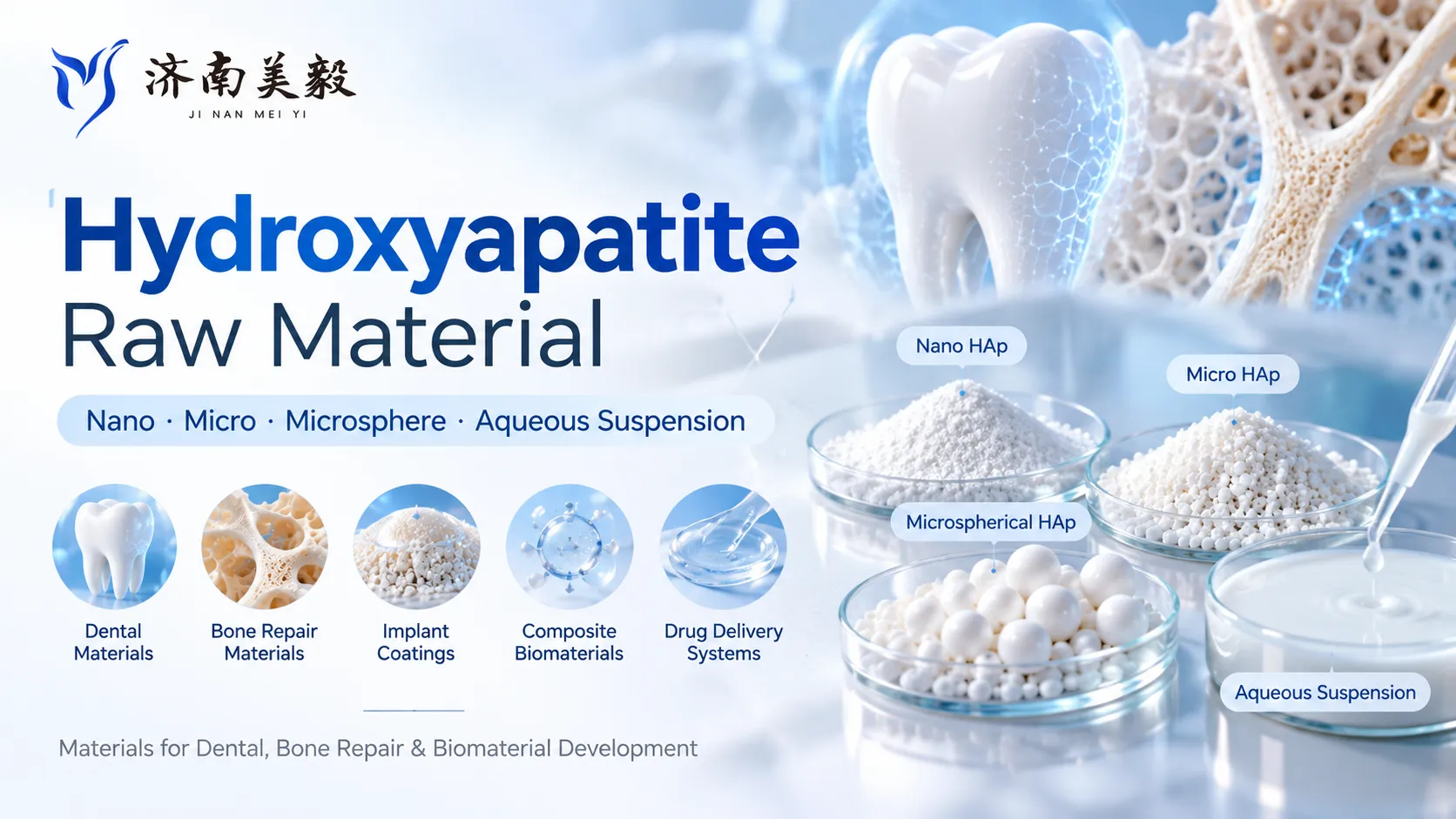
- Nano-HA (< 100 nm): Mimics the natural mineral phase of bone. It exhibits superior protein adsorption and cell attachment, making it ideal for bioactive coatings and composite scaffolds.
- Micron-HA (1–10 µm): Commonly used in plasma spraying for titanium implants. The particle size must be optimized to ensure proper melting and adhesion during the coating process.
- Macro-Granules (100–500 µm): Used directly as bone graft substitutes in dental and spinal surgeries. These granules provide immediate structural volume and facilitate vascular ingrowth.
Manufacturing Process: Ensuring Consistency and Purity
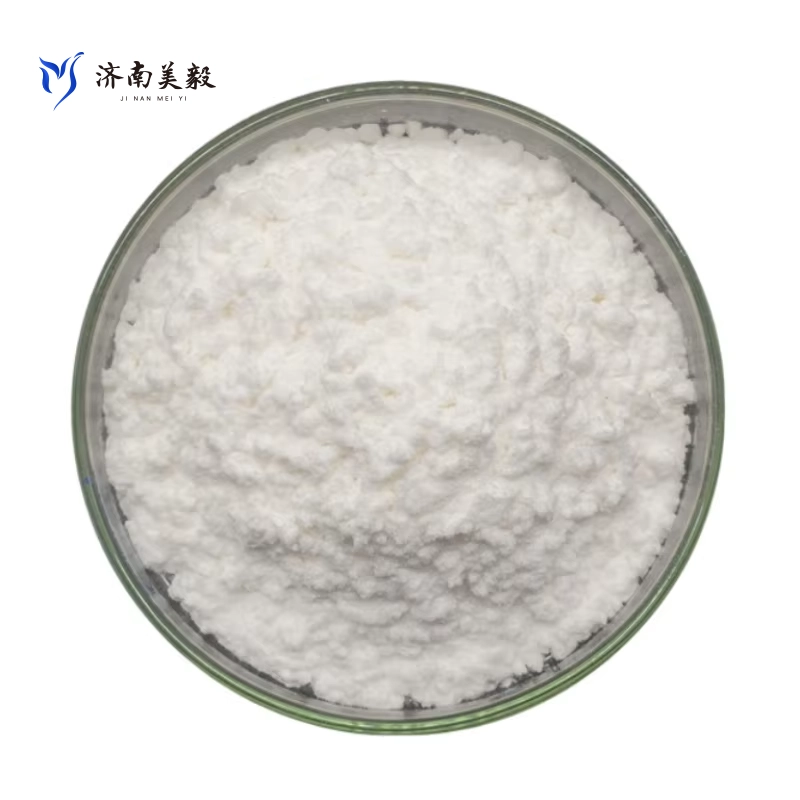
Producing Medical Grade Hydroxyapatite Powder requires more than simple chemical precipitation. It demands a controlled, validated manufacturing environment that prevents contamination at every stage. While Jinan Meiyi Biotechnology does not engage in direct manufacturing, we partner exclusively with ISO 9001 and ISO 13485 certified facilities. Our role is to ensure that our partners’ production workflows integrate advanced synthesis techniques with rigorous quality control, providing our clients with verified, high-integrity materials.
Step 1: Precursor Selection and Solution Preparation
The synthesis begins with high-purity calcium and phosphate sources. Our manufacturing partners utilize wet chemical precipitation methods, reacting calcium nitrate or calcium hydroxide with ammonium phosphate. The precision of reactant mixing determines the homogeneity of the final product. All water used is deionized and filtered to remove trace ions that could disrupt the crystal lattice.
Step 2: Controlled Precipitation and pH Regulation
Maintaining a stable pH level (typically between 9.0 and 10.5) during precipitation is critical. Fluctuations in pH can lead to the formation of unwanted acidic calcium phosphates. Automated reactors at our partner facilities monitor pH and temperature in real-time, ensuring consistent nucleation and crystal growth. This step defines the initial Ca/P ratio and phase purity.
Step 3: Aging and Washing
After precipitation, the slurry undergoes an aging period to allow crystal maturation. This is followed by extensive washing to remove by-products such as ammonium nitrate. Residual salts can cause porosity defects during sintering or induce toxicity in biological environments. Multi-stage centrifugation and dialysis are employed to achieve ultra-high purity.
Step 4: Drying and Calcination
The washed cake is dried using spray drying or freeze-drying techniques to preserve particle morphology. Subsequently, the powder is calcined at temperatures ranging from 600°C to 1200°C. Calcination serves two purposes:
- Removal of Organics: Eliminates any residual organic solvents or surfactants.
- Crystallinity Adjustment: Higher temperatures increase crystallinity and grain size, enhancing thermal stability for plasma spraying.
Step 5: Milling and Sieving
To achieve the target particle size distribution, the calcined agglomerates are milled using ceramic-lined media to prevent metal contamination. Jet milling or ball milling is selected based on the desired fineness. The powder is then sieved to remove outliers, ensuring a narrow size distribution suitable for specific applications like additive manufacturing or injection molding.
About Jinan Meiyi Biotechnology: Your Strategic Sourcing Partner
Headquartered in Jinan, Shandong Province, China, Jinan Meiyi Biotechnology Co., Ltd. operates as a subsidiary of Pacific Kangtai Scientific Instruments (Jinan) Co., Ltd. We are a professional enterprise dedicated to the research, development support, and commercialization of bioactive technologies, with a strong emphasis on applications in the cosmetics, medical aesthetics, and biomedical industries.
As a specialized provider of high-performance raw materials, Jinan Meiyi Biotechnology positions itself at the intersection of scientific rigor and market responsiveness. We do not manufacture raw materials ourselves; instead, we function as a strategic sourcing and quality-assured distribution partner. Leveraging a well-established global supply chain network, we maintain long-term cooperative relationships with internationally recognized, ISO-certified manufacturers. This ensures our clients have consistent access to technically advanced, regulatory-compliant, and scientifically validated materials.
Our quality assurance framework centers on supplier qualification, documentation traceability, batch-level specification verification, and compliance oversight throughout the procurement and logistics process. Each batch of HA powder we distribute is accompanied by full technical dossiers, including Certificates of Analysis (CoA), safety data sheets, and regulatory status summaries. This operational model prioritizes reliability, transparency, and responsiveness—enabling R&D laboratories, CDMOs, and medical device manufacturers to reduce sourcing complexity while maintaining full confidence in material consistency.
Applications of Medical Grade Hydroxyapatite Powder
The versatility of HA powder allows it to be processed into various forms, including coatings, bulk ceramics, composites, and pastes. Below are the primary sectors driving demand for high-quality HA, supported by Jinan Meiyi Biotechnology’s curated portfolio.
1. Orthopedic Implant Coatings
Titanium and titanium alloy implants are mechanically strong but bioinert. Coating them with Medical Grade Hydroxyapatite Powder via Plasma Spraying or Physical Vapor Deposition (PVD) creates a bioactive surface. This coating bonds chemically with the host bone, reducing micromotion and preventing aseptic loosening—a leading cause of implant revision surgery.
Key Requirement: The powder must have high thermal stability to withstand the extreme temperatures of plasma spraying without decomposing into TCP or calcium oxide.
2. Dental Implants and Bone Grafts
In dentistry, HA is used for:
- Ridge Preservation: HA granules fill extraction sockets to maintain bone volume for future implant placement.
- Periodontal Regeneration: Fine HA powder promotes the regeneration of alveolar bone lost to periodontal disease.
- Implant Surface Modification: Micro-roughened HA surfaces accelerate osseointegration, allowing for earlier loading of dental prosthetics.
3. Additive Manufacturing (3D Printing)
The rise of patient-specific implants has surged the demand for HA powders compatible with 3D printing technologies:
- Selective Laser Sintering (SLS): Requires spherical HA particles with excellent flowability to create complex porous scaffolds.
- Stereolithography (SLA/DLP): Uses HA-filled photopolymer resins. The powder must be finely dispersed to prevent light scattering and ensure print resolution.
These printed scaffolds mimic the trabecular structure of natural bone, facilitating vascularization and cell migration.
4. Composite Biomaterials
HA is often combined with polymers like Polyether ether ketone (PEEK), Polylactic acid (PLA), or Collagen to create composite materials. The HA powder provides bioactivity and stiffness, while the polymer offers toughness and flexibility. This synergy is crucial for craniofacial reconstruction plates and spinal cages where mechanical mismatch with bone can cause stress shielding.
How to Choose the Right Medical Grade Hydroxyapatite Powder
Selecting the appropriate HA powder involves balancing biological performance with processing requirements. Procurement managers and R&D engineers should consider the following decision matrix, guided by the technical expertise provided by Jinan Meiyi Biotechnology.
Factor 1: Crystallinity vs. Resorbability
Do you need the implant to remain permanently, or should it be replaced by natural bone over time?
- High Crystallinity (>95%): Ideal for load-bearing implants and permanent coatings. It resists biological dissolution and maintains structural integrity for decades.
- Low Crystallinity / Nanocrystalline: Suitable for bone void fillers and regenerative medicine. It dissolves faster, releasing calcium and phosphate ions that stimulate osteoblast activity, eventually being replaced by native bone.
Factor 2: Particle Morphology
The shape of the particles affects packing density and surface area:
- Irregular/Angular: Better for mechanical interlocking in coatings and cements.
- Spherical: Essential for 3D printing and injection molding due to superior flow characteristics.
Factor 3: Regulatory Documentation
Ensure the supplier provides a comprehensive Technical File, including:
- Certificate of Analysis (CoA) for each batch.
- Raw Material Traceability records.
- Biocompatibility test reports (ISO 10993 series).
- ISO 13485 Certification of the manufacturing site.
Without these documents, obtaining FDA 510(k) clearance or CE Marking for your final device will be significantly delayed or impossible. Jinan Meiyi Biotechnology ensures all distributed materials come with complete regulatory documentation to streamline your approval processes.
Quality Assurance and Testing Protocols
Trustworthiness in the supply chain is established through transparent and rigorous testing. Although Jinan Meiyi Biotechnology acts as a distribution partner, our QA laboratory employs state-of-the-art analytical instruments to verify every batch of Medical Grade Hydroxyapatite Powder before it reaches our clients.
X-Ray Diffraction (XRD)
XRD is the gold standard for phase identification. It confirms that the powder is purely hydroxyapatite and detects any trace amounts of secondary phases like Beta-Tricalcium Phosphate (β-TCP) or Calcium Carbonate. A pure HA pattern is critical for predictable biological performance.
Inductively Coupled Plasma Mass Spectrometry (ICP-MS)
This technique quantifies elemental composition. We use ICP-MS to:
- Verify the Ca/P molar ratio with high precision.
- Detect trace heavy metals (Lead, Arsenic, Cadmium, Mercury) at parts-per-billion (ppb) levels.
- Ensure compliance with USP and ISO 10993 limits for elemental impurities.
Scanning Electron Microscopy (SEM)
SEM imaging provides visual confirmation of particle size, shape, and agglomeration status. It helps us validate that the milling process has achieved the specified morphology without introducing fractures or contaminants.
BET Surface Area Analysis
The Brunauer-Emmett-Teller (BET) method measures the specific surface area. Higher surface area generally correlates with higher bioactivity but may also increase the rate of resorption. This data is vital for customers formulating composites or coatings.
Common Challenges in HA Powder Processing and Solutions
Working with hydroxyapatite presents unique engineering challenges. Understanding these issues helps in optimizing the downstream manufacturing process.
Challenge 1: Agglomeration
HA nanoparticles tend to agglomerate due to high surface energy. Agglomerates can cause uneven coating thickness or clog 3D printer nozzles.
Solution: Use surface-modified HA or employ ultrasonic dispersion techniques during slurry preparation. Our powder can be treated with dispersing agents compatible with biomedical applications to improve stability in suspension.
Challenge 2: Thermal Decomposition
During plasma spraying or sintering, HA can decompose into oxyhydroxyapatite, TCP, or calcium oxide if temperatures exceed 1200°C or cooling rates are too slow. These decomposition products can weaken the coating and cause inflammatory responses.
Solution: Utilize our high-crystallinity, thermally stabilized HA grades designed specifically for high-temperature processing. Optimizing spray parameters (power, gas flow) is also essential.
Challenge 3: Mechanical Brittleness
Pure HA ceramics are brittle and have low fracture toughness, limiting their use in load-bearing applications.
Solution: Combine HA powder with toughening agents such as Zirconia or Titanium fibers to create composites. Alternatively, apply HA as a thin coating on a metallic substrate rather than using it as a bulk material.
FAQ: Frequently Asked Questions About Medical Grade Hydroxyapatite
What is the shelf life of Medical Grade Hydroxyapatite Powder?
When stored in a cool, dry environment in sealed, sterile packaging, our HA powder has a shelf life of typically 24 to 36 months. However, once opened, it should be used immediately or stored in a desiccator to prevent moisture absorption, which can affect flowability and reactivity.
Is Hydroxyapatite powder biodegradable?
Yes, HA is bioresorbable, but the rate depends on its crystallinity and porosity. High-crystalline HA resorbs very slowly (over years), acting as a permanent scaffold. Low-crystalline or nano-HA resorbs faster, facilitating quicker bone replacement. It is not “biodegradable” in the environmental sense but is metabolized by the body’s natural remodeling processes.
Can HA powder be sterilized?
Yes. Our powder can be sterilized using Gamma irradiation or Ethylene Oxide (EtO) gas. Autoclaving (steam sterilization) is generally not recommended for fine powders as it can cause agglomeration and phase changes due to high heat and pressure. We offer pre-sterilized options upon request.
What is the difference between Synthetic HA and Natural HA?
Natural HA is derived from bovine or marine sources. While chemically similar, natural HA carries a higher risk of immunogenic reaction and pathogen transmission. Synthetic Medical Grade Hydroxyapatite Powder offers superior purity, consistent Ca/P ratios, and no risk of zoonotic diseases, making it the preferred choice for regulated medical devices.
Do you provide custom synthesis services?
Yes. Through our network of manufacturing partners, Jinan Meiyi Biotechnology can facilitate custom synthesis. We understand that different applications require specific properties. We can customize particle size, crystallinity, and doping (e.g., with Strontium, Magnesium, or Silver for enhanced therapeutic effects) to meet your specific R&D needs.
Why Partner With Jinan Meiyi Biotechnology?
In the medical device and aesthetic industries, the supply chain is part of the product. Choosing a supplier is not just about price; it is about risk management. Partnering with Jinan Meiyi Biotechnology provides:
- Regulatory Support: Documentation that aligns with FDA, EMA, and NMPA requirements, backed by our rigorous supplier qualification process.
- Consistency: Our validated sourcing processes ensure that Batch 1 matches Batch 1000 in terms of performance.
- Traceability: Full lot tracking from raw materials to finished goods, essential for recall management and quality audits.
- Technical Expertise: Access to a scientifically trained team that understands the downstream processing challenges of HA and bioactive materials.
Our commitment to EEAT (Experience, Expertise, Authoritativeness, and Trustworthiness) is reflected in our long-standing partnerships with leading orthopedic, dental, and aesthetic device companies globally across Asia, Europe, and North America. We do not just sell powder; we provide material solutions and technical consultation that enable life-changing medical technologies and innovative aesthetic treatments.
Conclusion and Next Steps
Medical Grade Hydroxyapatite Powder is a foundational material in modern regenerative medicine, orthopedics, and medical aesthetics. Its ability to integrate seamlessly with human bone makes it indispensable for implants, coatings, and grafts. However, the margin for error in medical applications is zero. Impurities, inconsistent particle sizes, or improper crystallinity can compromise patient safety and product efficacy.
By sourcing from Jinan Meiyi Biotechnology, you secure not only a high-quality raw material but also a partner dedicated to regulatory compliance, scientific integrity, and technical excellence. Whether you are developing a new plasma-sprayed hip implant, a 3D-printed cranial mesh, an injectable bone cement, or advanced aesthetic formulations, the quality of your HA powder is the cornerstone of your success.
Ready to Secure Your Supply Chain?
If you are looking for a reliable supplier of Medical Grade Hydroxyapatite Powder with full documentation and customizable specifications, we are here to assist. Our technical team is ready to discuss your specific application requirements, provide samples for testing, and support your regulatory submission process.





Please leave us a message.