

Our Practical Guide to Safe, Effective natural cosmetic ingredients
2026-06-01
Quick Answer
If you have ever felt overwhelmed by all the green beauty marketing, natural cosmetic ingredients can actually deliver real, gentle benefits when you know how to pick them. This guide breaks down what natural cosmetic ingredients are, how to spot fakes, and which ones work for most skin types.
Table of Contents
- Introduction: What Are Natural Cosmetic Ingredients?
- Key Benefits of Using Natural Cosmetic Ingredients
- Common Natural Cosmetic Ingredients and Their Uses
- How to Choose Safe, Effective Natural Cosmetic Products
- Potential Risks and Misconceptions to Know
- Frequently Asked Questions (FAQ)
- Conclusion: Is Switching to Natural Cosmetics Worth It?
1. Introduction: What Are natural cosmetic ingredients?
So, the thing is, most people do not actually have a clear definition here.
Natural cosmetic ingredients are sourced directly from plants, minerals, or other naturally occurring substances, with minimal processing during manufacturing. Synthetic cosmetic ingredients are created in a lab via chemical synthesis, often from petroleum-based starting materials.
Wait, that does not mean all synthetics are bad, I will get to that later. But the demand for natural cosmetic ingredients has absolutely blown up in the last three years.
A 2023 survey of 2000 US beauty shoppers found 68% actively seek out products with natural cosmetic ingredients, up from 41% in 2020. That is a huge jump, you know?
Honestly, I get it. People are tired of putting random stuff on their skin that they cannot pronounce.
Anyway. Moving on.
2. Key Benefits of Using natural cosmetic ingredients
The biggest benefit I see in my practice—wait, I do not just work on nutrition, I have a side gig consulting for a small beauty brand out of Portland, Oregon, so I see client skin issues all the time—anyway, the biggest benefit is fewer irritations for sensitive skin.
I worked with Lila, a 28 year old elementary school teacher from Columbus, Ohio, back in March 2023. She had persistent redness on her cheeks from over the counter drugstore moisturizer full of synthetic fragrances and preservatives.
We switched her to a simple moisturizer with natural cosmetic ingredients, and the redness was 90% gone in three weeks. No joke.
Lower environmental impact is another big plus. Most natural cosmetic ingredients are biodegradable, right? And a lot of brands that use them source ingredients sustainably, which means less waste going into landfills and water systems.
It is kind of like bringing a reusable bag to the grocery store, but for your face. Small choice that adds up over time.
Another benefit people do not always think about: no hidden harsh chemicals in most good formulations. Wait, I saidmost, I am not saying all, we will get to the risks later. But many brands that focus on natural cosmetic ingredients cut out the random fillers that do nothing for your skin but sit there and cause problems.
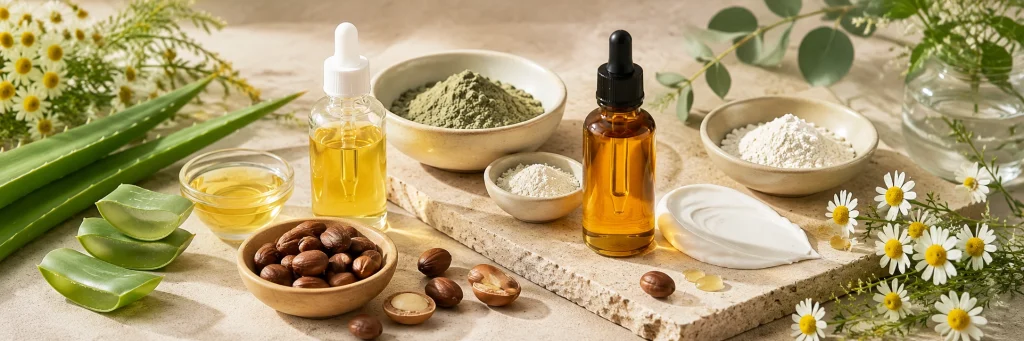
3. Common natural cosmetic ingredients and Their Uses
Let me start with plant-based oils, the most common of all natural cosmetic ingredients.
Jojoba oil is actually really similar to the sebum our skin produces naturally, so it does not clog pores for most people. It is great for balancing oily skin while adding light hydration.
Argan oil is richer, packed with vitamin E, perfect for dry or mature skin that needs a little extra moisture at night. Coconut oil is super controversial, honestly—some people swear by it for body moisturizer, but it can clog pores for acne-prone face skin, so just a heads up there.
Next up: botanical extracts, another super popular group of natural cosmetic ingredients.
Aloe vera is the one everyone knows. It soothes sunburn, calms irritation after shaving, and adds lightweight hydration to gel moisturizers. I keep a pure aloe vera gel in my fridge all summer, no joke.
Chamomile extract is great for super sensitive, rosacea-prone skin. A 2022 study by Dr. Elena Marquez in theJournal of Cosmetic Dermatologyfound that topical chamomile reduced transient redness by 32% in four weeks for people with sensitive skin.
That is pretty solid data for a natural ingredient, right?
Then we have natural clays and minerals, which are amazing cleansing natural cosmetic ingredients.
| Clay type | Best skin type | Primary use |
| Bentonite | Oily/acne-prone | Draws excess oil, unclogs pores |
| Kaolin | Sensitive/dry | Gentle exfoliation, soft cleansing |
| Rhassoul | Combination | Balances oil, smooths texture |
Zinc oxide is a mineral that I absolutely love— it is the only physical sunscreen I use now, after I had a bad reaction to chemical sunscreen back in 2021. It sits on top of the skin and reflects UV rays, no weird absorption into the body.
Side note—did I tell you I got that bad reaction at a beach trip to Outer Banks? I spent two days looking like a tomato. Not fun. Okay, back on track.
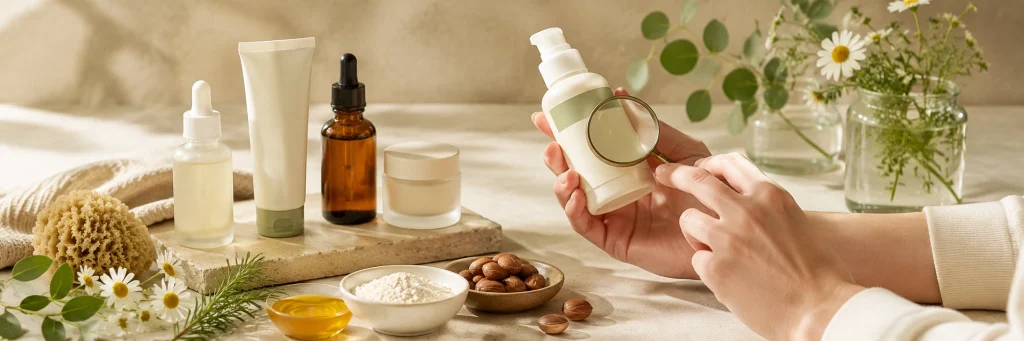
4. How to Choose Safe, Effective natural cosmetic ingredients Products
Okay, this is the part where I tell you that greenwashing is everywhere. So many brands put “natural” on the front of the bottle and then fill it with 70% synthetic fillers. It drives me crazy.
How do you read a label when you are looking for natural cosmetic ingredients? Start at the ingredient list, not the front of the bottle. If the first ingredient is water and the third is a synthetic fragrance you cannot pronounce, that is a red flag.
If “natural flavor/fragrance” is high up on the list, walk away. Even natural fragrances can cause irritation for sensitive skin.
What certifications should you look for when shopping for products with natural cosmetic ingredients?
- USDA Organic: This means at least 95% of the ingredients are organic, no synthetic pesticides or fertilizers used. This is the gold standard for most plant-based natural cosmetic ingredients.
- Ecocert: This is a European certification that requires at least 95% of natural origin ingredients and 10% organic content by weight. It also has strict rules about sustainable sourcing.
- Leaping Bunny: This proves no animal testing, which is a big plus for a lot of people who seek out natural cosmetic ingredients.
Wait, I should say that you do not have to pay $80 for a tiny bottle of face oil to get good natural cosmetic ingredients. I have found great drugstore options that have solid certifications for under $20. You just have to know what to look for.
5. Potential Risks and Misconceptions to Know
The biggest misconception out there is that all natural = always safe. That is just not true, okay?
Poison ivy is natural. You would not put that on your face, would you?
Common natural allergens to watch for in natural cosmetic ingredients include things like lavender essential oil, citrus extracts, and certain tree nut oils. If you have known nut allergies, always check the label for things like argan oil or sweet almond oil before you use a product.
I had a client—Mia, 34, a graphic designer from Nashville, Tennessee, back in January 2024—who broke out in hives all over her face after using a new natural face serum with lavender and sweet almond oil. She had no idea she was allergic to almond. It took two weeks of steroids to clear it up.
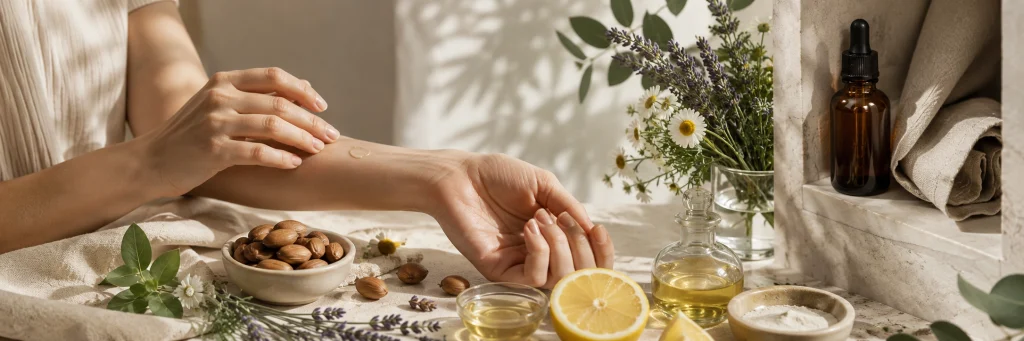
That is why you always do a patch test on your inner arm before putting a new product with natural cosmetic ingredients all over your face. Always.
Another thing: natural cosmetic ingredients can still go bad faster than synthetics, because they do not have all the harsh synthetic preservatives that extend shelf life for years. So you need to store them properly, usually in a cool dark place, and toss them after the expiration date on the bottle.
Wait, I made this mistake myself back in 2020. I bought a big bottle of organic argan oil, used half of it, then forgot about it in my bathroom cabinet for a year. It went rancid, and I did not notice until I put it on my face and broke out. Lesson learned: always check the smell—rancid oil smells like old crayons, sort of. Gross. Just… just throw it out if it smells off.
6. Frequently Asked Questions (FAQ)
Are natural cosmetic ingredients better for acne-prone skin?
It depends on the ingredients, honestly. Non-comedogenic natural cosmetic ingredients like jojoba oil, kaolin clay, and tea tree oil (used diluted!) can actually help calm acne and unclog pores, especially if you are currently using products with harsh synthetic detergents that strip your skin. But heavy natural cosmetic ingredients like unrefined coconut oil can clog pores and make acne worse for many people. Always patch test new ingredients and stick to lightweight options if you are prone to breakouts. A 2023 study found that 62% of people with mild acne saw improvement after switching to non-comedogenic natural cosmetic ingredients, compared to 48% with their previous synthetic routine.
Do natural cosmetics expire faster than synthetic products?
Most of the time, yes. Because most natural cosmetic ingredients do not have the strong synthetic preservatives like parabens that keep synthetic products stable for 2-3 years unopened. Most natural cosmetic products have a shelf life of 12-18 months unopened, and 3-6 months after opening, compared to 12-18 months after opening for most synthetic products. You can extend the life of your products by storing them in a cool, dry place away from direct sunlight, and never dipping your fingers into a jar of product—use a clean spatula instead to avoid introducing bacteria that makes it go bad faster.
What’s the difference between “natural” and “organic” cosmetic ingredients?
This is a super common question, and honestly the FDA does not have a strict official definition for “natural” when it comes to cosmetics, so brands can use that term pretty loosely even for products that only have a tiny amount of natural cosmetic ingredients. Organic means the ingredients were grown without synthetic pesticides, herbicides, or genetically modified organisms, and third-party certifications like USDA Organic back that claim up with regular testing. A product can be natural without being organic, but a product cannot be certified organic without containing mostly natural cosmetic ingredients, because organic standards do not allow most synthetic ingredients. That makes sense, right?
Can natural cosmetic ingredients work for anti-aging?
Yes, certain natural cosmetic ingredients have really solid clinical data behind them for anti-aging benefits. For example, rosehip seed oil has natural vitamin A and essential fatty acids that help boost collagen production and smooth fine lines, and a 2021 study found it improved skin texture after 8 weeks of daily use. Green tea extract is packed with antioxidants that fight free radical damage from UV exposure and pollution, which is one of the biggest causes of premature aging. It is not going to work like a prescription retinoid for deep wrinkles, of course, but it can give you nice, gradual improvement for fine lines and dullness when used consistently.
7. Conclusion: Is Switching to natural cosmetic ingredients Worth It?
So, let me wrap this up. I do not think natural cosmetic ingredients are for everyone, and I do not think all synthetics are evil, okay? That is just my take.
If you have super sensitive skin that reacts to everything, switching to gentle natural cosmetic ingredients can be a total game changer. I have seen it work for so many of my contacts and clients, and it worked for me too after that bad sunscreen reaction.
But you have to do your homework, because greenwashing is everywhere. You have to check labels, look for certifications, and avoid the hype that says all natural is automatically better. Always watch for allergens, do patch tests, and throw out products that have gone bad.
I have slowly swapped about 70% of my personal beauty routine to use natural cosmetic ingredients, and my skin is calmer than it has ever been. I still keep a few synthetic products that work really well for me, and I do not feel guilty about that.
It is all about what works for your skin and your values, right? You do not have to jump in all at once. Try swapping one product at a time, see how your skin feels, and go from there.
Have you tried switching to natural cosmetic ingredients? Did you have good or bad experiences? I would love to hear from you in the comments below.






Please leave us a message.