
SOD for Wound Healing: Clinical Efficacy & Top Suppliers
2026-09-25
- The Biological Mechanism of SOD in Tissue Repair
- Clinical Efficacy: Evidence from Dermatological Studies
- Types of SOD Used in Wound Care Formulations
- Formulation Challenges and Stability Solutions
- How to Evaluate and Source High-Quality SOD
- Integrating SOD into Wound Care Product Lines
- Common Misconceptions About SOD in Wound Care
- FAQ: SOD for Wound Healing
- Strategic Selection Guide for Buyers
- Future Trends in Enzymatic Wound Care
- Conclusion: Optimizing Outcomes with SOD
SOD for wound healing refers to the therapeutic application of Superoxide Dismutase, a potent antioxidant enzyme that neutralizes superoxide radicals to accelerate tissue repair. By reducing oxidative stress and modulating inflammation, SOD creates an optimal microenvironment for fibroblast proliferation and collagen synthesis. This page details the clinical efficacy, mechanisms of action, and sourcing criteria for high-purity SOD intended for advanced wound care formulations, providing essential data for biomedical engineers and procurement specialists.
The Biological Mechanism of SOD in Tissue Repair
Chronic and acute wounds often stall in the inflammatory phase due to excessive reactive oxygen species (ROS). Understanding how SOD for wound healing interacts with cellular pathways is critical for developing effective topical formulations or systemic supplements.
Oxidative Stress and the Healing Impasse
In healthy tissue, ROS play a signaling role. However, in damaged skin, particularly in diabetic ulcers or severe burns, ROS levels spike uncontrollably. This oxidative burst damages cell membranes, denatures proteins, and fragments DNA. The result is a persistent inflammatory state that prevents the transition to the proliferative phase of healing.
Superoxide Dismutase acts as the first line of defense. It catalyzes the dismutation of the superoxide radical ($O_2^-$) into oxygen and hydrogen peroxide. While hydrogen peroxide is also an oxidant, it is less damaging and is subsequently broken down by catalase or glutathione peroxidase. This cascade effectively lowers the overall oxidative burden on the wound bed.
Modulation of Inflammatory Cytokines
Beyond simple scavenging, SOD influences gene expression related to inflammation. High concentrations of superoxide radicals activate NF-κB, a protein complex that controls transcription of DNA, cytokine production, and cell survival. By reducing superoxide levels, SOD indirectly suppresses NF-κB activation.
- Reduced IL-6 and TNF-α: Lower levels of pro-inflammatory cytokines allow immune cells to shift from a destructive M1 phenotype to a reparative M2 phenotype.
- Protection of Growth Factors: Oxidative stress degrades essential growth factors like VEGF (Vascular Endothelial Growth Factor) and EGF (Epidermal Growth Factor). SOD preserves these molecules, ensuring they remain available to stimulate angiogenesis and epithelialization.
Stimulation of Fibroblast Activity
Fibroblasts are the primary cells responsible for producing the extracellular matrix (ECM), including collagen and elastin. These cells are highly sensitive to oxidative damage. When protected by exogenous SOD, fibroblasts exhibit higher migration rates and increased synthetic activity. This leads to faster granulation tissue formation and improved tensile strength in the healed scar.
Clinical Efficacy: Evidence from Dermatological Studies
The transition from theoretical mechanism to clinical application is supported by various studies focusing on different wound etiologies. While individual results vary based on patient health and wound severity, the consensus in dermatological research highlights specific areas where SOD demonstrates significant benefit.
Diabetic Foot Ulcers (DFUs)
Diabetic patients suffer from impaired microcirculation and heightened oxidative stress. Clinical trials involving topical SOD applications have shown promising results in reducing ulcer size. The enzyme helps counteract the glycation-induced oxidative damage common in diabetic tissues.
In comparative observations, wounds treated with SOD-enriched dressings often show earlier signs of granulation compared to standard saline controls. The reduction in local inflammation also correlates with decreased pain levels, improving patient compliance and quality of life during the lengthy healing process.
Burn Wound Management
Thermal injuries generate massive amounts of free radicals immediately upon tissue exposure to heat. This “oxidative shock” can cause deeper tissue damage than the thermal injury itself, a phenomenon known as reperfusion injury. Administering SOD, either topically or systemically, aims to mitigate this secondary damage.
Research indicates that early application of SOD can limit the depth of burn progression. By preserving viable tissue at the wound margins, SOD facilitates faster re-epithelialization. Furthermore, it may reduce the severity of hypertrophic scarring, a common complication in burn recovery, by regulating collagen deposition patterns.
Surgical Wounds and Post-Operative Care
In surgical settings, the goal is precise and rapid closure with minimal scarring. SOD is increasingly incorporated into post-operative gels and creams. Its ability to reduce edema and erythema (redness) accelerates the aesthetic recovery of incision sites.
For plastic surgery applications, maintaining low oxidative stress is crucial for flap survival. SOD helps protect the delicate microvasculature of skin flaps from ischemia-reperfusion injury, thereby reducing the risk of necrosis and improving overall surgical outcomes.
Types of SOD Used in Wound Care Formulations
Not all Superoxide Dismutase enzymes are created equal. For biomedical and cosmetic applications, the source, stability, and molecular weight of the enzyme are decisive factors. Selecting the right type of SOD for wound healing requires understanding these distinctions.
Bovine vs. Recombinant Human SOD
Historically, bovine liver was a common source of Cu/Zn-SOD. However, concerns regarding pathogen transmission and immunogenicity have shifted the industry toward recombinant technologies.
- Bovine SOD: Cost-effective but carries a higher risk of immune reaction. Its use is declining in regulated medical markets due to safety protocols.
- Recombinant Human SOD (rhSOD): produced via yeast or bacterial fermentation. It is identical to the human enzyme, minimizing immunogenicity. This is the preferred standard for high-end medical devices and advanced wound care products.
Metal Cofactors: Cu/Zn-SOD vs. Mn-SOD
SOD enzymes require metal cofactors to function. The two primary types used in topical applications differ in their cellular localization and stability.
| Feature | Cu/Zn-SOD (SOD1) | Mn-SOD (SOD2) |
|---|---|---|
| Location | Cytosol (Extracellular application feasible) | Mitochondria (Intracellular) |
| Stability | Moderate; sensitive to pH changes | Higher thermal stability |
| Application | Topical creams, gels, sprays | Systemic supplements, liposomal delivery |
| Primary Benefit | Direct scavenging in wound exudate | Cellular protection from within |
For direct wound application, Cu/Zn-SOD is more commonly utilized because it can act directly in the extracellular matrix where the wound exudate resides. Mn-SOD is often reserved for systemic support or specialized delivery systems that penetrate the cell membrane.
Plant-Derived SOD (Melon Extract)
A popular commercial source of SOD is concentrated melon extract (Cucumis melo). This plant-based SOD is often stabilized with gliadin, a wheat protein, to protect it from gastric degradation if taken orally. For topical wound care, plant-derived SOD offers a vegan-friendly alternative with a lower risk of allergic reactions compared to animal sources, though its enzymatic activity units per milligram may be lower than recombinant versions.
Formulation Challenges and Stability Solutions
The biggest hurdle in using SOD for wound healing is its instability. As a protein, SOD is prone to denaturation by heat, pH extremes, and proteolytic enzymes found in wound exudate. Effective product development requires robust stabilization strategies.
The Protease Problem
Chronic wounds contain high levels of matrix metalloproteinases (MMPs) and other proteases that break down proteins. Unprotected SOD applied to such a wound may be degraded before it can exert its therapeutic effect. This necessitates the use of protective carriers.
Advanced Delivery Systems
To overcome stability issues, modern formulations employ several engineering approaches:
- Liposomal Encapsulation: Encasing SOD in lipid bilayers protects it from proteases and enhances penetration into the stratum corneum and deeper tissue layers. Liposomes also provide a sustained release mechanism.
- Nanoparticle Carriers: Polymeric nanoparticles can shield the enzyme and target its release in response to specific pH conditions found in inflamed tissue.
- Chemical Modification: PEGylation (attaching polyethylene glycol chains) increases the half-life of SOD in the body and reduces immunogenicity, though this is more common in systemic than topical applications.
- Hydrogel Matrices: Incorporating SOD into hydrogels provides a moist wound environment while physically protecting the enzyme. The hydrogel can also be formulated with chelating agents to preserve the metal cofactors of the SOD.
Storage and Handling Requirements
For manufacturers and formulators, maintaining enzyme activity during storage is vital. Lyophilized (freeze-dried) SOD powder is the most stable form and should be stored at -20°C or lower. Once reconstituted or incorporated into a liquid formulation, the product typically requires refrigeration and protection from light. Oxygen-free packaging can further extend shelf life by preventing auto-oxidation of the enzyme’s active site.
How to Evaluate and Source High-Quality SOD
For B2B buyers, contract manufacturers, and product developers, sourcing the right grade of SOD for wound healing is a critical decision. Quality variations can lead to batch failures, inconsistent clinical results, and regulatory hurdles.
Key Quality Indicators
When requesting specifications from suppliers, focus on these technical parameters:
- Specific Activity: Measured in Units/mg (U/mg). Higher specific activity indicates a purer, more potent enzyme. For wound care, aim for ≥ 3,000 U/mg for crude extracts and ≥ 10,000 U/mg for purified forms.
- Purity Level: Determined by SDS-PAGE electrophoresis. A single band indicates high purity. Impurities can trigger immune responses or interfere with formulation stability.
- Endotoxin Levels: Critical for any product applied to open wounds. Ensure the supplier provides Certificates of Analysis (CoA) showing endotoxin levels within safe limits (e.g., < 0.5 EU/mg).
- Microbial Load: Total plate count, yeast, and mold must be negligible. Sterile filtration or aseptic processing is preferred for medical-grade SOD.
Supplier Verification Checklist
Selecting a reliable partner involves more than just checking specs. Use this checklist to assess potential suppliers:
- Manufacturing Standards: Does the facility operate under GMP (Good Manufacturing Practice) guidelines? ISO 13485 certification is a strong indicator of suitability for medical device components.
- Source Transparency: Is the SOD recombinant, bovine, or plant-based? The supplier should clearly disclose the origin and the fermentation or extraction method.
- Stability Data: Request accelerated stability test results. How much activity is retained after 6, 12, and 24 months at recommended storage conditions?
- Regulatory Support: Can the supplier provide documentation supporting DMF (Drug Master File) or REACH compliance? This is essential for international market access.
- Customization Capability: Can they provide custom concentrations or specific buffer formulations tailored to your product’s pH requirements?
Red Flags in Sourcing
Be cautious of suppliers who cannot provide detailed CoAs, offer prices significantly below market average (indicating potential dilution or low activity), or lack clear information about their cold chain logistics. SOD is a sensitive biological material; improper shipping temperatures can render it inactive before it reaches your facility.
The Role of Specialized Biotech Partners
Navigating the complexities of bioactive sourcing requires more than just identifying a vendor; it demands a partner who bridges the gap between scientific rigor and market responsiveness. This is where specialized enterprises like Jinan Meiyi Biotechnology Co., Ltd. play a pivotal role in the supply chain.
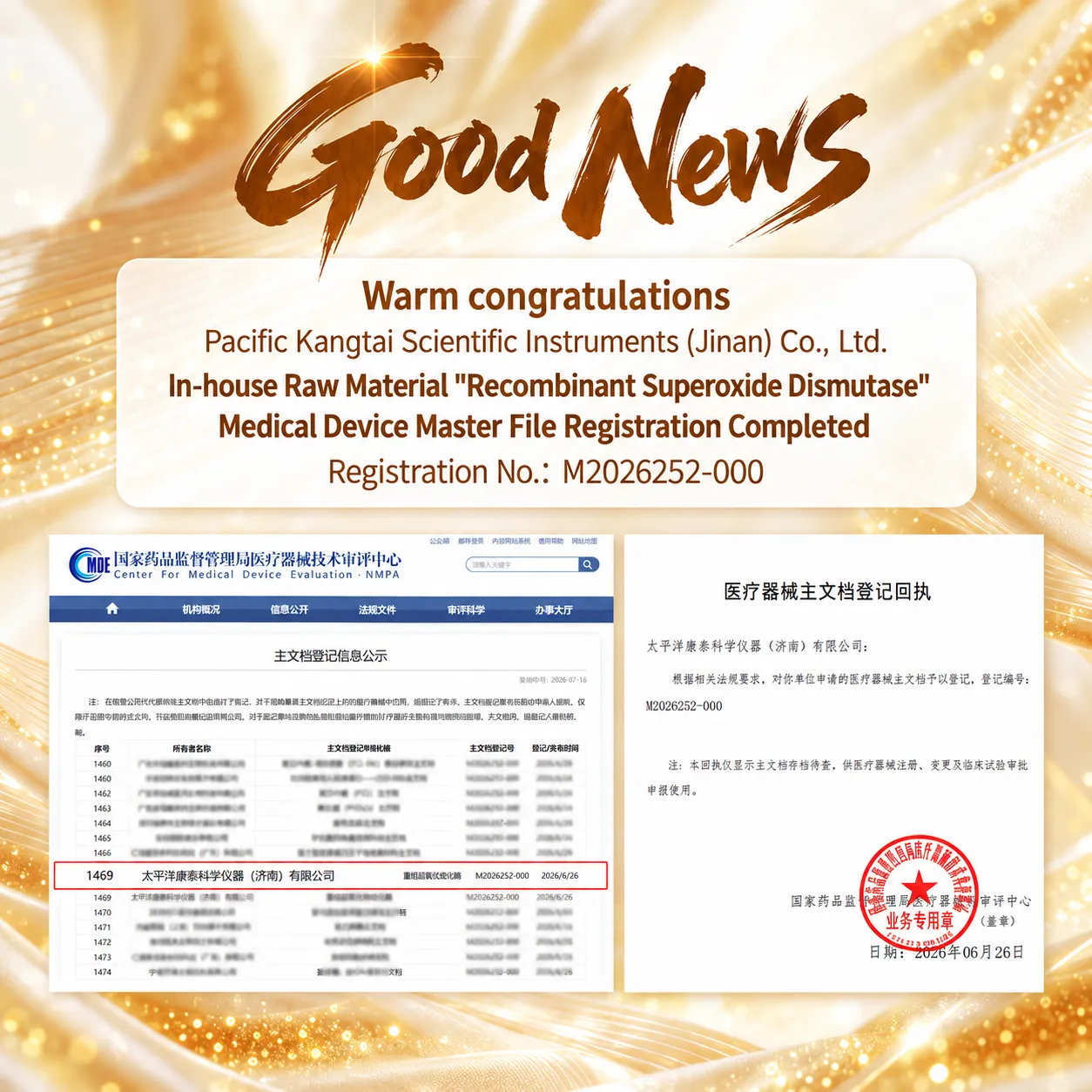
Headquartered in Jinan, Shandong Province, and operating as a subsidiary of Pacific Kangtai Scientific Instruments, Jinan Meiyi Biotechnology has established itself as a trusted enabler for innovation in the global personal care and aesthetic medicine sectors. Unlike traditional manufacturers, Jinan Meiyi functions as a strategic sourcing and quality-assured distribution partner. The company does not engage in raw material manufacturing itself; instead, it leverages a well-established global network to curate high-performance bioactive ingredients from internationally recognized suppliers.
For R&D laboratories and CDMOs developing SOD-based wound care solutions, Jinan Meiyi offers a distinct advantage through its disciplined curation methodology. Every raw material in their portfolio undergoes comprehensive evaluation based on efficacy data, stability profiles, and regulatory compliance. By partnering with certified manufacturers adhering to international quality management systems, Jinan Meiyi ensures that clients receive materials accompanied by full technical dossiers, including Certificates of Analysis (CoA) and safety data sheets. This transparency allows product developers to reduce sourcing complexity while maintaining full confidence in material consistency—critical when dealing with sensitive enzymes like SOD.
Integrating SOD into Wound Care Product Lines
Developing a successful product involves more than just adding an ingredient. It requires a holistic approach to formulation, regulatory compliance, and market positioning.
Product Format Considerations
The choice of delivery format depends on the wound type and user convenience:
- Hydrogels: Ideal for dry or necrotic wounds. They donate moisture and can hold high concentrations of SOD. Best for hospital or clinical use.
- Sprays: Suitable for large surface areas like burns. Non-contact application reduces pain and contamination risk. Requires SOD to be stable in aqueous solution.
- Creams/Ointments: Common for home care of minor cuts, abrasions, and post-surgical scars. Emulsion stability is key to preventing enzyme degradation.
- Dressings: Impregnated foams or alginates with SOD offer sustained release over several days. This is a high-value segment for chronic wound management.
Synergistic Ingredients
SOD works best when combined with other healing agents. Consider these synergistic pairings:
- Vitamin C: Essential for collagen synthesis. It also helps regenerate other antioxidants. Ensure the formulation pH allows stability for both SOD and Vitamin C.
- Zinc: Supports epithelialization and immune function. Zinc and Cu/Zn-SOD share a metabolic link, making them a logical combination.
- Hyaluronic Acid: Provides a scaffold for cell migration and retains moisture. It complements SOD’s anti-inflammatory action by creating a optimal physical environment for healing.
- Silver: Used for antimicrobial protection. Caution is needed as heavy metals can sometimes interfere with enzyme activity. Compatibility testing is mandatory.
Regulatory Pathways
The classification of SOD products varies by region. In the US, topical SOD for wound healing may be regulated as a medical device (if it acts as a barrier or supports structure) or a drug (if it makes pharmacological claims). In the EU, it may fall under the Medical Device Regulation (MDR) or cosmetics regulation, depending on the claim. Always consult with regulatory experts early in the development process to determine the appropriate pathway and required clinical data.
Common Misconceptions About SOD in Wound Care
Despite its benefits, several myths persist in the industry. Clarifying these helps set realistic expectations for product performance.
“All Antioxidants Are the Same”
This is false. SOD is unique because it specifically targets the superoxide radical, which is the primary ROS generated in ischemic and inflamed tissues. General antioxidants like Vitamin E do not have the same catalytic efficiency or specificity for superoxide. SOD acts enzymatically, meaning one molecule can neutralize millions of radicals, whereas non-enzymatic antioxidants are consumed in the process.
“Oral SOD Works Topically”
While oral SOD can reduce systemic inflammation, it does not directly replace the need for topical application in wound care. The bioavailability of oral SOD is limited, and getting sufficient concentrations to a specific local wound site via the bloodstream is inefficient. Direct topical application ensures high local concentration where it is needed most.
“Higher Concentration Is Always Better”
Enzyme kinetics follow a saturation curve. Beyond a certain point, adding more SOD yields diminishing returns. Moreover, extremely high protein loads can sometimes irritate sensitive tissue or increase the risk of allergic reaction. Formulators should optimize for the “effective dose” rather than maximizing concentration blindly.
FAQ: SOD for Wound Healing
What is the optimal pH for SOD stability in wound dressings?
Cu/Zn-SOD is most stable at a physiological pH of 7.4. However, it retains reasonable activity between pH 6.0 and 8.0. Formulations should avoid highly acidic (pH 9) environments, as these can cause irreversible denaturation of the enzyme.
Can SOD be combined with antibiotics?
Yes, SOD can be combined with many topical antibiotics. In fact, by reducing inflammation and oxidative stress, SOD may enhance the effectiveness of antibiotics by improving blood flow and immune cell function in the wound bed. However, compatibility testing is required to ensure no chemical interaction occurs between the specific antibiotic and the enzyme.
How long does it take to see results with SOD treatment?
Clinical improvements, such as reduced redness and edema, can often be observed within 3-7 days. Significant wound closure acceleration depends on the wound type. For acute wounds, healing time may be reduced by 20-30%. For chronic ulcers, visible granulation improvements may take 2-4 weeks of consistent application.
Is SOD safe for pediatric use?
Topical SOD is generally considered safe for pediatric use, especially when derived from recombinant or plant sources with low immunogenicity. However, as with any new topical agent, a patch test is recommended. Always adhere to local pediatric medical guidelines and consult a healthcare provider.
Does light exposure affect SOD efficacy?
Yes, UV light can degrade SOD and generate additional free radicals, counteracting its benefits. Products containing SOD should be packaged in opaque or UV-protective containers. Users should be advised to store the product away from direct sunlight.
Strategic Selection Guide for Buyers
Choosing the right SOD for wound healing ingredient involves balancing cost, efficacy, and regulatory ease. Here is a decision framework for procurement managers and R&D directors.
| Application Scenario | Recommended SOD Type | Key Consideration |
|---|---|---|
| High-End Medical Device | Recombinant Human Cu/Zn-SOD | Purity, sterility, and regulatory documentation (DMF). |
| Consumer Skincare/Scar Gel | Plant-Derived (Melon) SOD | Marketing appeal (natural/vegan), cost-effectiveness, stability in emulsion. |
| Burn Care Spray | Liposomal Encapsulated SOD | Penetration depth, cooling effect, ease of application on painful skin. |
| Chronic Ulcer Dressing | High-Activity Recombinant SOD | Long-term stability in hydrogel, resistance to proteases, sustained release. |
Cost vs. Value Analysis
While recombinant SOD is more expensive upfront than bovine or crude plant extracts, its higher specific activity means less is needed to achieve the same biological effect. Furthermore, the reduced risk of batch rejection due to impurities or pathogens often makes it the more cost-effective choice for large-scale medical manufacturing. Calculate cost per Unit of activity, not just cost per gram.
Supply Chain Resilience
Given the biological nature of SOD, supply chain disruptions can occur due to fermentation batch failures or raw material shortages. Diversify your supplier base if possible, or establish long-term contracts with reputable manufacturers who maintain strategic stockpiles of lyophilized enzyme. Verify their cold chain logistics capabilities to ensure product integrity during transit.
In this context, partners like Jinan Meiyi Biotechnology add significant value by managing these logistical complexities. With a service philosophy rooted in partnership rather than transaction, they provide technical consultation and regulatory intelligence sharing. Their operational model prioritizes reliability and transparency, ensuring strict control over storage conditions and shipping protocols. This level of oversight is crucial for preserving the integrity of sensitive bioactives like SOD from origin to end-user, allowing R&D teams and clinics to focus on innovation rather than supply chain vulnerabilities.
Future Trends in Enzymatic Wound Care
The field of enzymatic therapy is evolving. Several emerging trends are likely to shape the next generation of SOD for wound healing products.
Gene Therapy and In Situ Production
Research is ongoing into gene therapies that stimulate the patient’s own cells to produce higher levels of SOD at the wound site. While still largely experimental, this approach could eliminate the need for exogenous enzyme application, providing a continuous, self-regulating supply of antioxidant protection.
Smart Responsive Dressings
Next-generation dressings may incorporate sensors that detect ROS levels and release SOD only when oxidative stress exceeds a certain threshold. This “on-demand” delivery system would maximize efficiency and minimize waste, offering a personalized approach to wound management.
Combination with Exosomes
Exosomes, small vesicles released by cells, are gaining traction in regenerative medicine. Loading SOD into exosomes could provide a highly efficient delivery vehicle that not only protects the enzyme but also delivers additional signaling molecules to promote tissue regeneration. This synergy represents a frontier in advanced wound care biotechnology.
Conclusion: Optimizing Outcomes with SOD
Integrating SOD for wound healing into therapeutic protocols offers a scientifically grounded approach to managing oxidative stress in damaged tissue. By neutralizing superoxide radicals, SOD facilitates the transition from inflammation to proliferation, leading to faster closure, reduced scarring, and improved patient comfort.
For manufacturers and healthcare providers, the key to success lies in selecting high-quality, stable SOD sources and employing advanced delivery systems like liposomes or hydrogels. Whether developing medical devices for chronic ulcers or consumer products for scar management, understanding the nuances of enzyme activity, stability, and regulatory compliance is essential.
As the demand for evidence-based wound care solutions grows, SOD stands out as a versatile and effective ingredient. Partnering with reputable suppliers who prioritize purity, potency, and technical support will ensure your products deliver consistent, clinically relevant results.
Ready to source premium SOD for your wound care formulations?
Our team provides detailed technical specifications, stability data, and custom formulation support for recombinant and plant-derived SOD. Ensure your product meets the highest standards of efficacy and safety.





Please leave us a message.