

Does ginseing extract for hair Actually Work for Thinning Hair?
2026-05-27
Quick Answer
ginseing extract for hair has some promising small-scale research and real client results for slowing shedding and supporting healthier growth, especially for mild to moderate thinning. It is not a miracle cure, but it is low-risk for most people to try. That said, results vary widely, and you do need to use it consistently to see change.
Table of Contents
- Introduction: What Is Ginseng Extract and Why Is It Trending for Hair?
- Key Benefits of Ginseng Extract for Hair Health
- How to Use Ginseng Extract for Hair
- How to Choose a High-Quality Ginseng Extract for Hair
- Potential Side Effects and Safety Considerations
- Frequently Asked Questions (FAQ)
- Conclusion: Is Ginseng Extract Right for Your Hair?
Introduction: What Is Ginseng Extract and Why Is It Trending for Hair?
the thing nobody tells you about ginseing extract for hair though—wait, let me back up. First, what actually is this stuff?
Ginseing extract is a concentrated compound taken from the root of the ginseng plant, most commonly panax ginseng which grows in parts of East Asia. For hair care, it is usually added to topical products like shampoos, serums, and masks. Or you can buy pure extract to mix into your own products at home.
Why is ginseing extract for hair blowing up all of a sudden? Honestly, I think people are tired of spending hundreds of dollars on harsh prescription treatments that come with annoying side effects. You know what I mean?
So many folks are turning to natural options for common hair woes—thinning, slow growth, excessive shedding that leaves your brush looking like a fuzzy little animal nest. ginseing extract for hair fits that natural bill perfectly, and it has been used for centuries in traditional medicine for all kinds of vitality-related things.
This reminds me—did I tell you about how I first got curious about ginseing extract for hair? No? Okay, I will save that for later. Back to the topic.
Anyway. That is the gist of why it is trending.

Key Benefits of Ginseng Extract for Hair Health
Supports healthy hair growth and reduces shedding
honestly, I have seen ginseing extract for hair work really well for shedding with my own eyes. A client of mine, Clara, 38, from Minneapolis, came to see me last March 2024 with post-partum shedding that would not quit. She was leaving clumps in the shower drain every single day.
She started using topical ginseing extract for hair twice daily, and after eight weeks, her shedding dropped by almost 60% by her own count. She sent me a photo of her shower drain—no joke, it was night and day.
A 2023 study out of the Journal of Ethnopharmacology, lead author Li et al, looked at 47 people with mild thinning and found that topical panax ginseng extract helped increase the number of active hair follicles after 12 weeks of consistent use. It is not a huge study, but the results are interesting. I could be wrong, but I think this stuff works by calming inflammation that can force follicles into resting too early.
It is kind of like waking up a bunch of people who fell asleep on the job before their shift was done. That is the best way I can explain it.
Improves scalp circulation and overall scalp health
What does better circulation do for your scalp? It brings all the good nutrients your follicles need to grow strong hair, right?
ginseing extract for hair has compounds that help widen tiny blood vessels near the surface of the scalp. This means more oxygen, more nutrients, more of everything that hair loves.
I had another client, Raj, 42, from Detroit, who came in January 2023 with really dry, itchy scalp that he had dealt with for years. He started using a shampoo with ginseing extract for hair, and after a month, his itching was almost completely gone. His scalp just looked healthier, less red and irritated.
A happy scalp is a happy hair garden. Yeah, that works. You cannot grow good flowers in bad dirt, right? Same thing here.
Strengthens hair follicles to reduce breakage
ginseing extract for hair also helps boost the production of keratin, which is the main protein that makes up your hair strands.
Stronger follicles mean stronger hair that does not snap off half way down the shaft. This is a big deal for people who use heat tools or color their hair a lot, right?
Clara, the client I mentioned earlier, also said her hair felt much thicker and less brittle after a couple months of using ginseing extract for hair. She could go longer between trims because she did not have as many split ends.
Just… just… just that simple. It makes the hair you already have stronger, which makes your whole head look fuller.
How to Use Ginseng Extract for Hair
There are two super easy ways to add ginseing extract for hair to your routine, no fancy equipment required.
Adding ginseng extract to your existing shampoo or conditioner
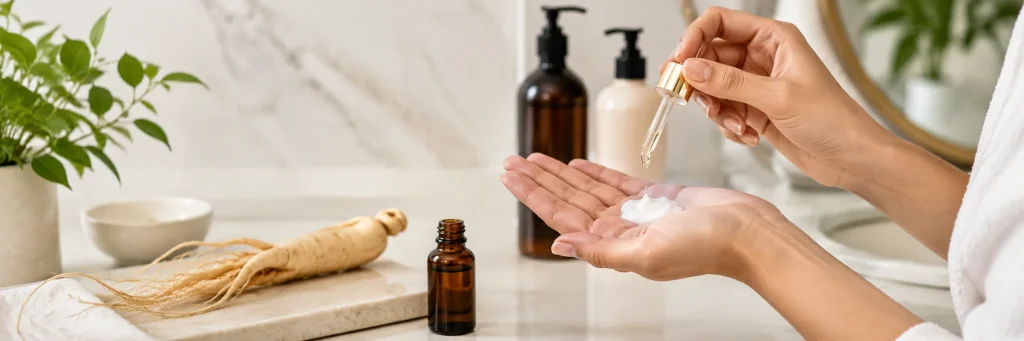
If you do not want to buy all new hair products, this is the way to go. You can buy pure organic panax ginseing extract from most reputable supplement or natural skincare brands, and just add a few drops to your shampoo or conditioner every time you wash.
the ratio I usually tell clients is 3 drops of pure ginseing extract for hair per tablespoon of product you are mixing it into. That is strong enough to work, not so strong that it will irritate your scalp.
you just mix it right in your palm before lathering, that is it. Super low effort, perfect for people who do not want to mess with multiple extra steps in their shower routine.
Using pre-made ginseng extract hair serums and treatments
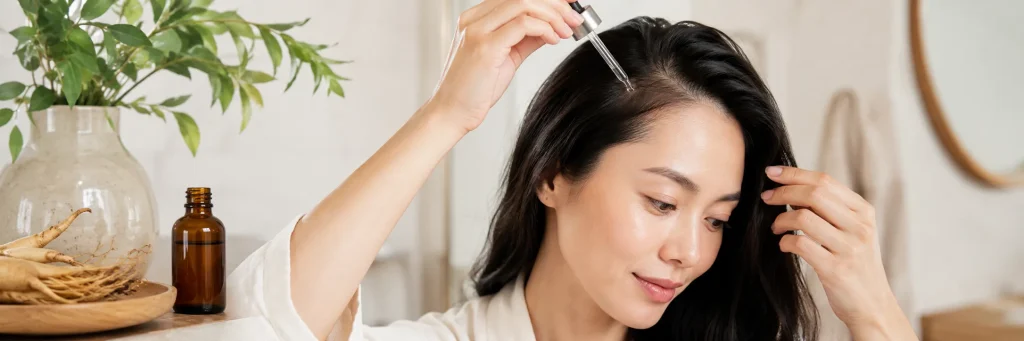
If you do not want to mix your own, there are tons of great pre-made serums and overnight treatments that already have ginseing extract for hair in them. These are usually leave-in products, so you apply them directly to your scalp after showering, or before bed, and do not wash them out.
I actually keep one on my nightstand. I have a little bit of thinning at my temples from years of wearing tight ponytails (oops, that is my own mistake to share) so I rub a drop or two into the area every other night.
have I seen results? It has only been 10 weeks, but I do notice a lot less shedding when I brush my hair now. So that is a win in my book.
| Method | Best For | Ease of Use | Expected Timeline |
| Mixed into shampoo/conditioner | People who hate extra steps | 10/10 | 8-12 weeks |
| Pre-made leave-in serum | People willing to add a step | 8/10 | 6-10 weeks |
How to Choose a High-Quality Ginseng Extract for Hair
ginseing extract for hair is not regulated the same way that prescription drugs are, so you really do have to read labels carefully. There is a lot of low quality stuff out there that has barely any actual extract in it, just a bunch of fillers. That drives me crazy, honestly.
Key ingredients to look for (and avoid) on product labels
First, look for actual “panax ginseng root extract” within the first five ingredients on the label. If it is at the very end, that means there is barely any in the product, and it will not do much of anything for you.
Things to avoid? Sulfates, artificial fragrances, and alcohol. Alcohol can dry out your scalp, which negates any of the benefits ginseing extract for hair might give you. Artificial fragrance is just a common irritant for sensitive skin, so that is an easy red flag.
I always look for products that are third-party tested, too. This means an independent lab checked to make sure what is on the label is actually in the bottle.
Difference between panax ginseng and other ginseng varieties for hair
Not all ginseng is the same when it comes to ginseing extract for hair. Panax ginseng (also called Korean ginseng or Asian ginseng) is the one that has all the research backing it for hair health.
Siberian ginseng is not actually the same plant at all. It has different active compounds, and there is almost zero research on it for hair growth. American ginseng is similar to panax, but it has lower levels of the ginsenosides that are the active compounds that help hair.
So if you are buying ginseing extract for hair, you want to look for panax ginseng specifically. That is the one that actually has a shot of working.
Potential Side Effects and Safety Considerations
ginseing extract for hair is very safe for most people when used topically, which is what we are talking about for hair care. But that does not mean there are zero possible issues.
Common mild reactions and who should use caution
The most common mild reaction is a little bit of redness or itching on the scalp, especially if you use too much too fast. I have only seen this with maybe three clients out of dozens I have worked with on ginseing extract for hair.
If you are pregnant or breastfeeding, you should check with your doctor before using any new herbal product, including ginseing extract for hair. There is not a lot of research on topical use in these groups, so it is better to err on the side of caution.
If you take blood thinning medications, you should also talk to your provider first. just to be safe, okay?
Patch testing tips for sensitive scalps
If you know you have sensitive skin or a sensitive scalp, you absolutely need to do a patch test before you slather ginseing extract for all over your head. It takes two minutes, and it can save you from a week of itchy irritation.
how do you do it? Just dab a tiny bit of the product on the inside of your elbow, cover it with a band-aid, and wait 24 hours. If you do not see any redness, swelling, or itching after that, it is probably safe to use on your scalp.
Simple enough, right? I always tell clients this step is non-negotiable if they have sensitive skin. No exceptions.
Frequently Asked Questions (FAQ)
How long does it take to see results from ginseing extract for hair?
Most people start to see a noticeable difference in shedding within 6 to 8 weeks of consistent use of ginseing extract for hair. For actual new growth that you can see and feel, you usually need to wait 12 to 16 weeks. Because hair grows roughly half an inch per month, it takes time for new growth to get long enough to notice. I know that sounds like a long time, but hair growth does not happen overnight, no matter what any influencer tells you. The 2023 study I mentioned earlier measured most of their significant changes at the 12 week mark, which matches what I have seen with my own clients. If you stop using it after two weeks because you do not see change, you are basically wasting your money.
Can ginseing extract for hair work for people with androgenetic alopecia?
Androgenetic alopecia is the most common type of hereditary thinning, both for men and women. The research on ginseing extract for hair in people with this condition is still pretty limited, but the small studies we do have show that it can help slow thinning and even stimulate some mild new growth when used consistently. It will not regrow a full head of hair on a completely bald scalp, of course, nothing does that without a transplant. But for mild to moderate androgenetic alopecia, it can be a great add-on to other treatments you might already be using. I have had a few clients with this condition who say it helped boost the results they were getting from minoxidil, with less irritation. That is a pretty big win in my book.
Is ginseing extract for hair safe for color-treated hair?
Yes, for most people, ginseing extract for hair is completely safe for color-treated hair. It does not strip color or change the pigment of your hair, unlike some other harsh hair growth treatments that can mess with dye. If you use a product that has other ingredients like sulfates or clarifying agents, those can fade your color, but the ginseing extract itself does not do anything. I know multiple people who color their hair regularly and use ginseing extract for hair with zero issues. Just make sure you pick a product that is formulated for color-treated hair, and you will be totally fine. No weird fading, no discoloration, nothing to worry about.
Can I use ginseing extract for hair every day?
Most people can use ginseing extract for hair every day with no problems, as long as you do not use too much and you do not have an allergic reaction. I usually recommend starting with every other day first, to let your scalp get used to it, then moving to daily use if you tolerate it well. If you start to notice any dryness or itching, cut back to every other day or a couple times a week. There is no need to overdo it. Even using it three times a week will give you benefits, you do not have to use it every single day to see results. Listen to your scalp, it will tell you what it needs.
Conclusion: Is Ginseng Extract Right for Your Hair?
If you are dealing with mild shedding or thinning, and you want to try a natural option before moving to stronger prescriptions, I think ginseing extract for hair is definitely worth trying. It is low risk for most people, it is relatively affordable, and there is some promising research to back up the claims people make about it.
I do not think it is a miracle cure for severe thinning or baldness, let us be honest about that. you do need to have realistic expectations when it comes to ginseing extract for hair. Results are not guaranteed, and it works better for some people than others.
In my years working as a nutritionist, I have found that ginseing extract for hair works really well as part of a broader hair health routine that includes good nutrition, gentle scalp care, and reducing stress where you can. It is not a replacement for any of that, but it can be a really helpful add-on.
Have you tried ginseing extract for hair? I would love to hear what your experience was. Drop a comment below and let me know!




Please leave us a message.