
High Purity Medical Grade SOD Manufacturer & Wholesale Price
2026-09-23
- What Is High Purity Medical Grade SOD?
- Why High Purity Matters in Clinical and Pharmaceutical Applications
- Technical Specifications and Quality Standards
- Manufacturing Process: From Source to Pure Powder
- Applications of High Purity Medical Grade SOD
- How to Choose the Right SOD Manufacturer: A Buyer’s Guide
- Common Challenges and Solutions in SOD Formulation
- FAQ: Frequently Asked Questions About High Purity Medical Grade SOD
- Storage and Handling Best Practices
- Conclusion: Securing Your Supply of Premium SOD
- Partnering with Jinan Meiyi Biotechnology for Reliable SOD Sourcing
High Purity Medical Grade SOD (Superoxide Dismutase) is a specialized enzymatic antioxidant engineered for clinical, pharmaceutical, and advanced cosmetic applications. Unlike standard agricultural or feed-grade variants, medical grade SOD undergoes rigorous purification processes to achieve purity levels exceeding 95%, often reaching 98-99% via HPLC analysis. It is characterized by low endotoxin levels, strict microbial control, and verified stability. This premium raw material is essential for manufacturers developing anti-inflammatory drugs, post-surgical recovery supplements, radiation protection therapies, and high-efficacy dermal repair products. Sourcing from a certified manufacturer ensures compliance with GMP, ISO, and relevant pharmacopoeia standards, guaranteeing batch-to-batch consistency and biological activity retention.
What Is High Purity Medical Grade SOD?
Superoxide Dismutase (SOD) is a metalloenzyme that serves as the body’s primary defense against oxidative stress. It catalyzes the dismutation of the superoxide radical ($O_2^-$) into ordinary molecular oxygen ($O_2$) and hydrogen peroxide ($H_2O_2$). While SOD exists in various forms, High Purity Medical Grade SOD refers specifically to extracts that meet stringent safety and efficacy criteria required for human internal use or application on compromised skin barriers.
In the context of B2B procurement and industrial manufacturing, “Medical Grade” is not merely a marketing term but a technical specification. It implies:
- Purity: Minimal presence of non-enzymatic proteins, pigments, or residual solvents.
- Activity: Verified enzymatic activity units (U/mg), typically standardized to ensure therapeutic dosage accuracy.
- Safety: Absence of pathogens, low bioburden, and negligible endotoxin content (<10 EU/mg).
- Source Traceability: Clear documentation of the biological source, whether bovine liver, melon extract (Cucumis melo), or microbial fermentation.
For pharmaceutical and high-end cosmetic formulators, using lower-grade SOD can lead to inconsistent product performance, potential immunogenic reactions, or regulatory rejection. Therefore, understanding the distinction between grades is critical for procurement decisions in 2026.
The Critical Difference Between Agricultural, Cosmetic, and Medical Grades
Not all SOD powders are created equal. The manufacturing process dictates the final application suitability. Below is a detailed comparison to help buyers distinguish between grades.
| Feature | Agricultural/Feed Grade | Standard Cosmetic Grade | High Purity Medical Grade |
|---|---|---|---|
| Purity Level | < 10% | 10% – 40% | > 95% (Up to 99%) |
| Source | Mixed plant waste, crude extracts | Melon extract, yeast fermentation | Controlled Fermentation, Bovine Liver (Pharma) |
| Endotoxin Level | Not Tested / High | Moderate | Extremely Low (< 10 EU/mg) |
| Microbial Limits | Loose standards | Standard cosmetic limits | Strict Pharmacopoeia Standards |
| Stability | Low, degrades rapidly | Moderate, requires stabilizers | High, often micro-encapsulated or lyophilized |
| Primary Application | Animal feed, crop protection | Anti-aging creams, lotions | Injectables, oral pharmaceuticals, clinical skincare |
| Documentation | Basic COA | COA, MSDS | COA, GMP Cert, DMF, Stability Data |
Why High Purity Matters in Clinical and Pharmaceutical Applications
The transition from standard cosmetic ingredients to medical-grade raw materials is driven by the need for predictability and safety. In clinical settings, the margin for error is zero. Impurities in lower-grade SOD can trigger adverse immune responses, especially when applied to broken skin or administered internally.
1. Enhanced Bioavailability and Efficacy
High purity SOD ensures that the active enzymatic units are delivered without interference from inert fillers or competing proteins. In pharmaceutical formulations, such as oral capsules for inflammatory bowel disease (IBD) or topical gels for burn treatment, the precise dosage of active SOD is crucial. Lower purity versions require higher volumes to achieve the same enzymatic activity, which can complicate formulation chemistry and increase the risk of allergenic exposure.
2. Regulatory Compliance and Market Access
Regulatory bodies like the FDA (USA), EMA (Europe), and NMPA (China) have tightened requirements for biological raw materials. Medical grade SOD manufacturers provide comprehensive dossiers, including Drug Master Files (DMF) where applicable. This documentation is essential for companies seeking approval for new drug applications (NDAs) or medical device registrations. Using a non-compliant supplier can delay product launches by months or years.
3. Reduced Risk of Immunogenicity
Crude extracts contain heterologous proteins that the human immune system may recognize as foreign invaders. High purity processing removes these non-SOD proteins. This is particularly vital for injectable applications or products used on patients with compromised immune systems. The removal of endotoxins is also a key differentiator; endotoxins can cause fever and inflammation, counteracting the therapeutic benefits of SOD.
Technical Specifications and Quality Standards
When evaluating a wholesale supplier for High Purity Medical Grade SOD, buyers must scrutinize the technical data sheet. The following parameters define the quality benchmark for 2026 industry standards.
Key Performance Indicators (KPIs)
- Enzymatic Activity: Typically measured in Units per milligram (U/mg). One Unit is defined as the amount of enzyme that inhibits the reduction of cytochrome c by 50% in a coupled xanthine/xanthine oxidase system. Medical grade usually ranges from 3,000 U/mg to over 10,000 U/mg depending on the specific activity standard used.
- Purity (HPLC): High-Performance Liquid Chromatography should show a single dominant peak corresponding to SOD, with minimal shoulder peaks indicating impurities. Purity >95% is the standard threshold for medical classification.
- Moisture Content: Lyophilized (freeze-dried) powder should have moisture content below 5% to ensure long-term stability and prevent microbial growth during storage.
- pH Value: The solution pH should be neutral to slightly acidic (typically 6.0-7.5) to maintain enzyme stability in physiological conditions.
- Heavy Metals: Must comply with ICH Q3D guidelines. Lead, arsenic, cadmium, and mercury levels must be below detectable limits or within strict ppm thresholds.
Certifications and Compliance
A reputable manufacturer will hold current certifications that validate their production environment. Key certifications include:
- ISO 9001:2015: Quality Management Systems.
- ISO 22000 or FSSC 22000: Food Safety Management (for oral supplements).
- GMP (Good Manufacturing Practice): Essential for any facility producing medical-grade ingredients. This ensures cleanroom environments, validated cleaning procedures, and rigorous personnel training.
- Kosher and Halal: Important for global market access, particularly in the Middle East and for specific consumer demographics in the West.
- Non-GMO Project Verified: Increasingly requested by European and North American buyers to ensure the source organism has not been genetically modified.
Manufacturing Process: From Source to Pure Powder
Understanding the production lifecycle helps buyers assess the reliability of the supply chain. The production of High Purity Medical Grade SOD involves several sophisticated steps designed to maximize yield while preserving enzymatic integrity.
Step 1: Source Selection and Extraction
The two primary sources for high-purity SOD are bovine liver and microbial fermentation (using yeast or bacteria like Saccharomyces cerevisiae or E. coli).
- Bovine Liver: Traditionally yields Cu/Zn-SOD. It requires strict veterinary health certificates to ensure the absence of BSE (Mad Cow Disease). The extraction involves homogenization and initial clarification.
- Fermentation: Produces Mn-SOD or Fe-SOD. This method is scalable, consistent, and free from animal-derived pathogen risks. It is increasingly preferred in 2026 for its sustainability and ethical profile.
Step 2: Purification and Chromatography
This is the most critical stage for achieving “Medical Grade” status. The crude extract undergoes multiple rounds of chromatography:
- Ion Exchange Chromatography: Separates SOD from other proteins based on charge differences.
- Affinity Chromatography: Uses specific ligands to bind SOD selectively, removing unrelated proteins.
- Ultrafiltration: Concentrates the enzyme and removes low molecular weight impurities.
Step 3: Stabilization and Lyophilization
SOD is sensitive to heat and pH changes. To preserve activity, the purified liquid is freeze-dried (lyophilized). This process removes water under vacuum at low temperatures, resulting in a stable powder. Some advanced manufacturers employ micro-encapsulation technologies, coating the SOD molecules with lipids or polymers to protect them from gastric acid if intended for oral use, or from oxidation in topical formulations.
Step 4: Quality Control and Testing
Every batch undergoes rigorous testing. This includes activity assays, sterility testing, endotoxin testing (LAL test), and identity verification via mass spectrometry. Only batches that meet all specifications are released for wholesale distribution.
Applications of High Purity Medical Grade SOD
The versatility of High Purity Medical Grade SOD allows it to be integrated into various high-value product lines. Its primary mechanism—neutralizing superoxide radicals—makes it indispensable in treatments involving oxidative stress and inflammation.
1. Pharmaceutical and Nutraceutical Industry
Anti-Inflammatory Drugs: SOD is used as an active pharmaceutical ingredient (API) or adjunct therapy for conditions like rheumatoid arthritis, osteoarthritis, and inflammatory bowel disease. Its ability to reduce oxidative damage in tissues accelerates healing.
Radiation Protection: Patients undergoing radiotherapy for cancer often suffer from tissue damage due to radiation-induced free radicals. High purity SOD supplements or topical agents help mitigate this collateral damage, protecting healthy cells.
Cardiovascular Health: Oxidative stress is a key factor in hypertension and atherosclerosis. SOD supplements support endothelial function and vascular health.
2. Advanced Dermatology and Medical Aesthetics
Post-Procedure Care: After laser resurfacing, chemical peels, or microneedling, the skin barrier is compromised. Medical grade SOD gels or serums reduce redness, swelling, and recovery time by neutralizing the inflammatory response.
Treatment of Chronic Skin Conditions: For psoriasis, eczema, and acne, SOD helps modulate the immune response in the skin. Unlike standard cosmetic antioxidants, medical grade SOD penetrates deeper and acts more effectively due to its high purity and lack of irritants.
Anti-Aging Injectables: Emerging trends in 2026 include the use of SOD in mesotherapy and injectable cocktails to combat intrinsic aging at the cellular level.
3. Ophthalmology
Dry Eye and Corneal Repair: Eye drops containing stabilized SOD are used to treat dry eye syndrome and protect the cornea from UV-induced oxidative stress. The high purity is crucial here to prevent eye irritation.
How to Choose the Right SOD Manufacturer: A Buyer’s Guide
Selecting a wholesale partner for High Purity Medical Grade SOD is a strategic decision. The wrong choice can lead to supply chain disruptions, quality failures, and reputational damage. Here are the critical factors to evaluate.
1. Verify Manufacturing Capabilities
Do not rely solely on brochures. Request a virtual or physical audit of the facility. Look for:
- Cleanroom classifications (e.g., Class 10,000 or better for final processing).
- Advanced chromatography equipment (HPLC, FPLC).
- In-house testing laboratories with validated methods.
2. Assess Supply Chain Stability
Ask about the source of raw materials. If they use bovine liver, do they have multiple approved slaughterhouses? If they use fermentation, what is the bioreactor capacity? A manufacturer with vertical integration (controlling both upstream raw materials and downstream processing) offers greater price stability and supply security.
3. Evaluate Technical Support
A top-tier manufacturer acts as a partner, not just a vendor. They should offer:
- Formulation advice: Helping you integrate SOD into your specific product matrix.
- Stability data: Providing long-term stability studies under various conditions.
- Regulatory support: Assisting with dossier preparation for local health authorities.
4. Check Batch Consistency
Request Certificates of Analysis (COAs) from the last three batches. Compare the activity levels, purity, and moisture content. Significant variations indicate poor process control. Consistent data reflects a robust Quality Management System.
5. Minimum Order Quantity (MOQ) and Pricing
While price is important, it should not be the sole determinant. Extremely low prices often signal corner-cutting in purification or testing. Evaluate the total cost of ownership, including the risk of batch rejection. Flexible MOQs are beneficial for R&D phases, while volume discounts should be available for commercial production.
Common Challenges and Solutions in SOD Formulation
Even with high-purity raw material, formulating SOD into a final product presents challenges. Understanding these helps in selecting the right grade and processing aid.
Challenge 1: Enzyme Instability
SOD is sensitive to heat, light, and extreme pH. Solution: Use lyophilized powder stored at 2-8°C. In formulations, incorporate stabilizers like trehalose or mannitol. For oral products, consider enteric-coated capsules or micro-encapsulated SOD to survive stomach acid.
Challenge 2: Low Skin Penetration
Native SOD has a large molecular weight, limiting transdermal absorption. Solution: Utilize penetration enhancers or nano-encapsulation technologies. Some manufacturers offer modified SOD with improved bioavailability profiles. Discuss these options with your supplier.
Challenge 3: Interaction with Other Ingredients
SOD can be deactivated by certain metal ions or oxidizing agents. Solution: Conduct compatibility testing early in the R&D phase. Avoid combining SOD with strong chelating agents unless necessary. Maintain a pH range of 5.5-7.5 in topical formulations.
FAQ: Frequently Asked Questions About High Purity Medical Grade SOD
What is the shelf life of High Purity Medical Grade SOD?
When stored properly in a cool, dry place (2-8°C recommended) in its original sealed packaging, lyophilized High Purity Medical Grade SOD typically has a shelf life of 24 to 36 months. Once reconstituted or opened, it should be used immediately or stored under strict refrigeration for a short period, as enzymatic activity degrades upon exposure to moisture and air.
Can Medical Grade SOD be used in injectable products?
Yes, but only if it is specifically manufactured and tested for injectable use. This requires sterile filtration, extremely low endotoxin levels (<0.5 EU/mg), and absence of pyrogens. Not all "medical grade" SOD is suitable for injection; you must specify "injectable grade" or "parenteral grade" when contacting the manufacturer.
What is the difference between Cu/Zn-SOD and Mn-SOD?
Cu/Zn-SOD (Copper/Zinc Superoxide Dismutase) is primarily found in the cytoplasm of eukaryotic cells and is often derived from bovine liver or melon. Mn-SOD (Manganese Superoxide Dismutase) is located in the mitochondria and is commonly produced via microbial fermentation. Both are effective antioxidants, but Mn-SOD is often preferred for its stability and ease of production in a controlled, animal-free environment.
How do I verify the activity of the SOD I purchased?
The supplier should provide a COA with activity measured in U/mg. You can also perform independent testing using a standardized assay kit (e.g., the WST-1 method or Cytochrome c reduction method) in your own lab or via a third-party testing agency to verify the claimed activity.
Is High Purity SOD vegan-friendly?
It depends on the source. SOD derived from bovine liver is not vegan. However, SOD produced through microbial fermentation (yeast or bacteria) or extracted from plants (like melon) is vegan-friendly. Always check the source declaration with your manufacturer.
What packaging is best for wholesale SOD?
High Purity Medical Grade SOD is hygroscopic and sensitive to oxygen. It should be packaged in double-layered, food-grade polyethylene bags inside aluminum foil bags or drums with desiccants. For smaller quantities, glass bottles with tight-sealing caps are appropriate. Ensure the packaging is light-resistant.
Storage and Handling Best Practices
To maintain the integrity of High Purity Medical Grade SOD, strict handling protocols are necessary.
- Temperature Control: Store at 2-8°C for long-term storage. Avoid freezing and thawing cycles, which can denature the enzyme.
- Moisture Protection: Keep containers tightly sealed. Use desiccants in storage areas. Reconstitute only the amount needed for immediate use.
- Light Sensitivity: Protect from direct sunlight and strong artificial light. Use amber glass or opaque containers.
- Cross-Contamination: Use dedicated scoops and equipment for SOD handling. Clean surfaces thoroughly before and after use to prevent microbial contamination.
Conclusion: Securing Your Supply of Premium SOD
In the competitive landscape of 2026, the quality of your raw materials directly defines the efficacy and safety of your final product. High Purity Medical Grade SOD is not just an ingredient; it is a critical component that drives therapeutic outcomes in pharmaceuticals, accelerates recovery in medical aesthetics, and supports health in advanced nutraceuticals. By choosing a manufacturer that prioritizes purity, transparency, and regulatory compliance, you safeguard your brand reputation and ensure consistent product performance.
Whether you are developing a new anti-inflammatory drug, a post-laser care serum, or a high-end dietary supplement, the choice of SOD grade matters. Do not compromise on purity. Partner with a supplier who understands the nuances of enzymatic stability and regulatory demands.
Partnering with Jinan Meiyi Biotechnology for Reliable SOD Sourcing
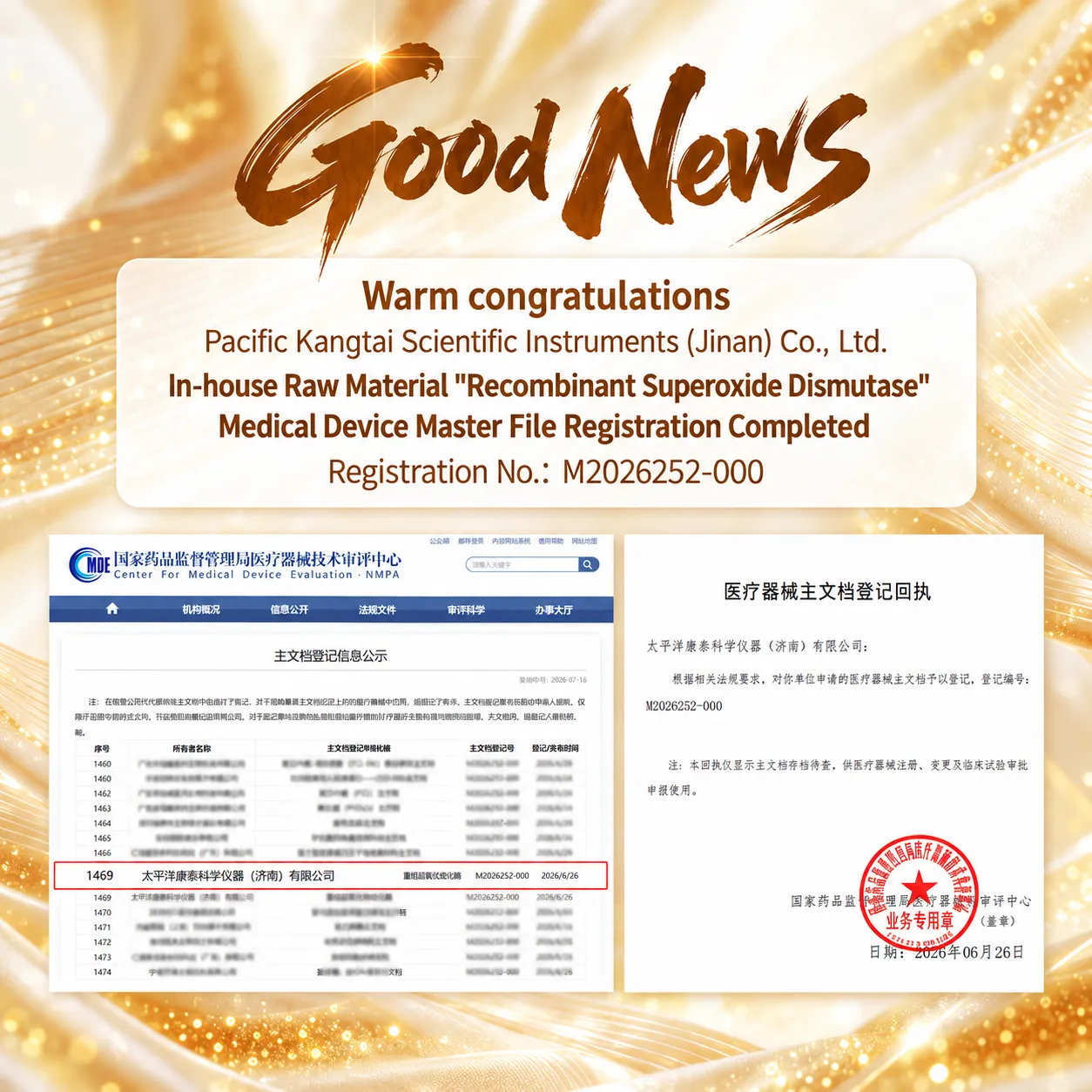
Navigating the complex landscape of bioactive ingredient procurement requires more than just finding a vendor; it requires a strategic partner who bridges the gap between scientific rigor and market responsiveness. This is where Jinan Meiyi Biotechnology Co., Ltd. distinguishes itself. Headquartered in Jinan, Shandong Province, and operating as a subsidiary of Pacific Kangtai Scientific Instruments, Jinan Meiyi Biotechnology has established itself as a trusted enabler for innovation across the global personal care and aesthetic medicine value chain.
Unlike traditional manufacturers, Jinan Meiyi Biotechnology operates as a specialized sourcing and quality-assured distribution partner. The company does not engage in raw material manufacturing itself; instead, it leverages a robust, globally integrated supply chain network to connect clients with internationally recognized, certified manufacturers. This model allows Jinan Meiyi to focus exclusively on what matters most to B2B clients: quality assurance, regulatory compliance, and supply chain stability.
Why Choose Jinan Meiyi Biotechnology for Your SOD Needs?
- Rigorous Quality Assurance & Traceability: Every batch of High Purity Medical Grade SOD distributed by Jinan Meiyi undergoes comprehensive evaluation prior to inclusion in their portfolio. Selection criteria are grounded in efficacy data, stability profiles, and compatibility with modern formulation standards. Clients receive full technical dossiers, including Certificates of Analysis (COA), Safety Data Sheets (SDS), and regulatory status summaries, ensuring complete transparency from origin to end-user.
- Specialization in Bioactive Technologies: With a strong emphasis on applications in cosmetics and medical aesthetics, Jinan Meiyi’s scientifically trained team stays at the forefront of international research. They understand the specific needs of R&D laboratories, CDMOs, and aesthetic clinics, offering tailored solutions that align with evolving regional and international market needs.
- Partnership-Oriented Service Model: Jinan Meiyi Biotechnology prioritizes collaboration over simple transactions. Their service philosophy includes technical consultation, regulatory intelligence sharing, and collaborative problem-solving. Whether you need assistance with formulation advice, stability data interpretation, or dossier preparation for health authorities, their team acts as an extension of your own R&D department.
- Global Reach with Local Responsiveness: Serving clients across Asia, Europe, and North America, Jinan Meiyi maintains strict control over storage conditions, shipping protocols, and delivery timelines. This ensures that the integrity of sensitive enzymes like SOD is preserved throughout the logistics process, reducing sourcing complexity and maintaining client confidence.
By partnering with Jinan Meiyi Biotechnology, companies can reduce the risks associated with raw material sourcing while gaining access to high-integrity, functionally validated ingredients. Their disciplined curation methodology ensures that every product, from active ingredients to finished medical aesthetic devices, meets the highest standards of clinical relevance and technological differentiation.
Ready to elevate your product formulation?
Jinan Meiyi Biotechnology offers customizable solutions for B2B clients worldwide, from small-scale R&D samples to large-scale commercial production. We provide the technical support and quality assurance you need to bring safe, effective, and compliant products to market.
Contact our technical sales team today to request a sample of High Purity Medical Grade SOD, review our latest COAs, or discuss your specific formulation requirements.
Explore Our Full Range of Enzymatic Solutions & Request a Quote





Please leave us a message.