

Hydroxyapatite Uses: From Toothpaste to Advanced Bone Treatments
2026-03-06
Hydroxyapatite has become one of the most important biomaterials used in modern healthcare and product development. From advanced toothpaste formulations to orthopedic implants and bone regeneration technologies, this mineral plays a key role in both preventive care and medical treatment.
For professionals working in toothpaste manufacturing, orthopedic medicine, biomaterials research, and product innovation, understanding how hydroxyapatite functions can unlock new opportunities in formulation, design, and clinical outcomes. In this article, we explore how hydroxyapatite works, where it is used today, and how professionals can choose the right form of this versatile material for their applications.
Introduction – Why Hydroxyapatite Matters
Hydroxyapatite (HA) is a naturally occurring calcium phosphate mineral with the chemical formula Ca₁₀(PO₄)₆(OH)₂. It is the primary structural component of human bones and teeth, accounting for roughly 70% of bone mass and 97% of tooth enamel. Because of this natural compatibility with the human body, hydroxyapatite has become one of the most widely studied and utilized biomaterials in both dentistry and orthopedics.
Hydroxyapatite can be obtained in two main ways:
-
Natural sources, such as bovine bone or marine materials
-
Synthetic production, created through controlled laboratory processes
Synthetic hydroxyapatite is often preferred in medical and dental applications because it allows precise control over purity, particle size, and crystallinity.
The growing popularity of hydroxyapatite is driven by several key advantages:
-
Excellent biocompatibility
-
Ability to promote enamel remineralization
-
Strong support for bone regeneration
-
Low toxicity and minimal immune reaction
Because of these properties, hydroxyapatite has become a critical ingredient in both consumer oral care products and advanced medical treatments.
Hydroxyapatite in Oral Care
One of the most visible and rapidly expanding applications of hydroxyapatite is in oral care products, particularly toothpaste.
Toothpaste & Enamel Remineralization
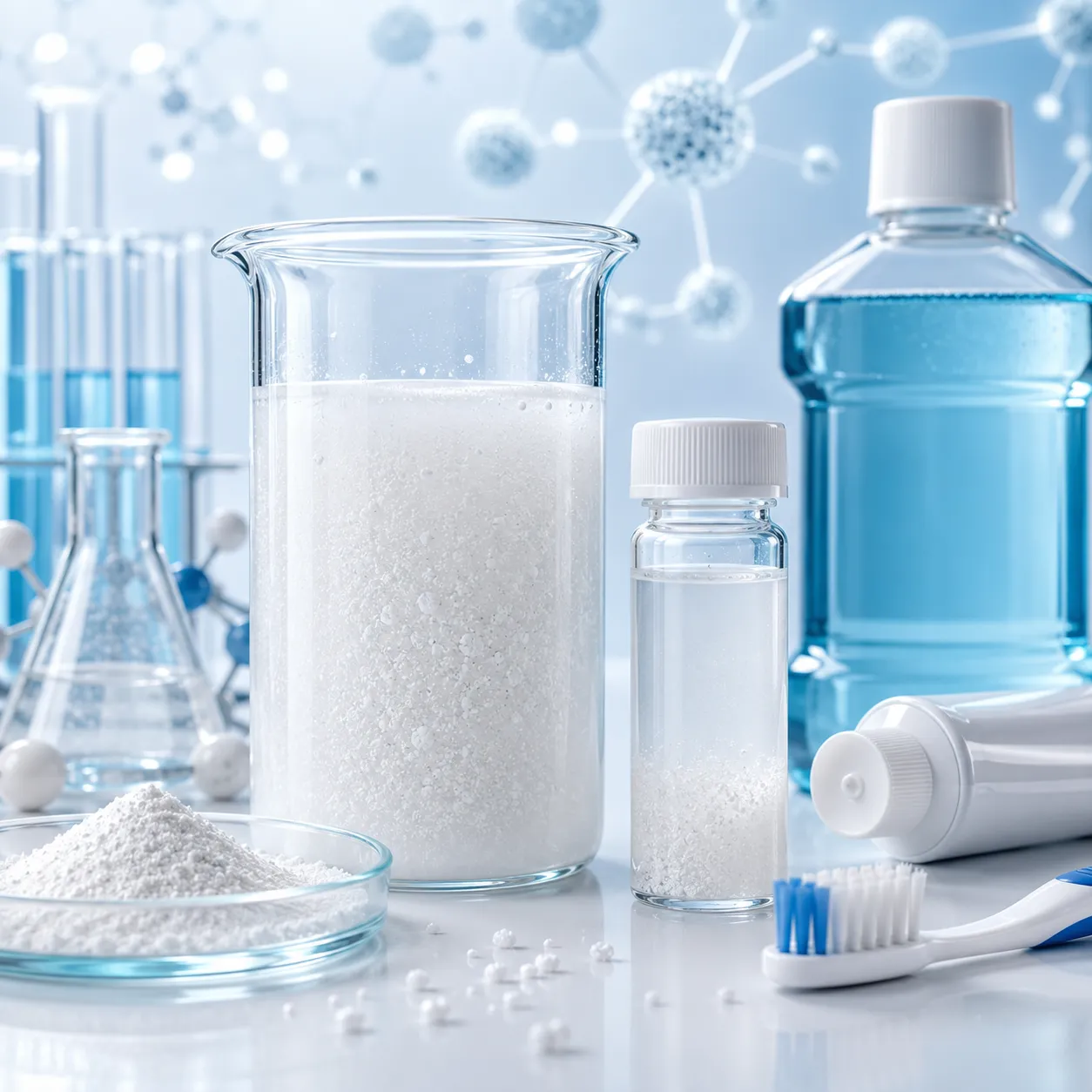
Hydroxyapatite toothpaste works by supplying minerals that can help repair and strengthen tooth enamel. When applied during brushing, micro or nano-sized hydroxyapatite particles adhere to the enamel surface and fill microscopic defects.
This process provides several benefits:
-
Helps rebuild weakened enamel
-
Reduces tooth sensitivity
-
Smooths the tooth surface
-
Protects against acid erosion
For toothpaste manufacturers, hydroxyapatite offers a compelling alternative or complement to traditional fluoride-based formulations. While fluoride strengthens enamel by forming fluorapatite, hydroxyapatite works by directly replacing lost mineral content.
Key differences include:
| Feature | Hydroxyapatite | Fluoride |
|---|---|---|
| Mechanism | Replaces lost minerals | Strengthens existing enamel |
| Sensitivity relief | Excellent | Moderate |
| Biocompatibility | Very high | High |
| Suitability for daily use | Safe and gentle | Requires dosage control |
As consumer demand grows for biomimetic and naturally inspired ingredients, hydroxyapatite toothpaste has gained significant popularity in both premium oral care brands and clinical dental products.
Dental Treatments & Restoratives
Beyond toothpaste, hydroxyapatite is also used in various dental treatments and restorative materials.
Common applications include:
-
Dental coatings for implants
-
Bone graft materials in oral surgery
-
Fillers in restorative dental composites
-
Preventive treatments for early enamel lesions
Hydroxyapatite coatings on dental implants improve osseointegration, meaning the implant can bond more effectively with surrounding bone tissue.
Clinical studies have shown that hydroxyapatite-based dental materials can:
-
Improve implant stability
-
Support faster healing
-
Reduce post-treatment complications
For dental professionals and manufacturers of dental materials, hydroxyapatite represents a highly adaptable material with strong clinical backing.
Hydroxyapatite in Orthopedics & Bone Health
While hydroxyapatite is widely recognized in oral care, its impact in orthopedic medicine is even more profound.
Bone Grafts & Implants
Hydroxyapatite is commonly used as a bone graft substitute because it closely resembles the mineral structure of natural bone.
When implanted in the body, hydroxyapatite can:
-
Act as a scaffold for new bone growth
-
Encourage osteoblast activity (bone-forming cells)
-
Integrate with surrounding bone tissue
This makes it valuable for treating:
-
Bone defects
-
Fractures
-
Spinal fusion procedures
-
Dental bone grafting
Compared with traditional graft materials, hydroxyapatite offers several advantages:
-
No risk of disease transmission
-
High structural stability
-
Long-term biocompatibility
Because of these benefits, it is frequently used in synthetic bone substitutes and implant coatings.
Joint & Orthopedic Treatments
Hydroxyapatite also plays a role in the design of orthopedic prosthetics and joint replacement technologies.
Applications include:
-
Coatings for titanium implants
-
Hip and knee prosthetics
-
Spinal implants
-
Bone cement additives
When applied as a coating, hydroxyapatite improves the surface properties of metal implants, allowing bone tissue to attach more effectively.
For orthopedic surgeons and medical device designers, hydroxyapatite enhances the long-term stability and performance of implants, reducing the likelihood of loosening or failure.
Advanced & Emerging Applications
As biomaterial science advances, hydroxyapatite continues to find new applications across multiple fields.
Tissue Engineering & Regenerative Medicine
Researchers are exploring hydroxyapatite as a component in 3D-printed bone scaffolds and regenerative therapies.
In tissue engineering, hydroxyapatite can be combined with materials such as:
-
Collagen
-
Biodegradable polymers
-
Stem cell matrices
These hybrid materials help create structures that support new tissue growth and regeneration.
Cosmetic & Aesthetic Treatments
Hydroxyapatite is also used in certain dermal fillers and cosmetic treatments designed to stimulate collagen production and improve skin structure.
Although these applications are still evolving, they demonstrate the versatility of hydroxyapatite as a biomaterial beyond traditional medical uses.
Choosing the Right Hydroxyapatite for Your Needs
For manufacturers, researchers, and healthcare providers, selecting the appropriate form of hydroxyapatite is essential for achieving the desired performance.
Key factors to consider include:
Natural vs Synthetic Hydroxyapatite
-
Natural hydroxyapatite may contain trace minerals that mimic biological materials.
-
Synthetic hydroxyapatite offers higher purity and more consistent quality.
Most medical and pharmaceutical applications rely on high-purity synthetic HA.
Particle Size and Structure
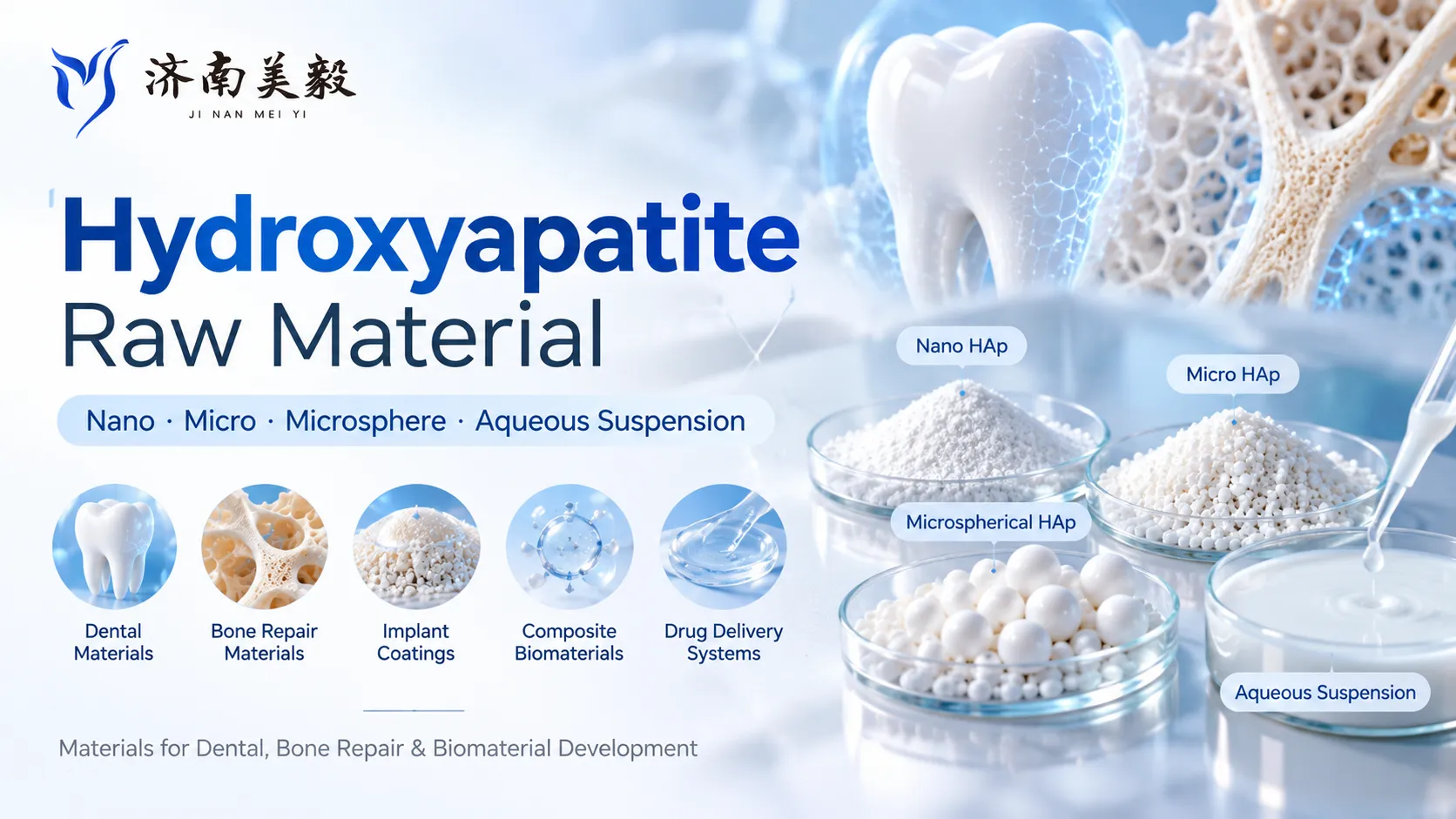
Hydroxyapatite is available in several forms:
-
Nano hydroxyapatite – commonly used in toothpaste and cosmetics
-
Micro hydroxyapatite – used in dental care and coatings
-
Porous hydroxyapatite blocks – used for bone grafting
The particle size affects surface area, absorption, and biological interaction.
Purity and Manufacturing Standards
Professionals should also evaluate:
-
Calcium-to-phosphate ratio
-
Crystallinity
-
Sterility standards
-
Manufacturing certification
For industries such as medical devices and dental materials, sourcing hydroxyapatite from reliable suppliers with strict quality control is critical.
Safety, Efficacy, and Regulatory Considerations
Hydroxyapatite has been extensively studied and is widely regarded as safe for both dental and medical applications.
Numerous clinical studies confirm its:
-
High biocompatibility
-
Low toxicity
-
Minimal inflammatory response
Regulatory frameworks vary by region, but hydroxyapatite is generally approved for use in:
-
Medical implants
-
Dental products
-
Cosmetic formulations
Manufacturers should ensure compliance with relevant standards such as:
-
ISO medical device regulations
-
GMP manufacturing practices
-
Regional health authority approvals
Adhering to these standards ensures both product safety and clinical effectiveness.
Conclusion – Maximizing Hydroxyapatite Benefits
Hydroxyapatite has evolved from a simple biomineral into a key material driving innovation in dentistry, orthopedics, and regenerative medicine. Its ability to mimic the natural structure of bones and teeth makes it uniquely suited for applications ranging from everyday toothpaste to advanced surgical implants.
For professionals working in toothpaste manufacturing, dental care, orthopedic medicine, and biomaterial research, understanding how hydroxyapatite functions can open the door to better product design and improved patient outcomes.
As research continues and new technologies emerge—such as 3D-printed bone scaffolds and next-generation biomaterials—the importance of hydroxyapatite will only continue to grow.
If you are exploring new ways to incorporate hydroxyapatite into oral care products, medical devices, or orthopedic treatments, now is the time to evaluate how this powerful biomaterial can support your innovation goals.
Start exploring hydroxyapatite solutions today and discover how this remarkable mineral can elevate both product performance and patient care.






Please leave us a message.