

Hydroxyapatite in Modern Biomaterials: Properties, Applications and Quality Requirements
2026-02-11
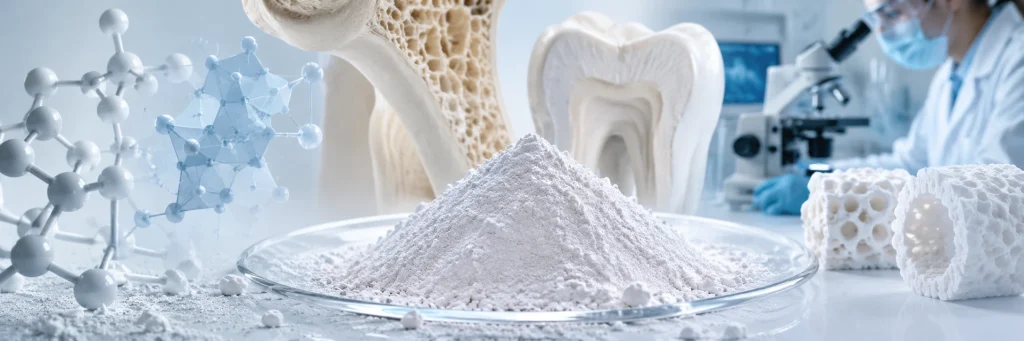
Hydroxyapatite in modern biomaterials has become an important topic for medical device developers, dental material manufacturers, biotechnology companies and oral care formulators. As a calcium phosphate material with a chemical structure similar to the mineral phase of human bone and teeth, hydroxyapatite offers a unique combination of biocompatibility, bioactivity and functional adaptability.
Today, hydroxyapatite powder is used in bone repair materials, implant coatings, tissue engineering scaffolds, protein purification systems and advanced toothpaste formulations. Its role has expanded from traditional bone graft applications to a broader biomaterial platform that supports innovation across healthcare, biotechnology and personal care industries.
For professional buyers and formulation teams, understanding the material properties, application differences and quality requirements of hydroxyapatite is essential before selecting the right grade for product development.
What Makes Hydroxyapatite Important in Modern Biomaterials?
Hydroxyapatite is valued in modern biomaterials because it closely resembles the inorganic mineral component naturally found in bone and teeth. This structural similarity helps explain why it is widely studied and used in orthopedic, dental and regenerative applications.
Unlike many inert materials, hydroxyapatite can interact with biological environments. In bone-related applications, it may support cell attachment and mineral integration when used in suitable forms. In dental applications, hydroxyapatite particles can be used in enamel care formulations because of their mineral compatibility with tooth surfaces.
Its importance also comes from its versatility. Depending on particle size, crystallinity, porosity and purity, hydroxyapatite can be designed for different applications, including:
- Bone defect filling materials
- Dental and maxillofacial repair products
- Titanium implant coatings
- Porous tissue engineering scaffolds
- Protein purification media
- Toothpaste and oral care formulations
- Functional composite biomaterials
This adaptability makes hydroxyapatite powder a strategic material for companies developing next-generation biomaterials.
Key Material Properties of Hydroxyapatite Powder
The performance of hydroxyapatite depends not only on its chemical identity, but also on its physical and structural characteristics. Buyers should evaluate these properties carefully because different applications require different technical specifications.
Chemical Composition and Ca/P Ratio
Hydroxyapatite has the chemical formula Ca₁₀(PO₄)₆(OH)₂. One of the key indicators used to evaluate hydroxyapatite quality is the calcium-to-phosphorus ratio, commonly known as the Ca/P ratio. A theoretical stoichiometric hydroxyapatite material has a Ca/P ratio close to 1.67.
For biomaterial applications, chemical consistency matters. Variations in composition may affect solubility, stability, biological response and compatibility with downstream processing. High-quality hydroxyapatite powder should be supported by clear documentation, including a Certificate of Analysis, technical data sheet and relevant safety information.
Important chemical quality indicators may include:
- Ca/P ratio
- Assay or purity
- Heavy metal limits
- Residual impurities
- pH value
- Loss on drying
- Microbial control, when required
For medical, dental or biotechnology applications, tighter quality control is often required compared with general industrial or cosmetic applications.
Particle Size, Surface Area and Crystallinity
Particle size is one of the most important parameters when selecting hydroxyapatite powder. Nano-scale and micro-scale hydroxyapatite can behave differently in formulation systems and biological environments.
Nano hydroxyapatite usually provides a higher specific surface area, which may improve surface interaction and dispersion in certain applications. This makes it attractive for toothpaste formulations, bioactive composites and research-focused regenerative materials.
Micro-scale hydroxyapatite is often preferred where bulk structure, handling stability or lower reactivity is desired. In bone repair materials, particle morphology, porosity and crystallinity can influence scaffold performance and material behavior.
Key physical parameters include:
- Particle size distribution
- Specific surface area
- Morphology
- Crystallinity
- Porosity
- Bulk density
- Dispersion behavior
- Thermal stability
The best particle size depends on the final application. A toothpaste manufacturer, a bone graft developer and a chromatography media producer may all require different hydroxyapatite specifications.
Biocompatibility, Bioactivity and Osteoconductivity
Hydroxyapatite is widely recognized for three important biomaterial properties: biocompatibility, bioactivity and osteoconductivity.
Biocompatibility refers to the material’s ability to perform in contact with biological systems without causing unacceptable local or systemic responses. Bioactivity describes the ability of a material to interact with biological tissues rather than remain completely inert. Osteoconductivity means the material can provide a surface or scaffold that supports bone growth along its structure.
These properties explain why hydroxyapatite is widely used in bone-related biomaterials. However, the final performance depends on many factors, including material purity, particle design, processing method, sterilization compatibility and final device design.
Hydroxyapatite for Bone Repair Materials
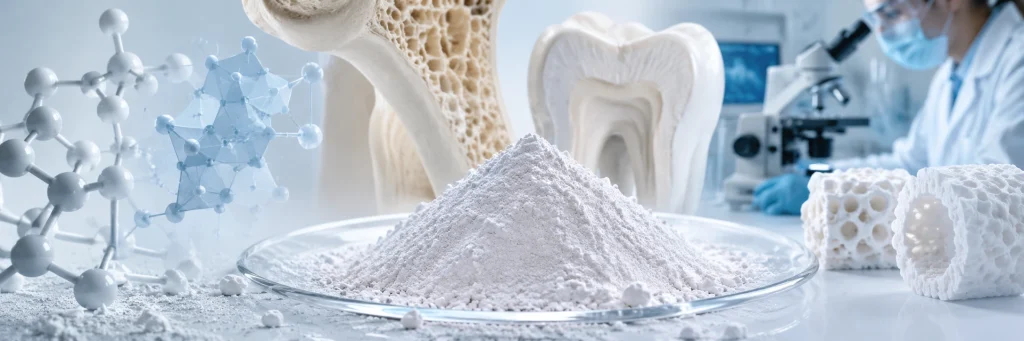
Bone repair is one of the most established application areas for hydroxyapatite. Because it resembles natural bone mineral, hydroxyapatite is commonly used in materials designed to support bone regeneration, defect filling and structural repair.
Orthopedic Bone Grafting
In orthopedic applications, hydroxyapatite can be used as part of bone graft substitutes or composite materials. It may help fill bone defects and provide a mineral scaffold for bone tissue interaction.
Typical orthopedic applications include:
- Bone void filling
- Spinal fusion support materials
- Trauma-related bone defect repair
- Composite graft materials
- Porous ceramic scaffolds
Pure hydroxyapatite has good bioactivity but limited mechanical toughness compared with natural bone. Therefore, it is often combined with other materials such as collagen, polymers, tricalcium phosphate or bioactive glass to balance biological performance and mechanical requirements.
For load-bearing applications, developers must carefully evaluate compressive strength, degradation behavior, porosity and long-term stability.
Dental and Maxillofacial Repair
Hydroxyapatite is also important in dental and maxillofacial biomaterials. It can be used in applications involving alveolar ridge augmentation, periodontal repair, sinus lift procedures and jawbone defect management.
In dentistry, hydroxyapatite-based materials are valued because they can provide mineral support in areas where bone volume or structure needs to be restored. The material may be used alone or as part of a composite system depending on the intended clinical application.
For dental material developers, important selection factors include:
- Particle size and granule structure
- Resorption profile
- Sterility requirements
- Handling properties
- Compatibility with blood or biological fluids
- Packaging and shelf-life stability
Because these applications are highly regulated, material traceability and documentation are essential.
Porous Scaffolds and Composite Systems
Porous hydroxyapatite scaffolds are widely studied in bone tissue engineering. Porosity allows space for cell migration, vascularization and tissue ingrowth, while the mineral phase provides a bone-like environment.
However, increasing porosity often reduces mechanical strength. This means scaffold design must balance biological accessibility with structural integrity. For this reason, hydroxyapatite is frequently used in composite biomaterials rather than as a single-phase material.
Common composite systems include:
- Hydroxyapatite-collagen composites
- Hydroxyapatite-polymer scaffolds
- Hydroxyapatite-tricalcium phosphate blends
- Hydroxyapatite-loaded hydrogels
- 3D printed hydroxyapatite-based structures
These systems are designed to better mimic the hierarchical structure of natural bone.
Hydroxyapatite Implant Coatings
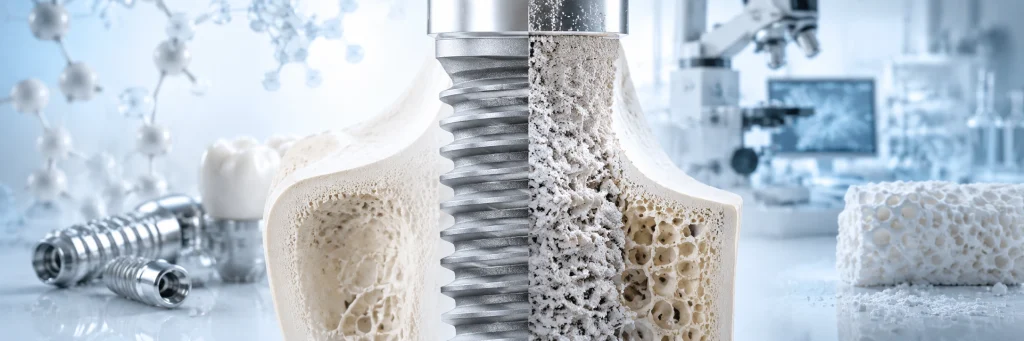
Hydroxyapatite implant coatings are widely used to improve the surface bioactivity of metallic implants, especially titanium-based orthopedic and dental implants.
Titanium provides mechanical strength, while hydroxyapatite provides a more bone-like surface chemistry. This combination can help create a biological interface between the implant and surrounding bone tissue.
Hydroxyapatite coatings may be applied through different techniques, including plasma spraying, electrophoretic deposition, sol-gel coating and other surface treatment methods. The coating method can affect adhesion strength, crystallinity, thickness and long-term stability.
Key quality factors for hydroxyapatite implant coatings include:
- Coating uniformity
- Adhesion strength
- Phase purity
- Crystallinity
- Surface roughness
- Dissolution behavior
- Sterilization compatibility
For implant manufacturers, hydroxyapatite coating performance must be evaluated not only as a raw material property, but also as part of the final device system.
Hydroxyapatite in Tissue Engineering and Regenerative Medicine
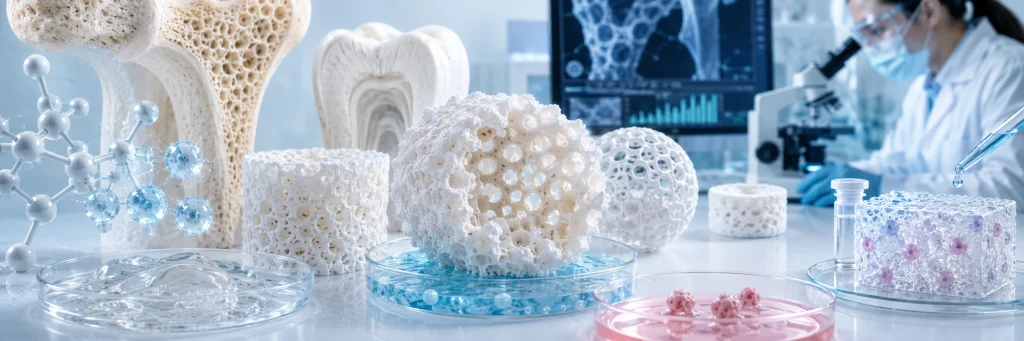
Tissue engineering aims to create materials that support tissue repair, regeneration and functional restoration. Hydroxyapatite is widely used in this field because it provides a mineral component similar to bone.
In regenerative medicine, hydroxyapatite can be incorporated into:
- 3D porous scaffolds
- Injectable biomaterials
- Hydrogels
- Nanofiber systems
- Growth factor delivery platforms
- Cell-supportive composite matrices
Hydroxyapatite can improve the biological performance of composite scaffolds by providing mineral cues that support cell attachment and differentiation in bone-related environments. It may also improve mechanical properties when combined with suitable polymers or collagen-based systems.
For R&D teams, hydroxyapatite selection should be based on the intended processing method. Materials used in 3D printing, electrospinning, hydrogel loading or injectable systems may require different particle size, surface treatment and dispersion performance.
Hydroxyapatite in Biotechnology and Protein Purification
Hydroxyapatite is also used outside traditional orthopedic and dental materials. In biotechnology and biopharmaceutical manufacturing, hydroxyapatite chromatography media are used for protein and antibody purification.
Hydroxyapatite chromatography works through multiple interaction mechanisms. Calcium sites and phosphate groups on the material surface can interact with biomolecules in different ways, allowing selective separation under controlled buffer conditions.
This makes hydroxyapatite valuable for:
- Protein purification
- Antibody purification
- Removal of impurities
- Process development in biopharmaceutical manufacturing
- Research-scale and production-scale chromatography
For biotechnology applications, the requirements for hydroxyapatite differ from those for bone repair materials. Particle uniformity, column performance, mechanical stability and batch consistency are especially important.
Extended Applications in Oral Care and Toothpaste
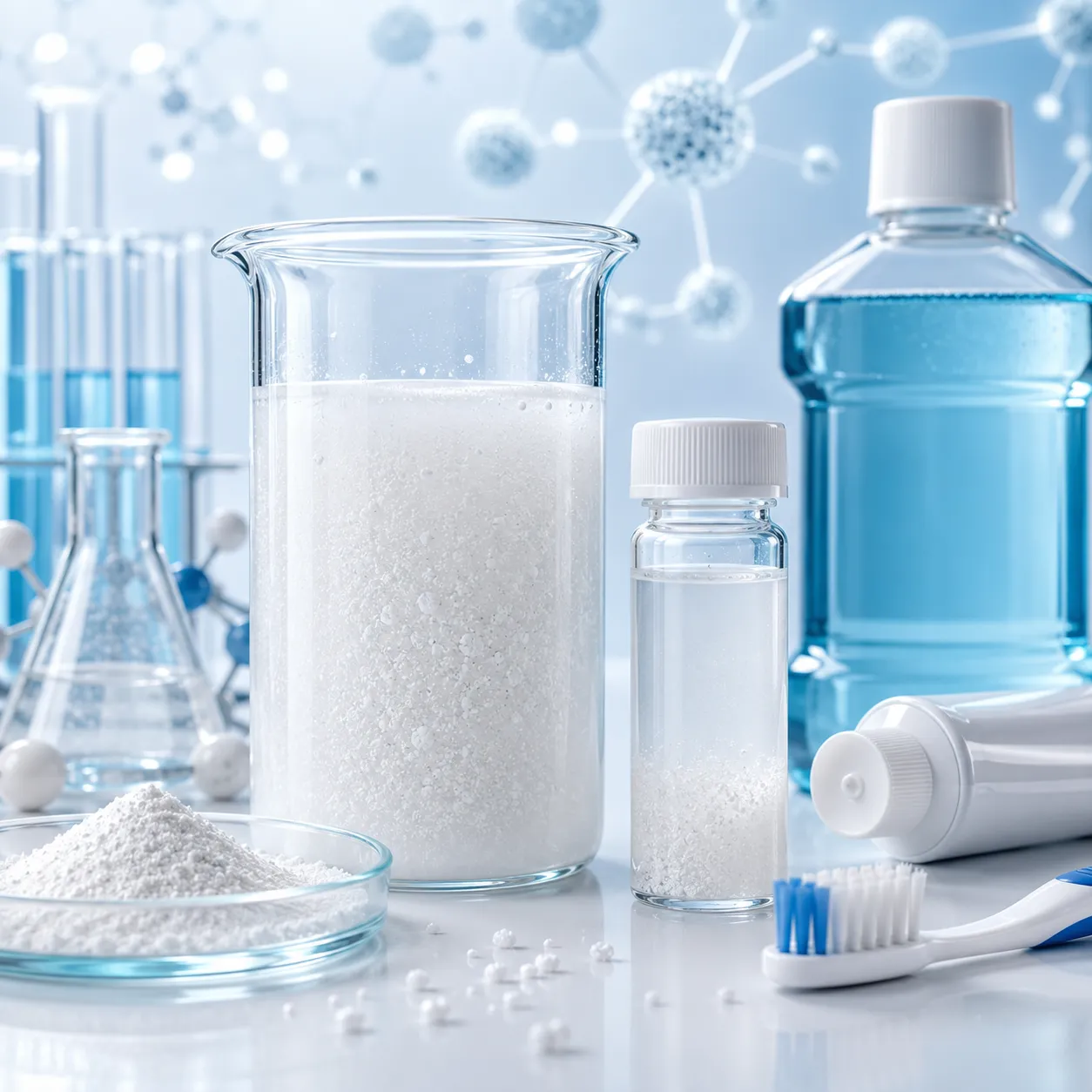
Although this article focuses on hydroxyapatite in modern biomaterials, oral care is an important extended application. Hydroxyapatite is increasingly used in toothpaste and mouth care products because it is chemically similar to the mineral component of enamel.
In toothpaste formulations, hydroxyapatite may be used to support:
- Enamel care
- Surface smoothing
- Dentin tubule occlusion
- Sensitive teeth formulations
- Fluoride-free oral care positioning
- Mild whitening claims
Nano hydroxyapatite is especially popular in advanced toothpaste development because smaller particles can improve dispersion and surface coverage. However, final performance depends on formulation design, concentration, particle quality and regulatory requirements in the target market.
For oral care brands, hydroxyapatite can be positioned as a biomimetic mineral ingredient. For raw material buyers, the most important factors are particle size, purity, dispersion behavior, heavy metal control and documentation.
Medical Grade vs Cosmetic Grade Hydroxyapatite
Not all hydroxyapatite powder is suitable for the same use. Medical grade and cosmetic grade hydroxyapatite may differ significantly in quality control, documentation, purity requirements and manufacturing conditions.
Medical grade hydroxyapatite is typically used in applications such as bone graft materials, implant coatings, dental biomaterials and regenerative systems. These applications may require stricter control of impurities, microbial limits, endotoxins, sterilization compatibility and traceability.
Cosmetic grade hydroxyapatite is generally used in oral care, skincare or personal care formulations. While quality is still important, the regulatory pathway and documentation requirements may be different from implantable or surgical materials.
Key differences may include:
- Raw material traceability
- Manufacturing environment
- Purity and impurity limits
- Heavy metal control
- Microbial specifications
- Sterility or bioburden requirements
- Regulatory documentation
- Application-specific testing
Before purchasing hydroxyapatite powder, buyers should clearly define the intended use. A grade suitable for toothpaste may not be suitable for implant coatings, and a material designed for research use may not be appropriate for commercial medical device production.
How to Choose Hydroxyapatite Powder for Biomaterial Applications
Choosing the right hydroxyapatite powder requires both technical evaluation and supplier qualification. Buyers should not select the material based only on price or particle size.
A practical evaluation process should include the following factors:
1. Define the Target Application
The first step is to identify whether the material will be used for bone repair, implant coating, tissue engineering, chromatography, toothpaste or another application. Each use has different quality and performance requirements.
2. Review Particle Size and Morphology
Particle size affects dispersion, surface area, biological interaction and processing behavior. Nano hydroxyapatite may be suitable for high-surface-area applications, while micro hydroxyapatite may be better for structural or granule-based systems.
3. Check Chemical Purity
High-purity hydroxyapatite is especially important for medical, dental and biotechnology uses. Buyers should review Ca/P ratio, impurity profile, heavy metal limits and batch-to-batch consistency.
4. Evaluate Documentation
Professional suppliers should provide clear documentation such as COA, TDS, MSDS and application-specific quality information. For regulated applications, additional documentation may be required.
5. Consider Manufacturing and Supply Stability
For commercial production, stable bulk supply is essential. Buyers should evaluate production capacity, packaging options, lead time, batch consistency and long-term supply capability.
6. Assess Regulatory Fit
Hydroxyapatite used in medical devices, oral care products or biotechnology processes may be subject to different regulatory requirements depending on the target market. Buyers should confirm whether the selected grade aligns with the intended regulatory pathway.
FAQ
What is hydroxyapatite used for in modern biomaterials?
Hydroxyapatite is used in bone repair materials, implant coatings, tissue engineering scaffolds, protein purification media and oral care formulations. Its value comes from its similarity to natural bone and tooth minerals.
What particle size of hydroxyapatite is suitable for biomaterial applications?
The best particle size depends on the application. Nano hydroxyapatite is often used where high surface area and dispersion are important, while micro-scale hydroxyapatite may be used in structural bone repair materials or granule-based systems.
Is hydroxyapatite suitable for implant coatings?
Yes, hydroxyapatite is widely used as a coating material for titanium orthopedic and dental implants. The coating can improve surface bioactivity, but final performance depends on coating method, adhesion strength and device design.
What is the difference between medical grade and cosmetic grade hydroxyapatite?
Medical grade hydroxyapatite usually requires stricter control of purity, traceability, microbial limits and regulatory documentation. Cosmetic grade hydroxyapatite is more commonly used in oral care and personal care formulations, where requirements may differ depending on market regulations.
Can hydroxyapatite be used in toothpaste?
Yes, hydroxyapatite is used in toothpaste and oral care products as a biomimetic mineral ingredient. It is commonly used in enamel care, sensitive teeth and fluoride-free toothpaste formulations.
What documents should buyers request from a hydroxyapatite supplier?
Buyers should request a Certificate of Analysis, technical data sheet, safety data sheet and relevant quality documentation. For medical or biotechnology applications, additional regulatory and traceability documents may be required.
Conclusion
Hydroxyapatite in modern biomaterials plays an important role across bone repair, implant coatings, tissue engineering, biotechnology and oral care. Its chemical similarity to natural bone and tooth minerals gives it strong value as a bioactive and functional material.
However, successful application depends on choosing the right grade. Particle size, Ca/P ratio, purity, crystallinity, porosity, documentation and regulatory fit all influence final performance.
For companies developing bone graft materials, implant surfaces, regenerative scaffolds, purification systems or toothpaste formulations, hydroxyapatite powder should be evaluated as a technical material rather than a generic ingredient.
A qualified hydroxyapatite supplier should be able to provide application-specific grades, reliable documentation, stable bulk supply and technical support for product development. By selecting the right hydroxyapatite powder, manufacturers can improve material performance and create more competitive biomaterial solutions for modern healthcare and oral care markets.






Please leave us a message.