

Microcrystalline Hydroxyapatite Powder: High Purity Supplier
2026-09-14
- What is Microcrystalline Hydroxyapatite Powder?
- Key Properties of High-Purity mHAp
- Manufacturing Process: Ensuring Purity and Consistency
- Applications of Microcrystalline Hydroxyapatite Powder
- Technical Specifications and Grades
- Comparison: Microcrystalline vs. Nano-Hydroxyapatite
- Selection Guide: Choosing the Right mHAp Grade
- Quality Assurance and Testing Protocols
- About Jinan Meiyi Biotechnology Co., Ltd.
- Storage and Handling Guidelines
- Frequently Asked Questions (FAQ)
- Why Choose Jinan Meiyi Biotechnology as Your mHAp Supplier?
- Conclusion
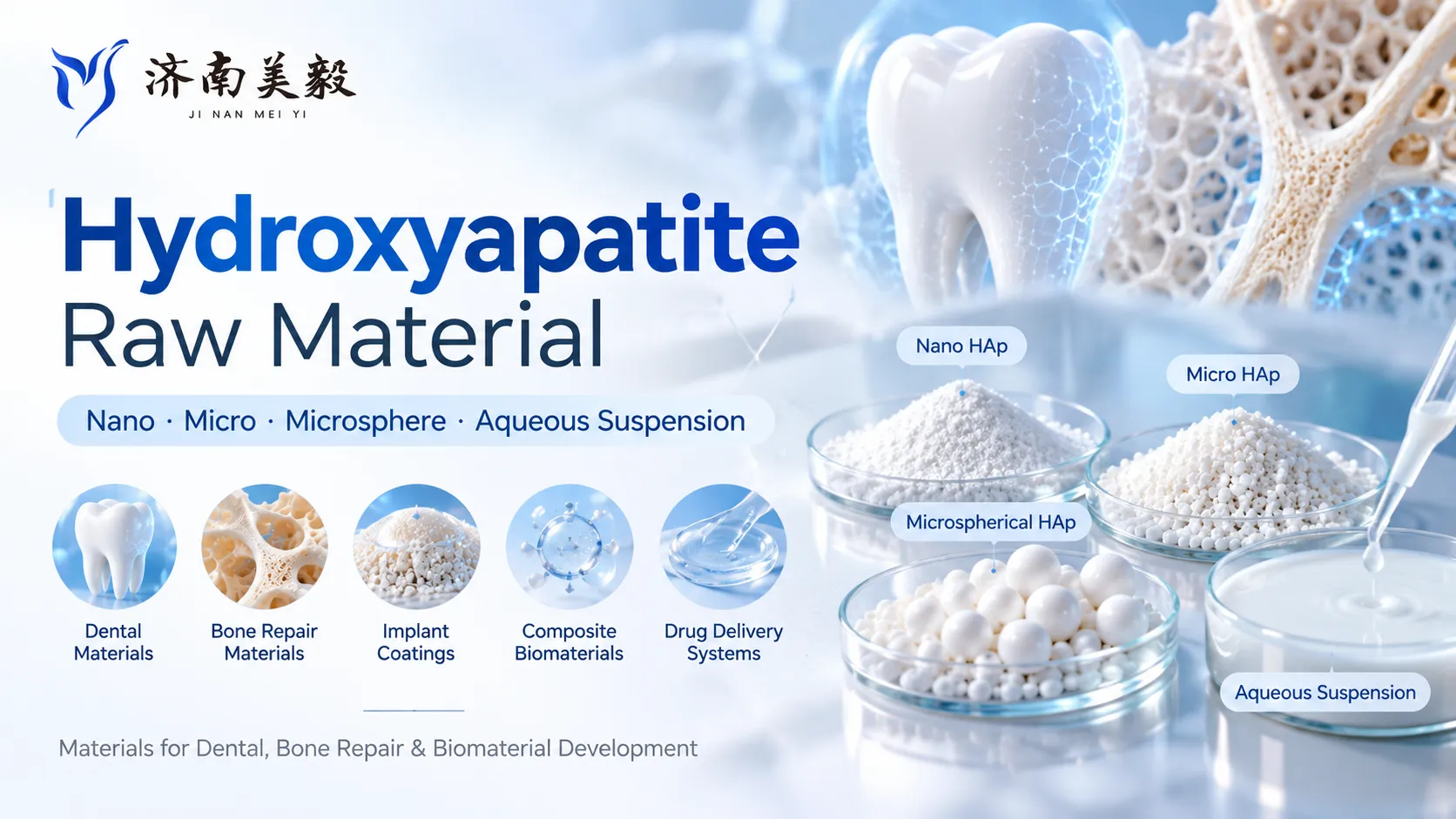
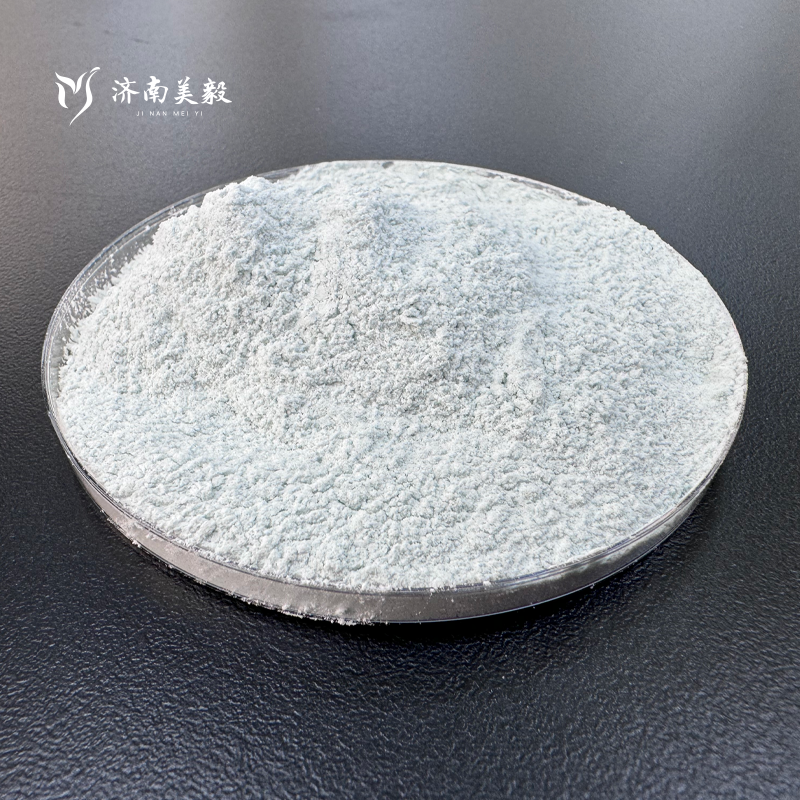
Microcrystalline hydroxyapatite powder is a high-purity, synthetic calcium phosphate ceramic material with the chemical formula Ca10(PO4)6(OH)2. It is engineered to replicate the mineral composition of natural human bone and teeth. As a premier supplier in 2026, we provide this advanced biomaterial for biomedical implants, dental regeneration, chromatography media, and cosmetic formulations. Our supply chain ensures exceptional crystallinity, controlled particle size distribution, and strict adherence to ISO 13485 medical device standards. This page details the technical specifications, production methodologies, and application-specific benefits of our microcrystalline hydroxyapatite (mHAp) solutions.
What is Microcrystalline Hydroxyapatite Powder?
Microcrystalline hydroxyapatite (mHAp) represents a specific structural form of hydroxyapatite where the crystal dimensions are meticulously controlled at the micro-scale, typically ranging from 0.1 to 10 micrometers. Unlike amorphous calcium phosphate or nano-hydroxyapatite, microcrystalline variants offer superior stability, predictable dissolution rates, and enhanced mechanical integrity when sintered or compounded.
In the context of materials science and biomedical engineering, mHAp is valued for its bioactivity. It forms a direct chemical bond with living bone tissue through a process known as osseointegration. This property makes it indispensable in orthopedics and dentistry. Furthermore, its high surface area and ion-exchange capacity make it a critical medium in protein purification and environmental remediation.
Chemical Composition and Structural Integrity
The fundamental structure of hydroxyapatite is a hexagonal crystal lattice. In our microcrystalline hydroxyapatite powder, this lattice is highly ordered. The ratio of calcium to phosphorus (Ca/P) is maintained strictly at 1.67, which is the stoichiometric ratio for pure hydroxyapatite. Deviations from this ratio can lead to the formation of other calcium phosphate phases, such as tricalcium phosphate (TCP), which dissolve more rapidly in physiological environments.
Our sourcing protocols ensure that the final product is phase-pure. X-ray diffraction (XRD) analysis confirms the absence of secondary phases. This purity is critical for regulatory compliance in medical applications, where impurities can trigger inflammatory responses or compromise the mechanical performance of implants.
Key Properties of High-Purity mHAp
Understanding the physicochemical properties of microcrystalline hydroxyapatite is essential for selecting the right grade for your application. The following characteristics define the quality and performance of our supply.
- Bioactivity and Osteoconductivity: mHAp supports the attachment, proliferation, and differentiation of osteoblasts (bone-forming cells). It acts as a scaffold that guides new bone growth without inducing an immune response.
- Controlled Crystallinity: High crystallinity correlates with lower solubility and higher mechanical strength. This is vital for load-bearing implants and long-term dental restorations.
- Particle Size Distribution: We offer customizable particle sizes. Smaller particles provide higher surface area for protein binding, while larger aggregates offer better flowability for powder processing and sintering.
- Thermal Stability: mHAp remains stable at high temperatures, allowing it to be sintered into dense ceramics or porous scaffolds without decomposing into other calcium phosphate phases.
- Ion Exchange Capacity: The crystal lattice can accommodate substitutions of carbonate, fluoride, and other ions. This feature is exploited in drug delivery systems and remineralizing toothpaste formulations.
Manufacturing Process: Ensuring Purity and Consistency
The production of high-quality microcrystalline hydroxyapatite powder requires precise control over reaction kinetics, temperature, and pH levels. Our partner facilities employ advanced wet chemical synthesis methods, primarily the wet precipitation technique, followed by rigorous post-processing steps.
Wet Precipitation Synthesis
The core of the manufacturing process involves the reaction between a calcium source (typically calcium nitrate or calcium hydroxide) and a phosphate source (such as diammonium hydrogen phosphate). The reaction is conducted under strictly controlled conditions:
- pH Control: The pH is maintained above 10 using ammonium hydroxide. This alkaline environment prevents the formation of acidic calcium phosphate phases like brushite.
- Temperature Regulation: The reaction temperature is kept between 60°C and 90°C. Higher temperatures promote crystal growth and improve crystallinity.
- Aging: The resulting precipitate is aged for a specific duration to allow for crystal maturation and Ostwald ripening, ensuring uniform particle size.
Purification and Drying
After precipitation, the slurry undergoes multiple washing cycles with deionized water to remove residual nitrates, ammonium ions, and other byproducts. This step is crucial for achieving high purity. The washed cake is then dried using spray drying or freeze-drying techniques. Spray drying produces spherical agglomerates with excellent flow properties, ideal for injection molding or tape casting. Freeze-drying preserves the delicate microstructure, suitable for applications requiring high porosity.
Calcination and Milling
For applications requiring high crystallinity, the dried powder is calcined at temperatures between 800°C and 1100°C. This heat treatment removes organic residues and enhances the crystal structure. Finally, the calcined material is milled and sieved to achieve the target particle size distribution. Jet milling is often used to prevent contamination from grinding media.
Applications of Microcrystalline Hydroxyapatite Powder
The versatility of microcrystalline hydroxyapatite powder allows it to serve diverse industries. Below, we detail the primary sectors where our product delivers significant value.
1. Biomedical and Orthopedic Implants
In orthopedics, mHAp is used to coat metallic implants (such as titanium alloys) or to fabricate bioceramic scaffolds. The coating enhances the bonding strength between the implant and the host bone, reducing the risk of aseptic loosening. Porous scaffolds made from mHAp are used in bone grafting procedures to fill voids caused by trauma, tumor resection, or congenital defects. The interconnected porosity allows for vascularization and nutrient transport, accelerating healing.
2. Dental Regeneration and Restoratives
Dentistry is one of the largest consumers of hydroxyapatite. mHAp is incorporated into:
- Bone Graft Substitutes: Used in periodontal surgery and sinus lifts to regenerate alveolar bone.
- Dental Composites: Added to resin matrices to improve mechanical properties and bioactivity.
- Remineralizing Agents: Due to its similarity to tooth enamel, mHAp is effective in repairing early carious lesions and reducing dentin hypersensitivity.
3. Chromatography and Protein Purification
Hydroxyapatite chromatography is a powerful technique for separating proteins, nucleic acids, and viruses. mHAp serves as the stationary phase. Its mixed-mode interaction mechanism involves both cation exchange (via calcium sites) and anion exchange (via phosphate sites). This allows for the separation of biomolecules based on their surface charge and affinity for calcium. Our high-purity mHAp is specifically graded for chromatographic use, ensuring consistent retention times and high resolution.
4. Cosmetic and Personal Care
In the cosmetic industry, mHAp is gaining traction as a safe and effective ingredient. It is used in:
- Toothpaste: As a gentle abrasive and remineralizing agent, offering an alternative to fluoride for consumers seeking natural options.
- Skin Care: Nanocrystalline and microcrystalline forms are used for their ability to deliver active ingredients and improve skin texture.
5. Environmental Remediation
mHAp has a high affinity for heavy metal ions such as lead, cadmium, and zinc. It is used in water filtration systems to immobilize these contaminants through ion exchange and surface complexation. This application leverages the material’s low cost and high efficiency in treating industrial wastewater.
Technical Specifications and Grades
We offer various grades of microcrystalline hydroxyapatite powder tailored to specific industrial needs. The table below outlines the typical parameters for our standard product lines.
| Parameter | Biomedical Grade | Chromatography Grade | Industrial/Cosmetic Grade |
|---|---|---|---|
| Purity | > 99.5% | > 99.0% | > 98.0% |
| Ca/P Ratio | 1.67 ± 0.02 | 1.67 ± 0.05 | 1.60 – 1.70 |
| Crystallinity | High (> 90%) | Moderate to High | Variable |
| Particle Size (D50) | 1 – 5 µm | 20 – 40 µm | 0.5 – 10 µm |
| Endotoxin Level | < 0.5 EU/mg | N/A | N/A |
| Heavy Metals | < 10 ppm | < 20 ppm | < 50 ppm |
| Certifications | ISO 13485, Biocompatibility Tested | ISO 9001 | ISO 9001, COSMOS Approved |
Note: Custom specifications regarding particle size, porosity, and ion substitution are available upon request. Contact our technical team for bespoke solutions.
Comparison: Microcrystalline vs. Nano-Hydroxyapatite
A common question in the industry is the difference between microcrystalline and nano-hydroxyapatite (nHAp). While both share the same chemical formula, their physical properties and applications differ significantly.
| Feature | Microcrystalline HAp (mHAp) | Nano-Hydroxyapatite (nHAp) |
|---|---|---|
| Particle Size | 0.1 – 10 µm | < 100 nm |
| Surface Area | Moderate | Very High |
| Agglomeration | Low tendency | High tendency (requires surfactants) |
| Mechanical Strength | Higher (better for bulk ceramics) | Lower (often used as coatings/additives) |
| Processing Ease | Easier to handle and mix | Difficult dispersion |
| Primary Applications | Bone grafts, chromatography, implants | Drug delivery, coatings, cosmetics |
| Cost | More cost-effective for bulk use | Higher production cost |
For applications requiring structural integrity and ease of processing, such as sintered implants or chromatography columns, microcrystalline hydroxyapatite powder is often the preferred choice. Conversely, nHAp is selected when maximum surface area is required for rapid biological response or drug loading.
Selection Guide: Choosing the Right mHAp Grade
Selecting the appropriate grade of hydroxyapatite depends on several factors. Consider the following criteria to ensure optimal performance in your application.
1. Application Requirements
For biomedical implants, prioritize high purity, low endotoxin levels, and proven biocompatibility. For chromatography, focus on particle size uniformity and pore structure. For cosmetics, aesthetic qualities like whiteness and smoothness are key.
2. Particle Size and Morphology
Smaller particles sinter at lower temperatures but may shrink excessively. Larger particles provide better dimensional stability. Spherical particles improve flowability for automated processing, while irregular particles may offer better mechanical interlocking in composites.
3. Crystallinity Level
High crystallinity is essential for long-term stability in the body. Low crystallinity materials dissolve faster, which may be desirable for temporary scaffolds but detrimental for permanent implants. Verify the crystallinity percentage via XRD data provided by the supplier.
4. Regulatory Compliance
Ensure the supplier provides comprehensive documentation, including Certificates of Analysis (CoA), Material Safety Data Sheets (MSDS), and relevant ISO certifications. For medical devices, traceability and batch consistency are non-negotiable.
Quality Assurance and Testing Protocols
As a trusted supplier in 2026, we implement rigorous quality control measures at every stage of our supply chain. Although we do not engage in direct manufacturing, our partnership model ensures that every batch meets the highest international standards.
- X-Ray Diffraction (XRD): Used to confirm phase purity and calculate crystallinity. We ensure no detectable amounts of TCP or calcium oxide.
- Scanning Electron Microscopy (SEM): Provides visual confirmation of particle morphology, size, and agglomeration status.
- Inductively Coupled Plasma (ICP-OES): Measures the exact Ca/P ratio and detects trace metal impurities.
- BET Surface Area Analysis: Determines the specific surface area, which influences bioactivity and adsorption capacity.
- Biocompatibility Testing: In accordance with ISO 10993, our biomedical grades undergo cytotoxicity, sensitization, and irritation testing.
Each batch is assigned a unique lot number, allowing full traceability from raw material sourcing to final packaging. This commitment to transparency builds trust and ensures consistent performance for our clients.
About Jinan Meiyi Biotechnology Co., Ltd.
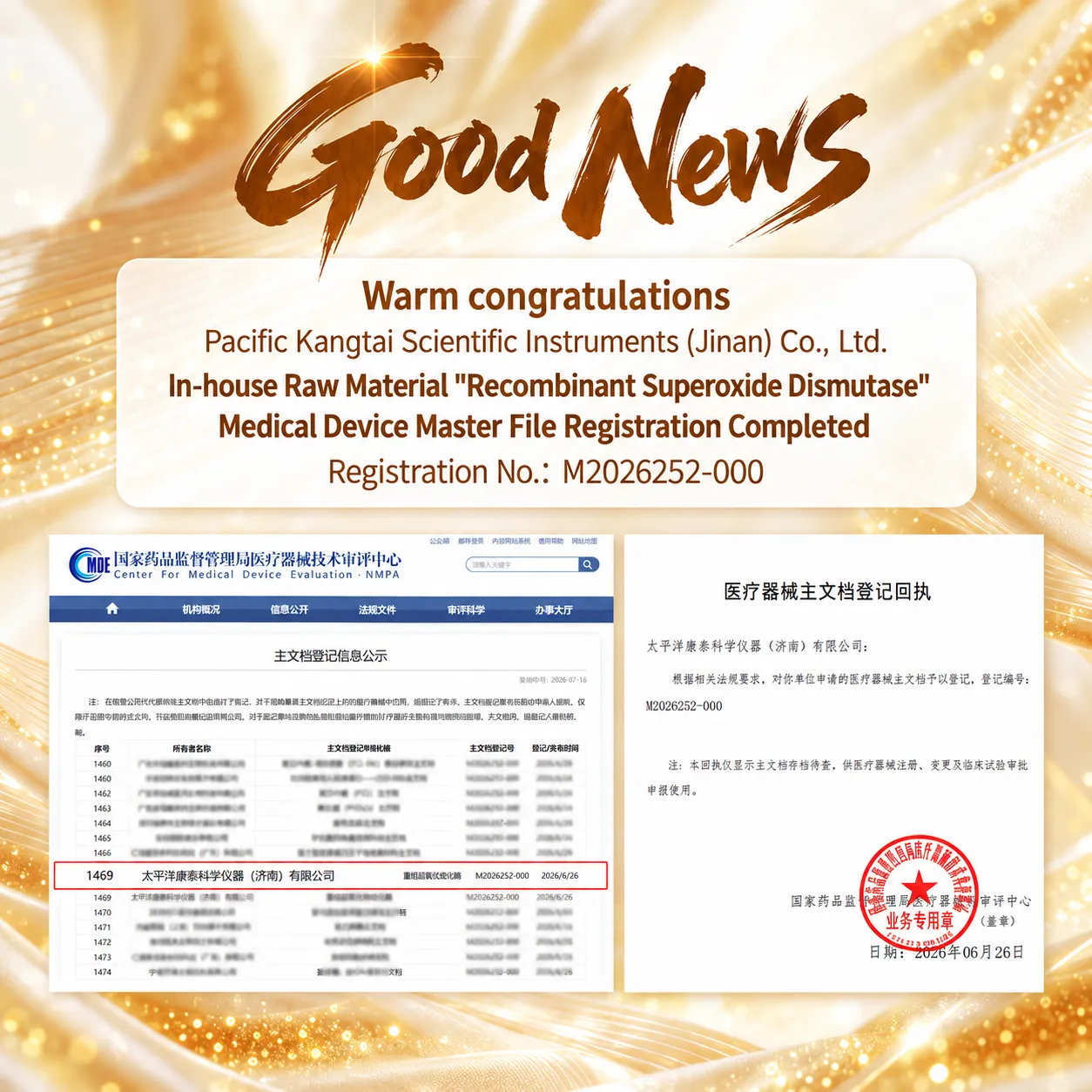
Jinan Meiyi Biotechnology Co., Ltd., headquartered in Jinan, Shandong Province, China, is a professional enterprise dedicated to the research, development support, and commercialization of bioactive technologies. As a subsidiary of Pacific Kangtai Scientific Instruments (Jinan) Co., Ltd., we position ourselves at the intersection of scientific rigor and market responsiveness, serving as a trusted enabler for innovation across the global personal care and aesthetic medicine value chain.
Unlike traditional manufacturers, Jinan Meiyi Biotechnology operates as a strategic sourcing and quality-assured distribution partner. We do not maintain our own production facilities; instead, we leverage a well-established global supply chain network to partner with certified manufacturers who adhere to internationally accepted quality management systems. This model allows us to focus exclusively on what matters most to our clients: efficacy, stability, and regulatory compliance.
Our core business is structured around two complementary pillars: the supply of cosmetic and bioactive raw materials, and the distribution of premium cosmetics and medical aesthetic products. Within the raw materials segment, we focus on active ingredients and functional components used in formulation development. All materials, including our microcrystalline hydroxyapatite powder, undergo comprehensive evaluation prior to inclusion in our portfolio. Our selection criteria are grounded in efficacy data, stability profiles, and compatibility with modern formulation standards.
We serve clients across Asia, Europe, and North America, with particular strength in supporting R&D laboratories, contract development and manufacturing organizations (CDMOs), and aesthetic clinics. Our service philosophy is rooted in partnership rather than transaction. Technical consultation, regulatory intelligence sharing, and collaborative problem-solving are integral to our client engagement. By acting as a knowledge-driven bridge between upstream innovation and downstream application, we facilitate faster, safer, and more effective translation of bioactive science into real-world consumer and clinical benefits.
Storage and Handling Guidelines
Proper storage is essential to maintain the quality of microcrystalline hydroxyapatite powder. Although chemically stable, mHAp is hygroscopic and can absorb moisture from the air, which may affect its flowability and processing characteristics.
- Environment: Store in a cool, dry place. Ideal temperature is below 25°C with relative humidity under 50%.
- Packaging: Keep containers tightly sealed when not in use. Original packaging consists of double-layered polyethylene bags inside fiber drums or foil-lined containers for moisture protection.
- Handling: Use appropriate personal protective equipment (PPE), including dust masks and gloves, to avoid inhalation of fine particles. While non-toxic, inhalation of any fine powder should be minimized.
- Shelf Life: When stored correctly, the shelf life is typically 24 months. Always check the expiration date on the certificate of analysis.
Frequently Asked Questions (FAQ)
Is microcrystalline hydroxyapatite safe for human use?
Yes, hydroxyapatite is biocompatible and bioactive. It is the main mineral component of human bone and teeth. Our biomedical-grade mHAp undergoes rigorous testing to ensure it meets safety standards for implantable devices and dental applications.
What is the difference between synthetic and natural hydroxyapatite?
Natural hydroxyapatite is derived from bovine bone or marine sources. While biocompatible, it carries a risk of pathogen transmission and variability in composition. Synthetic microcrystalline hydroxyapatite powder, like ours, offers superior purity, consistency, and control over physical properties, making it preferable for high-precision medical and industrial applications.
Can mHAp be used for drug delivery?
Yes, mHAp can serve as a carrier for drugs, genes, and proteins. Its surface can be modified to control the release rate. However, nano-hydroxyapatite is often preferred for intracellular delivery due to its smaller size, while mHAp is excellent for localized, sustained release in bone defects.
How does the Ca/P ratio affect performance?
A Ca/P ratio of 1.67 indicates stoichiometric hydroxyapatite, which is the most stable form. Lower ratios may indicate the presence of tricalcium phosphate, which is more soluble. Higher ratios might suggest calcium oxide contamination. Maintaining the correct ratio is crucial for predictable degradation and mechanical performance.
Do you provide custom synthesis services?
Yes, through our network of certified manufacturing partners, we offer custom synthesis capabilities. We can adjust particle size, porosity, and ion substitution (e.g., fluoride-doped, carbonate-doped) to meet specific research or commercial requirements. Contact our R&D team to discuss your project needs.
What is the lead time for orders?
Standard grades are typically shipped within 5-7 business days. Custom orders may require 2-4 weeks depending on the complexity of the specifications and batch size. We maintain a robust inventory to support urgent prototyping needs.
Why Choose Jinan Meiyi Biotechnology as Your mHAp Supplier?
In the competitive landscape of advanced biomaterials, choosing the right partner is critical. Jinan Meiyi Biotechnology stands out for several reasons:
- Technical Expertise: With a scientifically trained team and continuous exposure to international research frontiers, we provide deep technical support, from material selection to process optimization.
- Consistent Quality: Our disciplined curation methodology and strict QC protocols ensure batch-to-batch consistency, reducing variability in your final products.
- Regulatory Support: We provide comprehensive documentation packages to assist with your regulatory filings, including Certificates of Analysis, safety data sheets, and regulatory status summaries.
- Global Supply Chain: Our globally integrated and vetted supply chain enables reliable access to high-integrity, functionally validated ingredients backed by robust documentation.
- Customer-Centric Approach: We view ourselves as an extension of your R&D team, offering collaborative problem-solving and rapid response times.
Conclusion
Microcrystalline hydroxyapatite powder is a cornerstone material in modern biomedical, dental, and industrial applications. Its unique combination of bioactivity, stability, and versatility makes it indispensable for bone regeneration, protein purification, and advanced composites. By choosing a high-purity supplier with rigorous quality controls, you ensure the success and safety of your products.
Whether you are developing next-generation orthopedic implants, optimizing chromatography processes, or formulating premium dental care products, our high-quality mHAp solutions provide the foundation for innovation. Jinan Meiyi Biotechnology is committed to delivering materials that meet the highest standards of performance and reliability, bridging the gap between scientific innovation and practical application.
Ready to elevate your product formulation? Contact our technical sales team today to request a sample, review detailed specifications, or discuss custom manufacturing options. Let us help you achieve your material goals with precision and confidence.
Explore our full range of biomaterials and technical resources





Please leave us a message.