

How to Use Salmon PDRN in Skincare Formulations
2026-03-10
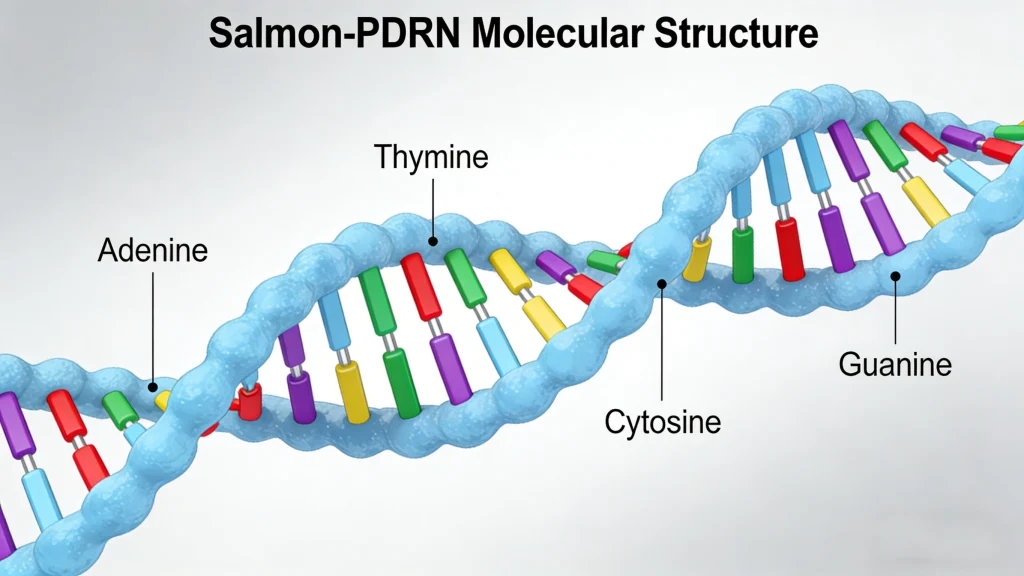
salmon derived PDRN molecular fragments for skin regeneration
Introduction: Why Salmon PDRN Is Becoming a Popular Skincare Ingredient
In recent years, salmon-derived PDRN (polydeoxyribonucleotide) has gained significant attention in the skincare and cosmetic industry. Originally studied in regenerative medicine, PDRN is now widely explored as a bioactive ingredient in advanced skincare formulations.
Consumers are increasingly looking for science-backed skincare ingredients that support skin recovery, hydration, and overall skin health. As a result, cosmetic brands and formulation laboratories are beginning to incorporate salmon PDRN into serums, creams, masks, and post-treatment skincare products.
Because of its biological origin and compatibility with human skin, salmon PDRN is often used in formulations designed for:
-
skin repair and recovery
-
anti-aging skincare
-
post-procedure care
-
hydration and barrier support
For cosmetic manufacturers, understanding how to use salmon PDRN in skincare formulations is essential for developing high-performance products.
Featured Snippet: How Is Salmon PDRN Used in Skincare?
Salmon PDRN is commonly used in skincare products such as serums, creams, and sheet masks. It is typically added to cosmetic formulations at concentrations between 0.05% and 0.5% and is valued for its potential to support skin repair, hydration, and regenerative skincare formulations.
What Is Salmon-Derived PDRN?
Salmon PDRN is a purified DNA fragment derived from salmon sperm DNA through advanced extraction and enzymatic processing techniques.
During production, long DNA chains are fragmented into controlled molecular sizes, usually ranging from 50 kDa to 1500 kDa, forming polydeoxyribonucleotide fragments suitable for biological applications.
In skincare formulations, salmon-derived PDRN is valued for its potential ability to support:
-
skin regeneration processes
-
improved skin resilience
-
enhanced hydration and barrier recovery
-
smoother and healthier skin appearance
Due to these characteristics, salmon PDRN has become an increasingly popular ingredient in regenerative skincare and premium cosmetic products.
How Salmon PDRN Works in Skincare
In topical skincare products, PDRN is believed to support the natural repair processes of the skin.
Research in regenerative medicine suggests that polydeoxyribonucleotides may play a role in promoting cellular activity and supporting tissue repair. When incorporated into cosmetic formulations, these properties may contribute to improved skin appearance and recovery.
For skincare products, this may translate into benefits such as:
-
improved skin texture
-
support for skin barrier recovery
-
enhanced hydration
-
reduced appearance of skin fatigue
These benefits make salmon-derived PDRN attractive for high-performance skincare formulations.
Types of Skincare Products That Use Salmon PDRN
Salmon PDRN can be incorporated into various cosmetic product formats. The ingredient is particularly popular in products designed to support skin recovery and rejuvenation.
PDRN Serums and Ampoules
Serums and ampoules are among the most common products that contain salmon PDRN.
Because serums typically deliver concentrated active ingredients, they are well suited for regenerative compounds like PDRN.
PDRN serums are often marketed for:
-
anti-aging skincare
-
skin repair support
-
post-treatment recovery
PDRN Creams and Moisturizers
Cream-based formulations allow PDRN to be combined with other hydrating and skin-conditioning ingredients.
Common ingredient combinations include:
-
hyaluronic acid
-
peptides
-
ceramides
-
niacinamide
These combinations help create multifunctional skincare products that support both hydration and skin renewal.
PDRN Sheet Masks
Sheet masks are another popular application for salmon PDRN.
Because masks remain in contact with the skin for extended periods, they are often used to deliver hydrating and soothing ingredients.
PDRN sheet masks are frequently positioned as:
-
skin recovery masks
-
post-treatment masks
-
intensive hydration masks
Post-Procedure Skincare Products
Many skincare brands formulate PDRN-based products specifically for post-aesthetic treatment care.
These products may be used after treatments such as:
-
laser procedures
-
microneedling
-
chemical peels
Their goal is to support skin recovery and help restore the skin barrier.
Recommended Concentration of PDRN in Skincare
The concentration of PDRN used in cosmetic formulations varies depending on the product type and formulation goals.
Typical ranges include:
| Product Type | Suggested PDRN Concentration |
|---|---|
| Serums | 0.1% – 0.5% |
| Creams | 0.05% – 0.3% |
| Sheet Masks | 0.1% – 0.5% |
| Professional formulations | Higher concentrations depending on formulation |
Formulators should always evaluate ingredient compatibility and stability during product development.
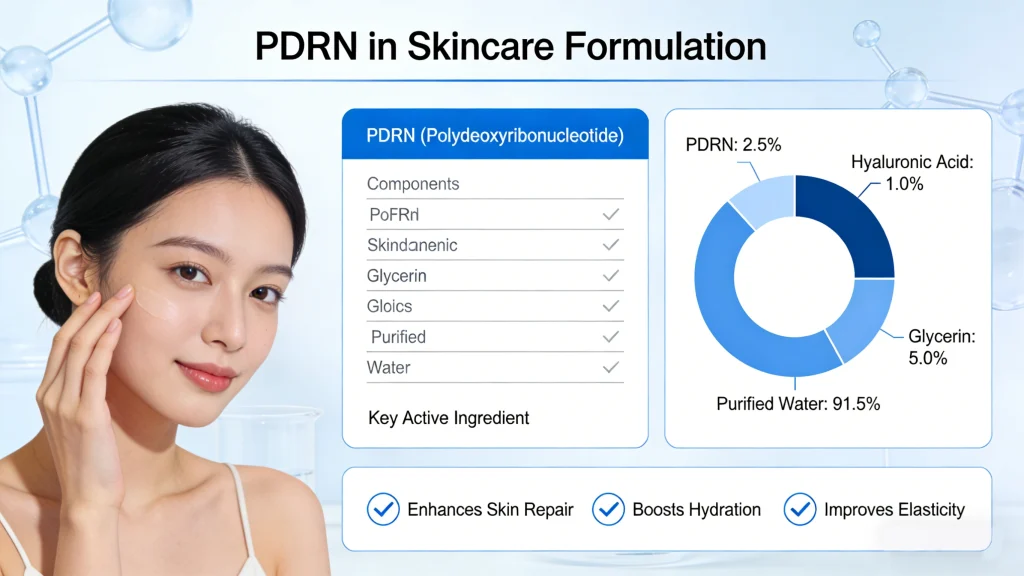
Example PDRN Skincare Formulation
Below is an example of how salmon-derived PDRN may be incorporated into a basic serum formulation.
| Ingredient | Function | Typical Percentage |
|---|---|---|
| Purified Water | Base solvent | q.s. |
| Salmon PDRN | Regenerative active | 0.2% |
| Hyaluronic Acid | Hydration | 0.5% |
| Peptides | Anti-aging support | 0.3% |
| Panthenol | Skin soothing | 0.5% |
| Preservative System | Product stability | 0.8% |
This type of formulation is commonly used in regenerative skincare serums and post-treatment recovery products.
Formulation Considerations When Using Salmon PDRN
When incorporating PDRN into skincare formulations, cosmetic manufacturers should consider several formulation factors.
Ingredient Stability
Because PDRN is a biologically derived ingredient, maintaining stability during formulation is important.
Many manufacturers incorporate PDRN during the cool-down phase of the production process to preserve its structure.
Compatibility With Other Ingredients
PDRN can work well with many commonly used skincare ingredients, including:
-
hyaluronic acid
-
peptides
-
ceramides
-
antioxidants
-
panthenol
These combinations can enhance the overall performance of regenerative skincare products.
Packaging Considerations
To protect ingredient stability, many brands choose packaging such as:
-
airless pumps
-
ampoule bottles
-
sealed serum containers
These packaging options help minimize exposure to air and contamination.
How Cosmetic Brands Source High-Quality PDRN
For cosmetic brands developing PDRN-based skincare products, selecting a reliable PDRN raw material supplier is essential.
Several factors should be considered when sourcing cosmetic-grade PDRN.
Purity and Quality Control
High-quality PDRN should undergo advanced purification processes to ensure consistent quality and minimal contaminants.
Molecular Weight Distribution
Controlled DNA fragment size distribution is important for maintaining stable and predictable formulation performance.
Manufacturing Standards
Professional PDRN suppliers typically produce ingredients in facilities that follow strict quality management standards.
Technical Documentation
Reliable suppliers should provide documentation such as:
-
Certificate of Analysis (COA)
-
Safety Data Sheet (SDS)
-
technical specifications
These documents are necessary for regulatory compliance and product development.
Conclusion
Salmon-derived PDRN has become an increasingly important ingredient in modern skincare formulations. Its potential role in supporting skin repair, hydration, and regenerative skincare makes it attractive for cosmetic brands developing high-performance products.
From serums and creams to masks and post-treatment skincare, salmon PDRN offers versatile applications for cosmetic manufacturers.
As demand for science-based skincare ingredients continues to grow, sourcing high-quality PDRN raw materials and understanding proper formulation techniques will be essential for brands seeking to develop competitive skincare products.





Please leave us a message.