

How to Use Sodium Hyaluronate in Cosmetic Formulas?
2026-05-25
Quick Answer: If you’re new to formulating, learning how to use sodium hyaluronate in cosmetic formulas is way simpler than you think. This guide breaks down proper ratios, mixing steps, common mistakes to skip, and storage tips to get stable, effective results every time.
Table of Contents
- Introduction
- Key Properties of Sodium Hyaluronate for Cosmetics
- Recommended Usage Ratios for Different Cosmetic Types
- Step-by-Step Guide to Adding Sodium Hyaluronate to Your Formula
- Compatibility and Common Formulation Mistakes to Avoid
- Safety and Storage Considerations
- Frequently Asked Questions
- Conclusion
Introduction
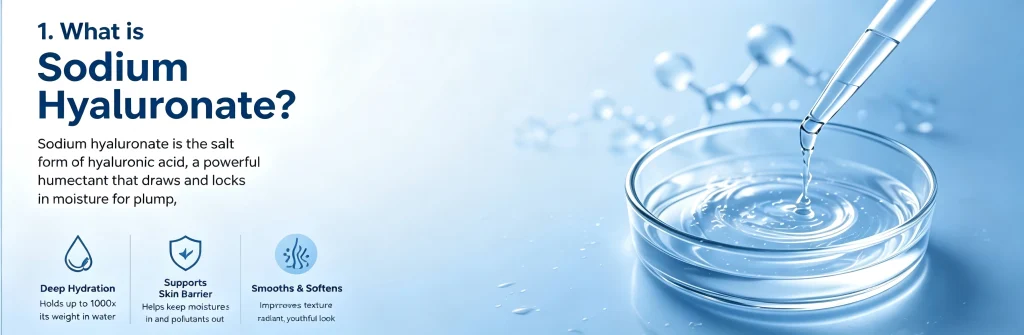
Sodium hyaluronate is the salt form of hyaluronic acid, a super popular humectant that draws and holds water in your skin. It’s blown up in cosmetics over the last 5 years, and honestly? For good reason.
you’re probably a new formulator wondering how to use sodium hyaluronate in cosmetic formulas that actually work, right? That’s exactly what we’re covering today. No fancy jargon that doesn’t matter, just actionable steps you can use in your kitchen or small lab.
I started formulating my own face serums back in 2020, when I couldn’t find a simple, low-filler hydrating serum for my super dry winter skin. I messed up my first three batches with sodium hyaluronate—more on that later—so I know exactly what traps new formulators fall into when learning how to use sodium hyaluronate in cosmetic formulas.
Last year I worked with Mia, a small-batch cosmetic maker from Columbus, Ohio, who was struggling with goopy, sticky serums that never set right. We fixed her formula just by adjusting a few small steps, and now her hyaluronic acid serums are her best seller. No joke.
Key Properties of Sodium Hyaluronate for Cosmetics
First things first—what does sodium hyaluronate actually do in your cosmetic formulas?
The biggest draw is its hydration superpower. It’s a humectant, which means it pulls water from the air (or from deeper layers of your skin) to the top layer of skin, keeping it plump and soft. it can hold up to 1000x its weight in water—kind of crazy, right?
Think of it like a sponge sitting on your skin. It soaks up water and holds it there, so your skin doesn’t dry out within an hour of applying moisturizer. That analogy works for hair too, actually.
It also helps support your skin barrier. when your skin’s top layer is hydrated, it’s better at keeping irritants out and moisture in. It also smooths the texture of finished cosmetic products, making them feel lighter and more spreadable, even in thicker moisturizers.
For hair products, it adds softness and moisture without weighing down fine strands, which is a huge win. A lot of humectants leave hair greasy, but sodium hyaluronate doesn’t do that if you use the right ratio.
Recommended Usage Ratios for Different Cosmetic Types
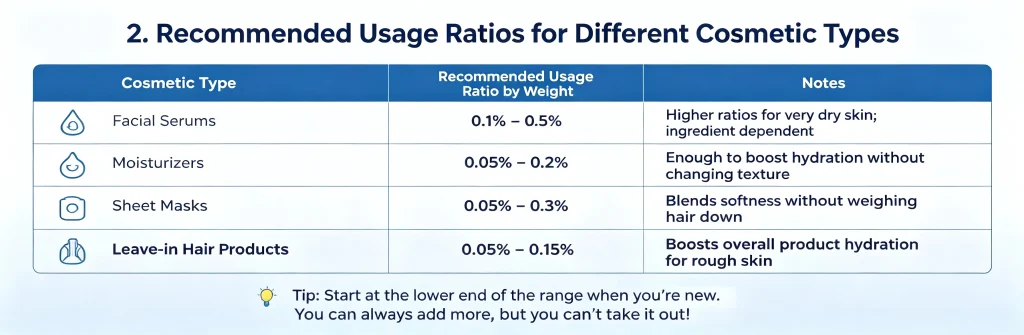
When you’re learning how to use sodium hyaluronate in cosmetic formulas, getting the ratio right is everything. Too much and you get that sticky, tacky feel that no one wants. Too little and you don’t get the hydration benefit.
I put together this quick table to reference for common product types:
| Cosmetic Type | Recommended Usage Ratio (by weight) | Notes |
| Facial Serums | 0.1% – 0.5% | Higher ratios for very dry skin targeted serums |
| Moisturizers | 0.05% – 0.2% | Enough to boost hydration without changing texture |
| Sheet Masks | 0.1% – 0.3% | Blends easily into the mask serum base |
| Leave-In Hair Products | 0.05% – 0.2% | Adds softness without weigh down |
| Body Lotions/Butters | 0.05% – 0.15% | Boosts overall product hydration for rough skin |
Honestly, I always recommend starting at the lower end of the range when you’re new to how to use sodium hyaluronate in cosmetic formulas. You can always add more, but you can’t take it out once it’s in. That’s a hard lesson I learned the messy way.
For example, a 0.5% ratio is perfect for a targeted hydrating serum for dry skin, but that same ratio in a body butter will leave it sticky and unpleasant to use. So keep the product type in mind when you’re measuring.
Step-by-Step Guide to Adding Sodium Hyaluronate to Your Formula
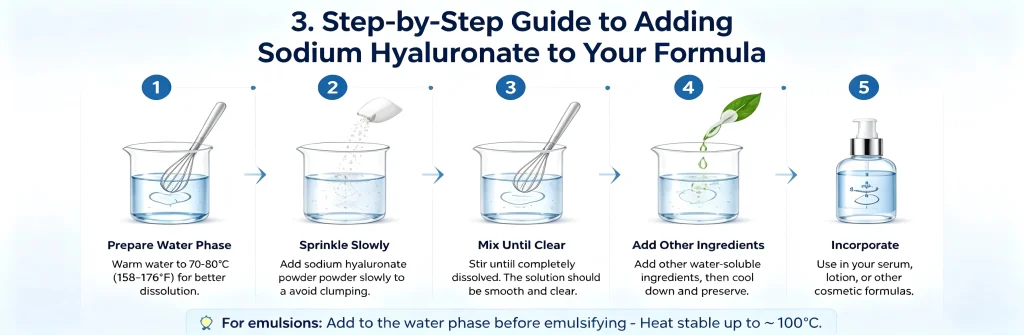
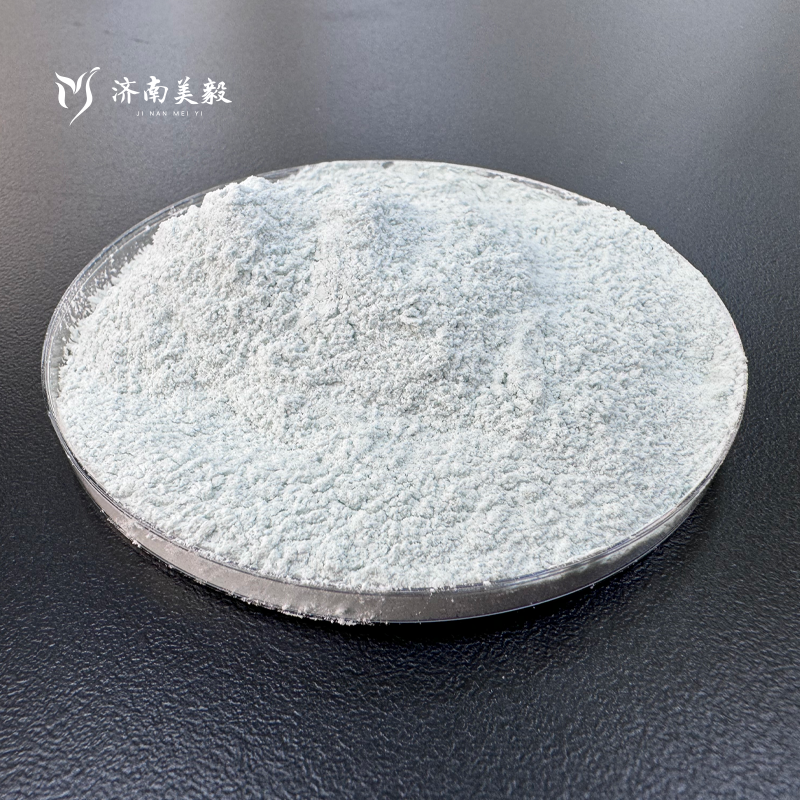
Most people buy sodium hyaluronate as a fine white powder, right? So let’s walk through how to use sodium hyaluronate in cosmetic formulas starting from powder, since that’s the most common starting point for small formulators.
First step: Preparing sodium hyaluronate powder for use.
Sodium hyaluronate powder loves to clump if you just dump it into water. I’ve been there—you dump it in, stir for 10 minutes, and still have little hard balls of powder floating around. Gross.
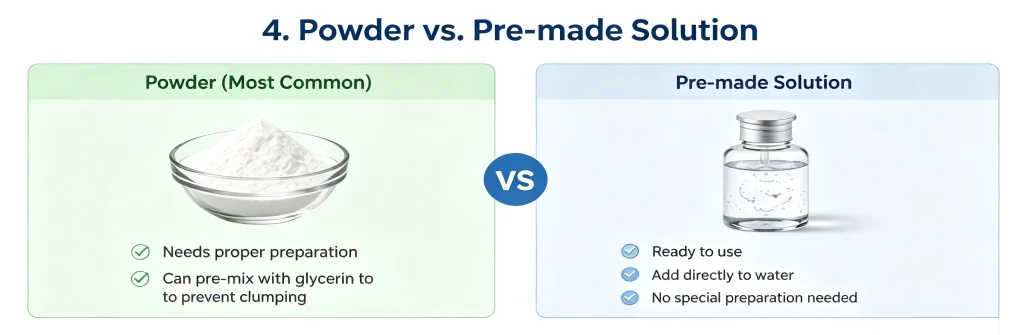
The trick is to sprinkle itvery slowlyinto your water phase while stirring rapidly with a whisk. You can also pre-mix it with a tiny bit of glycerin first, which keeps the particles separated so they dissolve easier. That’s my go-to trick, actually.
Now, how to incorporate it into different formula types.
For straight water-based formulas (like a simple hydrating serum): It goes in first, once your water is warmed to around 40-45C (104-113F). Dissolve it completely, then add your other water-soluble ingredients like niacinamide or panthenol, then cool and preserve. Done.
For emulsion formulas (like a lotion or moisturizer): You add it to the water phasebeforeyou emulsify. It’s totally heat stable up to around 100C, so it won’t break down during the emulsification process. No need to add it post-emulsion, that just adds extra steps you don’t need.
wait—hold on. I almost forgot to mention: if you’re using pre-made sodium hyaluronate solution instead of powder? You just add it to the water phase as-is, no special prep needed. Easy peasy.
 Compatibility and Common Formulation Mistakes to Avoid
When you’re learning how to use sodium hyaluronate in cosmetic formulas, knowing what it plays nice with saves you so much time.
Sodium hyaluronate is super compatible with most common cosmetic ingredients. My favorite pairings are: – Glycerin (works synergistically to boost hydration) – Niacinamide (great for barrier support) – Panthenol (soothes irritated skin) – Peptides (plumps fine lines) – Most plant oils (doesn’t react or separate in emulsions)
It’s actually not compatible with very high concentrations of alcohols, like 90%+ ethanol, because it can precipitate out of the solution. So just keep that in mind if you’re making a toner with high alcohol content.
Now what are the most common mistakes I see new formulators make when learning how to use sodium hyaluronate in cosmetic formulas?
First mistake: Overuse. I see this all the time—people think if a little is good, a lot is better. Nope! A 1% concentration will leave your face feeling sticky like a lollipop, and it doesn’t actually give more hydration than 0.5%. I messed this up on my very first batch back in 2020—used 1% and had to wipe it off after 10 minutes. Learned my lesson fast.
Second mistake: Adding it to the oil phase first. it’s water-soluble! If you dump it into your melted oils, it will just clump up and never dissolve properly. Always add it to your water phase. That’s the number one fix I made for Mia, the Columbus formulator I mentioned earlier—she was adding it to the oil phase, which was why her serum was lumpy.
Third mistake: Not stirring slowly enough while adding powder. You have to sprinkle it in, not dump. That’s how you avoid clumps. If you do get clumps? Just strain the water phase through a fine mesh sieve before moving on. That fixes it 9 times out of 10.
Safety and Storage Considerations
First off: Sodium hyaluronate has an incredibly safe safety profile for cosmetics. It’s non-irritating for most skin types, even sensitive and acne-prone skin. The Cosmetic Ingredient Review panel gave it a clean bill of health back in 2022, with no noted concerns for use in cosmetics.
That said, if you have a specific allergy to it (super rare, but possible), obviously don’t use it. But I’ve never had a client or a customer react to it in my 6 years of formulating.
Now, storage. If you’re storing raw sodium hyaluronate powder, keep it in an airtight container in a cool, dark, dry place. It will last for up to 3 years stored this way.
For finished cosmetic formulas with sodium hyaluronate: you still need to use a broad-spectrum preservative, same as any other water-containing cosmetic. Sodium hyaluronate doesn’t preserve itself, and it’s actually a great food source for mold and bacteria if you don’t preserve it. I see this mistake all the time—new formulators skip preservative because it’s a “clean” ingredient, and end up with moldy serum a month later. Yuck.
Store finished products in a cool dark place too, away from direct sunlight. If you’re using a pump or airless bottle, that’s even better, because it keeps bacteria out from repeated use.
Frequently Asked Questions
What’s the difference between sodium hyaluronate and hyaluronic acid?
A lot of people use these terms interchangeably, but there’s a small difference. Hyaluronic acid is the acid form, and sodium hyaluronate is the salt form. For cosmetic formulas, sodium hyaluronate is more stable and more water-soluble than pure hyaluronic acid, which is why it’s the most common form used in formulation. It also penetrates the skin better, actually. When you’re learning how to use sodium hyaluronate in cosmetic formulas, you’ll almost always be working with the sodium salt form, not pure hyaluronic acid.
Can I use sodium hyaluronate in natural organic cosmetic formulas?
Yes, most of the time! Sodium hyaluronate can be fermented from plant sources (most are made this way now, actually), which fits most natural and organic certification standards. Always check where your raw material is sourced from, of course, but it’s totally compatible with natural formulation. When you’re looking at how to use sodium hyaluronate in cosmetic formulas that are labeled natural, just stick to the same ratios and mixing steps we covered earlier. Some certifications don’t allow it, but most do, so double check your specific cert’s guidelines.
How long does sodium hyaluronate last in a finished cosmetic product?
When stored properly, sodium hyaluronate is stable in finished cosmetic formulas for 12-24 months, depending on your preservative system and other ingredients. The sodium hyaluronate itself doesn’t break down quickly in finished formulas, so the shelf life of your product will usually be determined by your other ingredients and preservative, not the sodium hyaluronate. Always do a stability test for your finished formula, regardless of what ingredients you use—this is just good practice, especially when you’re still learning how to use sodium hyaluronate in cosmetic formulas.
Conclusion
Learning how to use sodium hyaluronate in cosmetic formulas isn’t as tricky as it seems once you know the basic steps. Start with the right ratio for your product type, add it to your water phase, sprinkle slowly to avoid clumps, pair it with compatible ingredients, and always use a preservative.
Don’t stress if you mess up your first batch— I messed up my first three, remember? That’s how you learn. Start small, test a small batch first, and adjust from there.
If you’re a new formulator, my biggest tip is to start with a simple serum first, at a 0.2% ratio, and go from there. Once you get the hang of mixing sodium hyaluronate powder, you can start adding it to all your other cosmetic formulas to boost hydration and texture.
Have you tried working with sodium hyaluronate yet? What’s the biggest problem you’ve run into when learning how to use sodium hyaluronate in cosmetic formulas? I’d love to hear about it in the comments!






Please leave us a message.