

Hydroxyapatite Suspension for Mouthwash: What Formulators Should Know
2026-06-10
Introduction
Mouthwash used to be a simple category. Most products focused on fresh breath, alcohol-free claims, mint flavor or antibacterial positioning. Today, the category is changing. Consumers are looking for products that do more than rinse the mouth. They want formulas that feel gentle, support enamel care and fit into a modern daily oral care routine.
This is one reason hydroxyapatite suspension for mouthwash is receiving more attention from oral care brands and formulators.
Hydroxyapatite is already well known in toothpaste, especially in fluoride-free and enamel care formulas. But using it in mouthwash is a little different. It is not a fully water-soluble ingredient. It behaves as a dispersed mineral particle system, which means formulators need to think carefully about suspension stability, sedimentation, pH, mouthfeel and final product appearance.
For brands, this also creates an opportunity. A well-developed hydroxyapatite mouthwash can stand out from common fresh-breath products and move into a more premium “mineral care” position.
This article explains what formulators should know before developing a mouthwash with hydroxyapatite suspension.
What Is Hydroxyapatite Suspension?
Hydroxyapatite suspension is a water-based dispersion of hydroxyapatite particles. It may also be described as nano hydroxyapatite suspension, hydroxyapatite aqueous suspension, hydroxyapatite dispersion or hydroxyapatite slurry, depending on the particle size and raw material format.
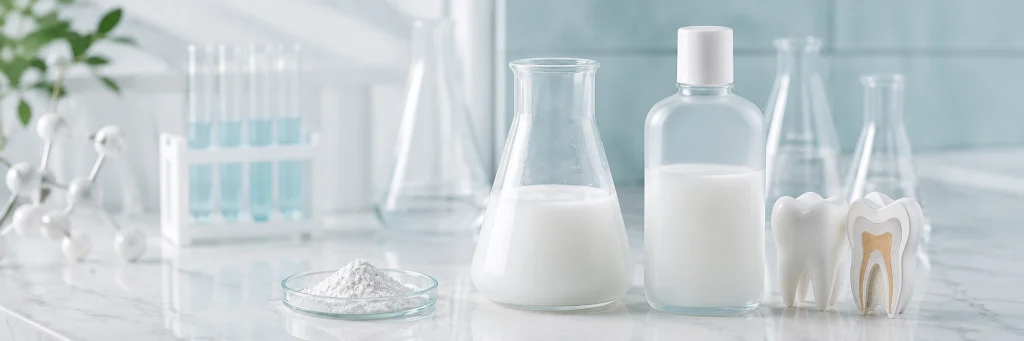
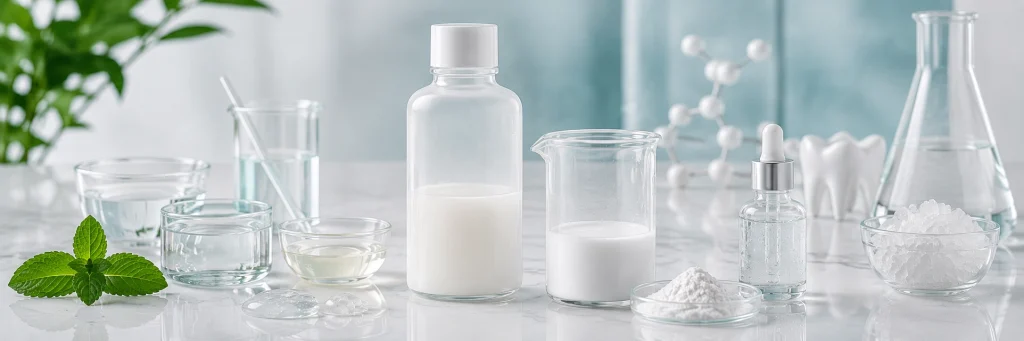
In simple terms, the ingredient is not dissolved in water like salt or sugar. Instead, fine mineral particles are dispersed in the liquid phase. This is an important point for mouthwash formulation because the final product may look slightly cloudy, milky or mineral-rich rather than completely transparent.
For some brands, that appearance is not a problem. In fact, it can support the product story. A slightly milky mouthwash can visually communicate mineral care, enamel support and a more advanced oral care concept. But from a formulation point of view, the suspension must still be stable, smooth and pleasant to use.
Why Use Hydroxyapatite in Mouthwash?
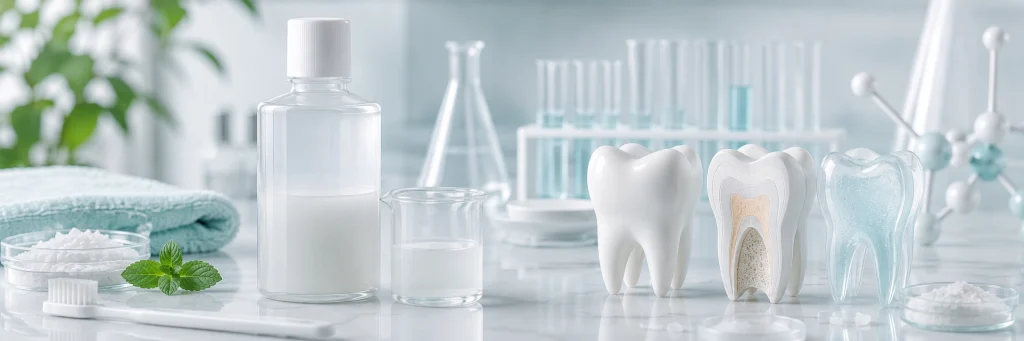
Hydroxyapatite is closely related to the mineral structure of teeth. This makes it an attractive ingredient for oral care products designed around enamel care, tooth surface protection and gentle daily use.
In mouthwash, hydroxyapatite can help brands create a formula that goes beyond the usual “fresh breath” message. It allows a brand to talk about mineral-based oral care, fluoride-free routines and enamel-focused product design.
For formulators, hydroxyapatite suspension may be especially useful when developing:
Fluoride-free mouthwash
Enamel care mouthwash
Sensitive teeth care mouthwash
Kids’ oral care rinses
Premium daily oral care products
Alcohol-free mouthwash with added mineral care positioning
The key is to build the claim language carefully. A mouthwash with hydroxyapatite should not be marketed with exaggerated treatment claims unless the brand has the right testing and regulatory support. More balanced wording such as “supports enamel care,” “helps maintain a smooth tooth surface feel” or “designed for daily mineral oral care” is often more suitable for commercial communication.
Hydroxyapatite Suspension vs Powder in Mouthwash
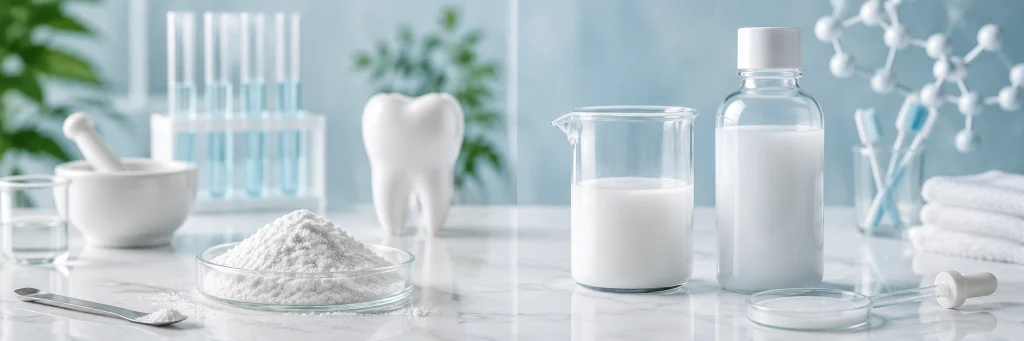
Hydroxyapatite powder can be used in oral care formulas, but it may not always be the easiest format for mouthwash. Fine powder needs proper wetting, dispersion and mixing. If the powder is not dispersed well, it may form clumps, settle quickly or create a gritty feeling during use.
A pre-dispersed hydroxyapatite suspension can make production easier. It can reduce powder handling, improve batch consistency and help the ingredient spread more evenly in the liquid system.
However, suspension does not remove every formulation challenge. The formulator still needs to test sedimentation, viscosity, preservative compatibility, flavor compatibility and long-term stability.
In general, hydroxyapatite suspension is more practical for liquid products such as mouthwash and oral rinse, while hydroxyapatite powder may be more flexible for toothpaste, tooth powder and tablet formats.
Key Benefits for Mouthwash Formulation
1. Stronger Product Differentiation
Many mouthwash products look similar on the shelf. They are often clear, mint-flavored and focused on breath freshness. Adding hydroxyapatite gives brands a more technical and differentiated ingredient story.
Instead of simply offering a rinse, the product can be positioned as a mineral care mouthwash or an enamel care rinse. This is especially useful for brands that want to enter the premium oral care category.
2. Good Fit for Fluoride-Free Concepts
Fluoride-free oral care continues to attract consumer interest in many markets. Hydroxyapatite is one of the ingredients brands often consider when developing fluoride-free toothpaste or mouthwash.
For a fluoride-free mouthwash, hydroxyapatite suspension can become the hero ingredient. It gives the product a clearer reason to exist and makes the formula more attractive to consumers looking for alternatives to conventional oral care.
3. Suitable for Gentle Daily Care
Hydroxyapatite can fit well in mild, alcohol-free and low-irritation mouthwash concepts. It pairs naturally with ingredients such as xylitol, glycerin, mild flavors, hyaluronic acid and zinc salts.
This makes it suitable for formulas designed for daily use, not just strong rinses that leave a sharp or burning sensation.
4. Better Processing Convenience
Compared with dry powder, a water-based hydroxyapatite suspension can be easier to add during production. It may help reduce dust, shorten pre-dispersion work and improve production cleanliness.
This is helpful for factories that want a more convenient raw material format, especially when producing liquid oral care products.
Formulation Challenges Formulators Should Expect
Sedimentation
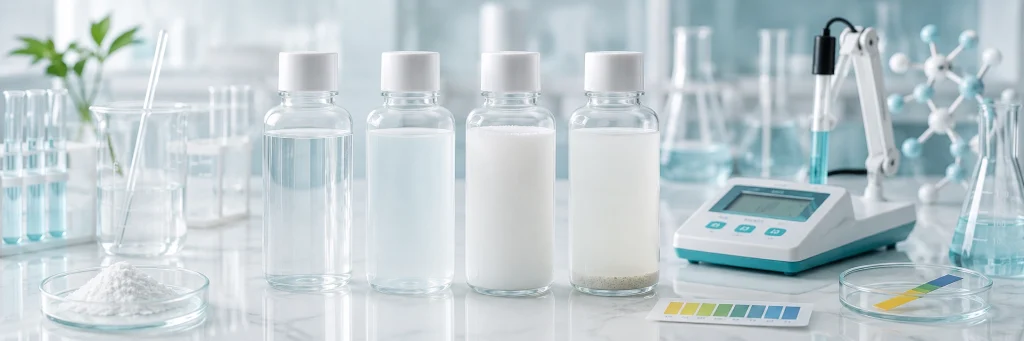
Sedimentation is one of the biggest challenges in hydroxyapatite mouthwash. Since hydroxyapatite particles do not truly dissolve in water, they may slowly settle at the bottom of the bottle.
This does not always mean the formula has failed. Some mineral suspensions are designed as “shake before use” products. But if the sediment becomes hard, uneven or difficult to redisperse, the user experience will suffer.
Formulators should test sedimentation under different storage conditions, including room temperature, elevated temperature and repeated use simulation.
Gritty Mouthfeel
Hydroxyapatite particle size and dispersion quality can directly affect mouthfeel. If the particles are too large or poorly dispersed, the rinse may feel powdery or gritty.
Nano hydroxyapatite suspension may help improve smoothness, but particle size alone is not the only factor. The whole system matters, including viscosity, humectants, flavor, sweetener and mixing process.
Cloudy Appearance
Brands should understand that a hydroxyapatite mouthwash may not look like a clear blue or green conventional rinse. It may appear white, milky or slightly cloudy.
This can be turned into a positive visual identity if the packaging and product story are designed well. For example, a white mineral rinse in a clean frosted bottle can look more premium and technical than a standard transparent mouthwash.
Preservation
Because hydroxyapatite suspension is water-based, microbial control is important. The raw material itself should have clear microbial specifications, and the final formula needs a suitable preservative system.
Preservative efficacy should always be tested in the final product, especially if the formula is alcohol-free or contains natural extracts, sweeteners or gum-care ingredients.
pH Considerations
Mouthwash formulas are often designed within a gentle pH range for daily oral use. When formulating with hydroxyapatite, extremely acidic conditions are generally not ideal. A mild pH close to neutral is usually a better fit for enamel care positioning and mineral stability.
A practical target range for development may be around pH 6.5 to 7.5, but the final value should depend on the full formula, preservative system, flavor stability and market requirements.
Formulators should also check pH drift during stability testing. A formula may look good on day one but change over time, especially when multiple active ingredients, flavors and salts are included.
Ingredients That Pair Well with Hydroxyapatite Suspension
Hydroxyapatite suspension can be used alone as the main mineral care ingredient, but it often works better as part of a balanced oral care system.
Common pairing options include:
Xylitol for a clean oral care positioning and pleasant sweetness
Glycerin or sorbitol to improve mouthfeel and reduce dryness
Hyaluronic acid for a softer, more comfortable oral feel
Zinc salts for breath care positioning
Mild mint flavors for freshness without excessive burning
CPC for antibacterial positioning, where regulations and formula compatibility allow
Low levels of surfactants or solubilizers to support flavor dispersion
The best combination depends on the target product. A kids’ mouthwash, for example, may need a very mild flavor system and simple ingredient list. A premium adult mouthwash may allow a more complex formula with mineral care, breath care and gum comfort positioning.
Packaging and User Instructions
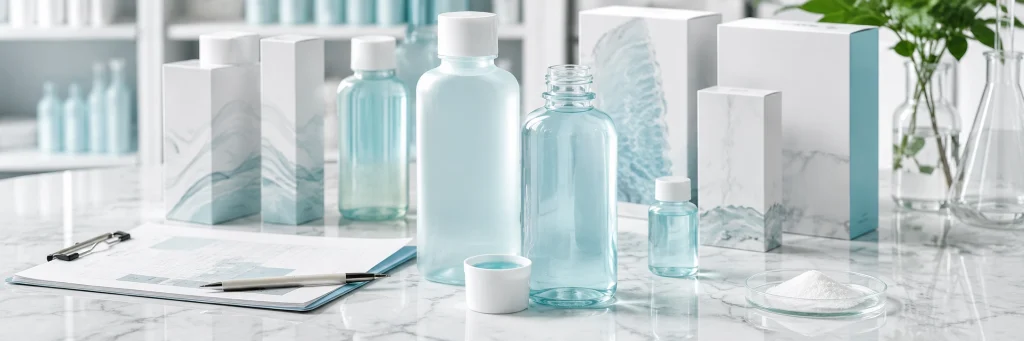
Packaging matters more than many people expect. If the formula is a suspension-type mouthwash, a clear bottle may reveal sediment at the bottom. This can worry consumers, even if the product is technically normal.
A semi-opaque, frosted or white bottle may be more suitable for hydroxyapatite mouthwash. It helps reinforce the mineral care concept and makes the product look intentional rather than unstable.
If sedimentation is expected, the label should include simple instructions such as “shake well before use.” The instruction should feel normal and easy, not like a warning.
The bottle opening also matters. If the product contains a suspended mineral system, the cap and dispensing structure should allow smooth pouring without clogging or uneven flow.
Suggested Positioning for Brands
A hydroxyapatite mouthwash can be positioned in several ways:
Mineral care mouthwash
Fluoride-free enamel care rinse
Alcohol-free mouthwash with hydroxyapatite
Daily oral care rinse for smooth tooth surface feel
Premium mouthwash for modern oral care routines
Sensitive teeth care mouthwash
For B2B ingredient suppliers, the most useful message is not only “we supply hydroxyapatite.” It is better to show how the ingredient can help brands develop a new mouthwash concept.
For example:
“Hydroxyapatite suspension for fluoride-free mouthwash development.”
“Mineral-based oral care ingredient for mouthwash, toothpaste and oral gel.”
“Pre-dispersed hydroxyapatite suspension designed for liquid oral care formulas.”
These messages are clear, practical and closer to what formulators and purchasing teams search for.
Supplier Selection: What to Ask Before Buying
Choosing a hydroxyapatite suspension supplier is not only about price. Formulators should ask for technical details before starting product development.
Important questions include:
What is the hydroxyapatite solid content?
What is the particle size range?
Is it nano hydroxyapatite or regular hydroxyapatite?
What is the dispersion medium?
What is the preservative system?
What is the pH range?
What is the recommended storage condition?
How long is the suspension stable?
Does the supplier provide COA, specification sheet and safety documents?
Is the ingredient suitable for oral care applications?
Can the supplier provide formulation support?
A good supplier should be able to discuss stability, application range and documentation clearly. This is especially important for brands developing products for international markets.
FAQ
Can hydroxyapatite suspension be used in mouthwash?
Yes. Hydroxyapatite suspension can be used in mouthwash, especially in mineral care, enamel care and fluoride-free mouthwash concepts. The formula usually needs proper suspension design because hydroxyapatite is not fully water-soluble.
Will hydroxyapatite mouthwash be transparent?
Usually not. Hydroxyapatite is a dispersed mineral particle, so the mouthwash may look cloudy, milky or slightly white. This can be acceptable if the product is designed and marketed as a mineral suspension rinse.
Does hydroxyapatite suspension settle over time?
It may settle, depending on particle size, viscosity and the suspension system. Formulators can improve stability with proper dispersion, suspending agents and packaging design. Some products may also use “shake before use” instructions.
Is nano hydroxyapatite better for mouthwash?
Nano hydroxyapatite may provide better dispersion and smoother mouthfeel, but the final result depends on the full formula. Safety documentation, particle size data and regulatory compliance should be reviewed before use.
What claims can brands use for hydroxyapatite mouthwash?
Common claim directions include enamel care, mineral care, fluoride-free oral care, smooth tooth surface feel and daily oral care support. Strong medical or treatment claims should be avoided unless supported by proper evidence and allowed by local regulations.
Conclusion
Hydroxyapatite suspension gives mouthwash brands a way to move beyond basic fresh breath claims. It supports a stronger mineral care story and fits well with fluoride-free, enamel care and premium oral care positioning.
For formulators, the ingredient is promising but requires careful handling. Sedimentation, mouthfeel, pH, preservation, packaging and claim language all need to be considered from the beginning.
A successful hydroxyapatite mouthwash is not just a formula with mineral particles added in. It is a product where the ingredient format, visual appearance, user experience and marketing story all work together.
For oral care brands looking for a more differentiated rinse product, hydroxyapatite suspension is worth serious consideration.
CTA
Looking for hydroxyapatite suspension for mouthwash, toothpaste or oral care formulations? Contact us to request specifications, samples and formulation support.






Please leave us a message.