

Medical Hydroxyapatite Raw Material: Certified Manufacturer & Wholesale Price
2026-09-20
- What Is Medical Grade Hydroxyapatite Raw Material?
- Key Technical Specifications for Medical HA Powder
- Manufacturing Processes: Ensuring Consistency and Safety
- Applications of Medical Hydroxyapatite Raw Material
- Regulatory Compliance and Quality Certifications
- How to Choose the Right Hydroxyapatite Supplier
- Common Challenges in Using HA Raw Material
- Comparison: Medical Grade vs. Industrial Grade Hydroxyapatite
- FAQ: Sourcing Medical Hydroxyapatite Raw Material
- Why Choose Jinan Meiyi Biotechnology?
- Conclusion and Next Steps
Medical hydroxyapatite raw material is a high-purity, bioactive calcium phosphate ceramic widely used in orthopedic and dental implants. As a specialized provider of high-performance biomaterials, Jinan Meiyi Biotechnology Co., Ltd. supplies GMP-compliant hydroxyapatite powder with controlled crystallinity, stoichiometric Ca/P ratios (1.67), and verified biocompatibility. Our wholesale pricing and strategic sourcing model support scalable production for bone grafts, coating formulations, and regenerative medicine applications. This guide details technical specifications, quality certifications, and sourcing strategies for B2B buyers seeking reliable, medical-grade raw materials through our vetted global supply chain.
What Is Medical Grade Hydroxyapatite Raw Material?
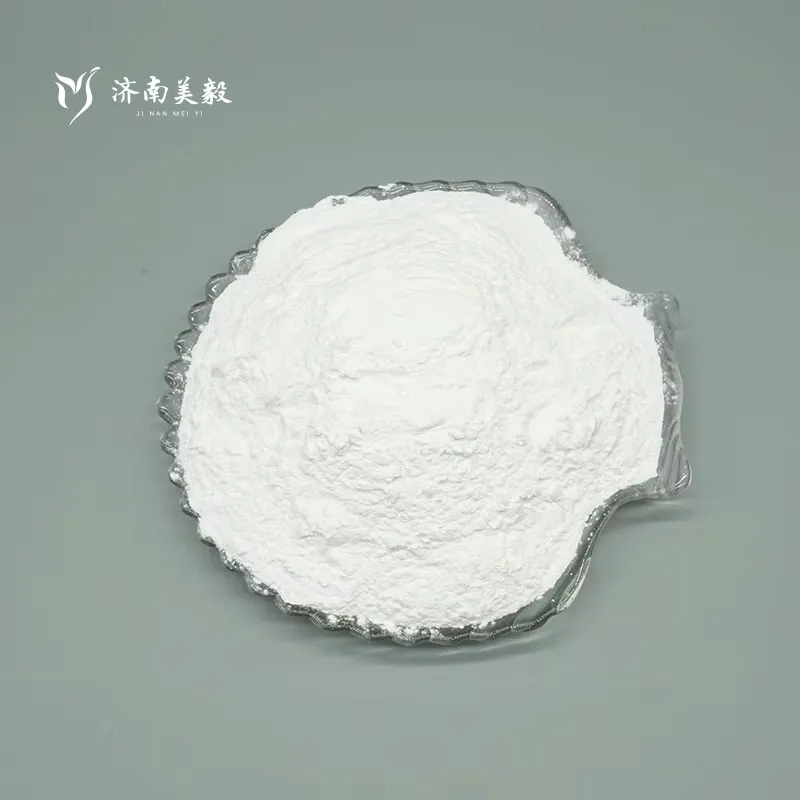
Hydroxyapatite (HA), chemically represented as Ca10(PO4)6(OH)2, is the primary mineral component of human bone and teeth. In the context of medical hydroxyapatite raw material, it refers to synthetically produced HA powder engineered to meet strict regulatory standards for implantable devices and biomedical applications.
Unlike industrial-grade HA used in agriculture or water filtration, medical-grade HA requires precise control over chemical purity, particle size distribution, and phase composition. The material must be free from toxic impurities such as heavy metals, endotoxins, and residual solvents. Its primary value lies in its osteoconductivity—the ability to support bone growth along its surface—making it indispensable in modern reconstructive surgery and dentistry.
Chemical Structure and Biological Significance
The crystal structure of hydroxyapatite closely mimics the inorganic phase of natural bone. This structural similarity allows for direct chemical bonding with living bone tissue, a process known as osseointegration. For manufacturers of medical devices, the quality of the raw HA powder directly influences the performance of the final implant.
- Calcium-to-Phosphorus Ratio: The ideal stoichiometric ratio is 1.67. Deviations can lead to the presence of other calcium phosphate phases like tricalcium phosphate (TCP), which degrade at different rates.
- Crystallinity: High crystallinity offers greater stability and slower resorption, suitable for long-term implants. Low crystallinity dissolves faster, aiding in rapid bone replacement.
- Ionic Substitutions: Natural bone contains trace ions (carbonate, magnesium, fluoride). Synthetic medical HA can be doped with these ions to enhance specific biological responses, such as antibacterial properties or accelerated healing.
Key Technical Specifications for Medical HA Powder
When sourcing hydroxyapatite raw material medical grade, procurement teams and R&D engineers must evaluate specific technical parameters. These specifications determine whether the material is suitable for sintering, plasma spraying, or use as a cement component.
| Parameter | Standard Specification | Impact on Application |
|---|---|---|
| Purity | > 98.5% – 99.9% | Ensures biocompatibility and prevents inflammatory responses caused by impurities. |
| Ca/P Molar Ratio | 1.65 – 1.67 | Critical for phase stability. Ratios below 1.67 may indicate TCP presence, affecting degradation rates. |
| Particle Size (D50) | 0.5 µm – 100 µm (Customizable) | Smaller particles sinter better for dense ceramics; larger particles are used for porous scaffolds. |
| Crystallinity | 30% – 95% (Adjustable) | Determines solubility. High crystallinity for load-bearing implants; low for resorbable bone fillers. |
| Specific Surface Area | 20 – 80 m²/g | Higher surface area enhances protein adsorption and cell attachment but may increase agglomeration. |
| Endotoxin Level | < 0.5 EU/mL | Mandatory for injectable or implantable applications to prevent immune reactions. |
Phase Purity and XRD Analysis
X-Ray Diffraction (XRD) is the standard method for verifying phase purity. High-quality medical HA should show sharp, distinct peaks corresponding to the hexagonal crystal system of hydroxyapatite. The absence of peaks for beta-tricalcium phosphate (β-TCP) or calcium oxide (CaO) is crucial unless a biphasic calcium phosphate (BCP) product is specifically requested. Manufacturers must provide XRD reports with every batch to ensure consistency.
Trace Metal Analysis
Inductively Coupled Plasma Mass Spectrometry (ICP-MS) is used to detect trace metals. Regulatory bodies like the FDA and EMA set strict limits for elements such as lead, arsenic, mercury, and cadmium. A certified manufacturer will provide a Certificate of Analysis (CoA) detailing these levels, ensuring they fall well below ISO 13785 limits for implant materials. At Jinan Meiyi Biotechnology, we ensure that all distributed batches come with full technical dossiers, including CoAs and safety data sheets, to guarantee regulatory readiness.
Manufacturing Processes: Ensuring Consistency and Safety
The production method of medical hydroxyapatite raw material significantly affects its physical and chemical properties. Understanding these processes helps buyers select the right supplier for their specific application needs. While Jinan Meiyi Biotechnology operates as a strategic sourcing partner rather than a direct manufacturer, we collaborate exclusively with certified facilities that adhere to internationally accepted quality management systems, ensuring the highest standards in production.
Wet Chemical Precipitation
This is the most common method for producing high-purity HA powder. It involves reacting calcium sources (such as calcium nitrate or calcium hydroxide) with phosphate sources (such as diammonium hydrogen phosphate) in an aqueous solution.
- Control: pH, temperature, and stirring speed are tightly controlled to manage particle size and morphology.
- Advantages: High chemical homogeneity, ability to dope with ions, and cost-effectiveness for large-scale production.
- Post-Processing: The resulting precipitate is washed extensively to remove ammonium and nitrate ions, then dried and calcined at temperatures between 600°C and 1000°C to stabilize the crystal structure.
Sol-Gel Method
The sol-gel process offers superior control over molecular mixing, resulting in highly homogeneous powders with lower processing temperatures.
- Process: Uses alkoxide precursors that undergo hydrolysis and polycondensation to form a gel.
- Benefits: Produces nano-sized particles with high surface area, ideal for bioactive coatings and composite materials.
- Limitations: Higher cost and longer processing time compared to precipitation.
Hydrothermal Synthesis
Hydrothermal synthesis involves crystallizing HA from aqueous solutions at high temperatures and pressures.
- Outcome: Produces highly crystalline HA with well-defined morphologies (e.g., rods, plates).
- Application: Preferred for applications requiring specific crystal orientations or high thermal stability without extensive calcination.
Applications of Medical Hydroxyapatite Raw Material
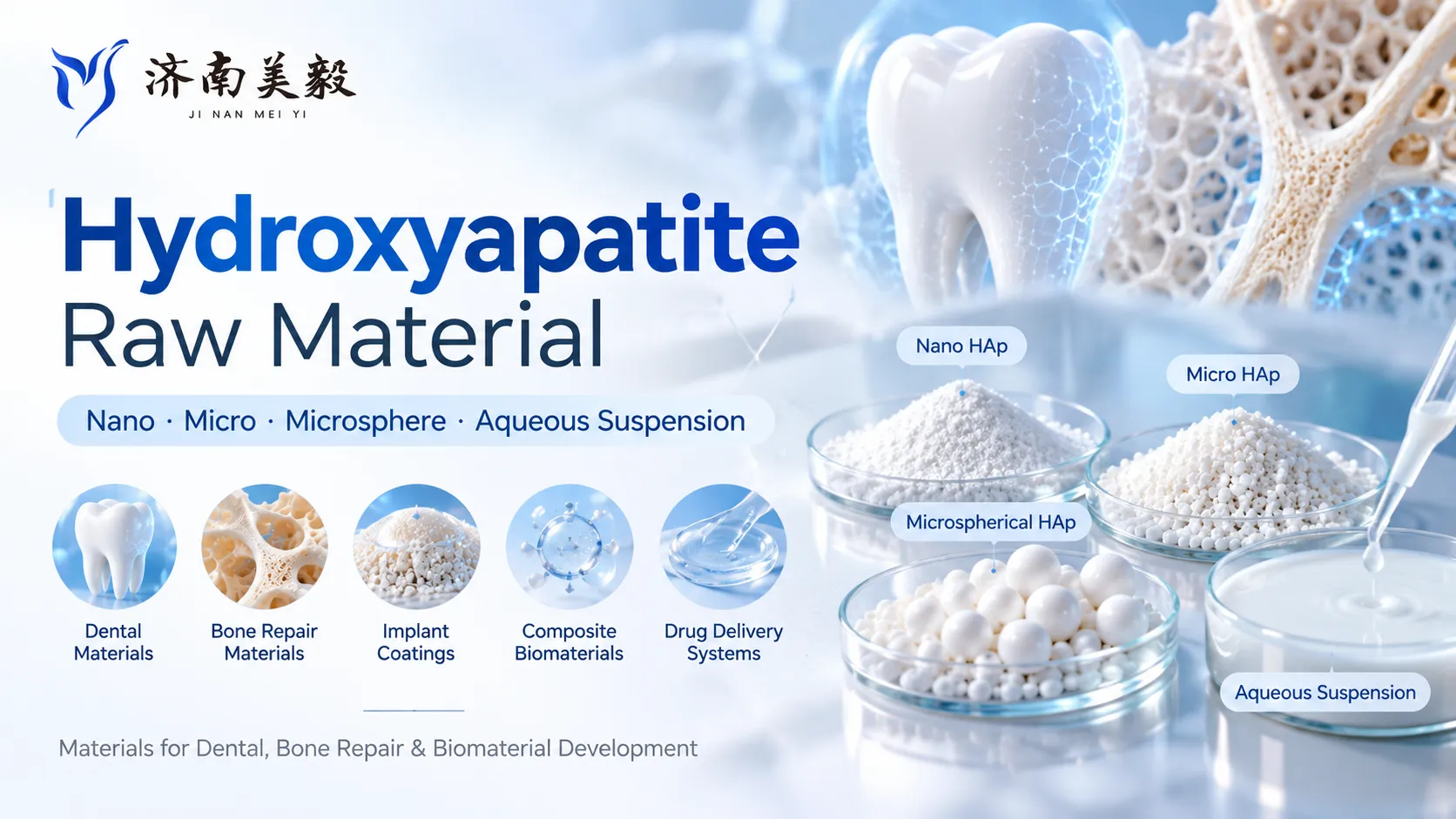
The versatility of HA powder allows it to be processed into various forms for diverse medical applications. As a trusted enabler for innovation across the global personal care and aesthetic medicine value chain, Jinan Meiyi Biotechnology supports clients across several key sectors with scientifically validated materials.
Orthopedic Implants and Coatings
Titanium and titanium alloy implants are widely used for joint replacements and spinal fusion due to their mechanical strength. However, titanium is bioinert. Coating these implants with medical hydroxyapatite raw material via plasma spraying creates a bioactive surface that encourages bone ingrowth.
The HA coating acts as a bridge between the metal implant and the host bone, reducing the risk of implant loosening—a common cause of revision surgeries. The adhesion strength of the coating depends heavily on the purity and particle size distribution of the raw HA powder used.
Dental Implants and Bone Grafts
In dentistry, HA is used for both implant coatings and as a bone void filler. After tooth extraction or periodontal surgery, HA granules or blocks are placed in the defect site to preserve bone volume and guide regeneration.
- Granules: Used for socket preservation and ridge augmentation. The particle size (typically 0.5-2mm) affects handling and integration speed.
- Blocks: Sintered HA blocks provide structural support for larger defects. They are often used in conjunction with titanium meshes.
Bone Cements and Putties
Calcium phosphate cements (CPCs) are formed by mixing HA powder with a liquid phase to create a paste that hardens in situ. These cements are used for minimally invasive procedures, such as vertebral augmentation (kyphoplasty) and craniofacial reconstruction.
The setting time, compressive strength, and injectability of the cement are dictated by the reactivity of the HA powder. Fine-tuning the particle size and crystallinity of the raw material allows manufacturers to customize these properties for specific clinical needs.
Drug Delivery Systems
Due to its high surface area and adsorption capacity, HA powder is an excellent carrier for drugs, growth factors, and genes. In oncology, HA nanoparticles can be loaded with chemotherapy agents for targeted delivery to bone tumors, leveraging HA’s natural affinity for bone tissue.
Regulatory Compliance and Quality Certifications
Sourcing hydroxyapatite raw material medical grade requires strict adherence to international regulatory frameworks. A reliable supplier must operate under a robust Quality Management System (QMS). Jinan Meiyi Biotechnology prioritizes reliability and transparency, maintaining strict control over storage conditions, shipping protocols, and delivery timelines to ensure product integrity from origin to end-user.
ISO 13485 Certification
ISO 13485 is the global standard for medical device quality management systems. It ensures that the manufacturer has consistent processes for design, production, and distribution. For raw material suppliers, this certification demonstrates a commitment to traceability, risk management, and regulatory compliance. We partner exclusively with manufacturers who hold such certifications, ensuring that every batch meets international standards.
Biocompatibility Testing (ISO 10993)
All medical-grade HA must undergo rigorous biocompatibility testing as per ISO 10993 standards. Key tests include:
- Cytotoxicity: Ensures the material does not kill cells.
- Sensitization: Checks for allergic reactions.
- Irritation: Verifies that the material does not cause local irritation.
- Genotoxicity: Ensures the material does not damage genetic information.
- Implantation: Long-term studies in animal models to assess local tissue response.
REACH and RoHS Compliance
For global distribution, especially in Europe, compliance with REACH (Registration, Evaluation, Authorisation and Restriction of Chemicals) and RoHS (Restriction of Hazardous Substances) is mandatory. These regulations restrict the use of specific hazardous substances, ensuring the safety of the material for both patients and healthcare workers.
How to Choose the Right Hydroxyapatite Supplier
Selecting the right partner for medical hydroxyapatite raw material is a critical decision that impacts product performance and regulatory approval. Here are key factors to consider, reflecting the partnership-oriented service model championed by Jinan Meiyi Biotechnology.
1. Verify Supply Chain Integrity
Not all suppliers manufacture their own HA, and many act merely as traders without quality oversight. Working with a strategic sourcing partner like Jinan Meiyi Biotechnology offers better control over quality and supply chain stability. We leverage a globally integrated and vetted supply chain, maintaining long-term cooperative relationships with internationally recognized suppliers. This ensures consistent access to technically advanced, regulatory-compliant, and scientifically validated materials.
2. Request Comprehensive Documentation
A trustworthy supplier will provide detailed documentation for every batch, including:
- Certificate of Analysis (CoA) with actual test results.
- XRD and FTIR spectra confirming phase purity.
- SEM images showing particle morphology.
- Biocompatibility test reports from accredited third-party labs.
- Stability data supporting shelf-life claims.
3. Assess Customization Flexibility
Different applications require different HA properties. Can the supplier adjust particle size, crystallinity, or ion doping levels? A flexible partner can tailor the raw material to your specific formulation needs. Through our technical consultation services, we help clients identify the exact specifications required for their R&D needs, whether for fast-resorbing bone grafts or stable coating powders.
4. Evaluate Supply Chain Reliability
Consistency is key in medical manufacturing. Ensure the supplier has sufficient production capacity to meet your demand scales, from pilot batches to commercial volumes. Jinan Meiyi Biotechnology actively monitors emerging trends and supply chain dynamics to mitigate risks, ensuring timely delivery and material consistency for our clients across Asia, Europe, and North America.
Common Challenges in Using HA Raw Material
Working with hydroxyapatite powder presents certain technical challenges. Understanding these issues can help optimize your manufacturing process.
Agglomeration
HA nanoparticles tend to agglomerate due to high surface energy. This can lead to uneven distribution in composites or coatings. To mitigate this:
- Use surfactants or dispersants during processing.
- Employ ultrasonic dispersion techniques.
- Choose supplier-grade powders with surface treatments designed to reduce agglomeration.
Sintering Shrinkage and Cracking
When sintering HA ceramics, significant shrinkage occurs, which can lead to cracking or distortion. Controlling the heating rate, holding temperature, and cooling rate is essential. Using HA powder with a narrow particle size distribution can help achieve uniform packing and reduce differential shrinkage.
Phase Decomposition
At high temperatures (>1200°C), HA can decompose into TCP and tetracalcium phosphate. This alters the material’s solubility and mechanical properties. To prevent this:
- Monitor sintering temperatures carefully.
- Use high-purity starting materials to avoid catalytic impurities.
- Consider adding stabilizers if high-temperature processing is unavoidable.
Comparison: Medical Grade vs. Industrial Grade Hydroxyapatite
It is crucial to distinguish between medical and industrial HA, as using the wrong grade can have severe consequences.
| Feature | Medical Grade HA | Industrial Grade HA |
|---|---|---|
| Purity | > 98.5%, strictly controlled impurities | Variable, often contains heavy metals |
| Source | Synthetic (Chemical Precipitation/Sol-Gel) | Often derived from animal bones (Bovine/Porcine) |
| Pathogen Risk | None (Synthetic process eliminates pathogens) | Potential risk of prions/viruses if animal-derived |
| Regulatory Status | ISO 13485, FDA Master File, CE Mark supported | No medical regulatory support |
| Cost | Higher due to stringent QC and processing | Lower, suitable for non-medical uses |
| Application | Implants, bone grafts, drug delivery | Fertilizers, water filtration, cosmetics |
Using industrial-grade HA in medical applications is strictly prohibited due to the risk of immune rejection, disease transmission, and inconsistent performance. Always verify the source and certification of your raw material.
FAQ: Sourcing Medical Hydroxyapatite Raw Material
What is the shelf life of medical hydroxyapatite powder?
When stored in a cool, dry place in sealed containers, medical-grade HA powder typically has a shelf life of 2-3 years. However, it is essential to conduct stability testing on your specific batch to confirm usability over time, especially if the powder is exposed to humidity.
Can hydroxyapatite be sterilized?
Yes, HA powder can be sterilized using gamma irradiation or ethylene oxide (EtO) gas. Autoclaving (steam sterilization) is generally not recommended for loose powder as it can alter the crystallinity and cause agglomeration. Discuss sterilization requirements with your supplier to ensure the material maintains its properties post-sterilization.
What is the difference between stoichiometric and non-stoichiometric HA?
Stoichiometric HA has a Ca/P ratio of exactly 1.67. Non-stoichiometric HA (often calcium-deficient) has a lower ratio and may contain other phosphate phases. Stoichiometric HA is more stable and resists resorption, making it suitable for long-term implants. Non-stoichiometric HA dissolves faster, which is beneficial for temporary bone scaffolds that need to be replaced by natural bone.
Do you provide custom particle sizes?
Through our network of certified manufacturing partners, we offer customization services. We can facilitate the milling and classification of HA powder to meet specific particle size distributions (D10, D50, D90) required for your application, whether it’s for fine coatings or coarse granules for bone void fillers.
Is synthetic HA better than bovine-derived HA?
Synthetic HA is generally preferred in modern medical applications. It offers higher purity, no risk of zoonotic disease transmission (such as mad cow disease), and consistent physicochemical properties. Bovine-derived HA may have a similar structure but lacks the reproducibility and safety profile of high-quality synthetic HA.
Why Choose Jinan Meiyi Biotechnology?
Headquartered in Jinan, Shandong Province, and operating as a subsidiary of Pacific Kangtai Scientific Instruments, Jinan Meiyi Biotechnology Co., Ltd. stands as a trusted partner for B2B clients worldwide. We do not just distribute powder; we provide solutions backed by science, compliance, and a deep specialization in bioactive technology applications.
- Strategic Sourcing Partner: We function as a quality-assured distribution partner, eliminating the complexity of managing multiple vendors. You get access to internationally recognized suppliers through a single, reliable channel.
- Rigorous Quality Assurance: Our framework centers on supplier qualification, documentation traceability, and batch-level specification verification. Every raw material undergoes comprehensive evaluation prior to inclusion in our portfolio.
- Regulatory Support: We provide all necessary documentation (DMF, ISO certificates, CoA, SDS) to support your regulatory filings, ensuring clarity and compliance for global markets.
- Technical Collaboration: Our service philosophy is rooted in partnership. We offer technical consultation, regulatory intelligence sharing, and collaborative problem-solving to support R&D laboratories, CDMOs, and aesthetic clinics.
- Global Logistics: Reliable shipping with proper packaging to ensure material integrity upon arrival, serving clients across Asia, Europe, and North America.
Conclusion and Next Steps
Choosing the right medical hydroxyapatite raw material is fundamental to the success of your biomedical product. From orthopedic coatings to dental bone grafts, the quality of your HA powder dictates the biocompatibility, efficacy, and regulatory viability of your final device. By partnering with a knowledge-driven bridge like Jinan Meiyi Biotechnology, you mitigate risk, reduce sourcing complexity, and accelerate time-to-market.
Whether you are scaling up production or initiating a new R&D project, our team is ready to support your specific requirements. We invite you to request a sample kit or a detailed technical consultation to discuss how our high-grade, scientifically validated HA can enhance your product portfolio.
Ready to secure your supply chain?
Contact our sales engineering team today for a customized quote and technical datasheet. Let us help you build the future of regenerative medicine with premium, certified hydroxyapatite.





Please leave us a message.