

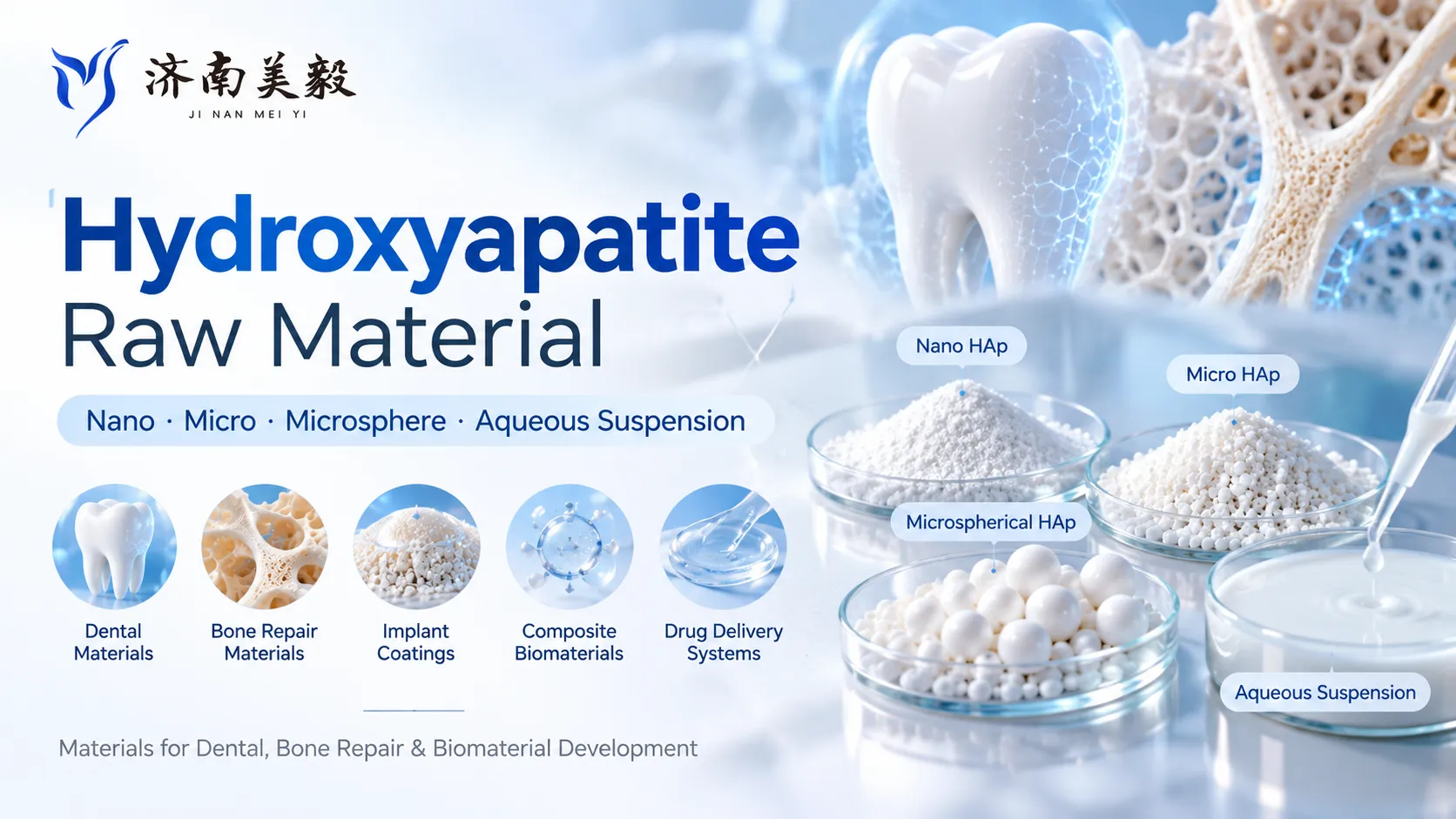
Hydroxyapatite Raw Material: Nano, Micro and Microsphere Options for Different Applications
2026-09-28
Explore different Hydroxyapatite particle sizes and morphologies for dental, bone repair, coating, composite biomaterial and delivery-system development.
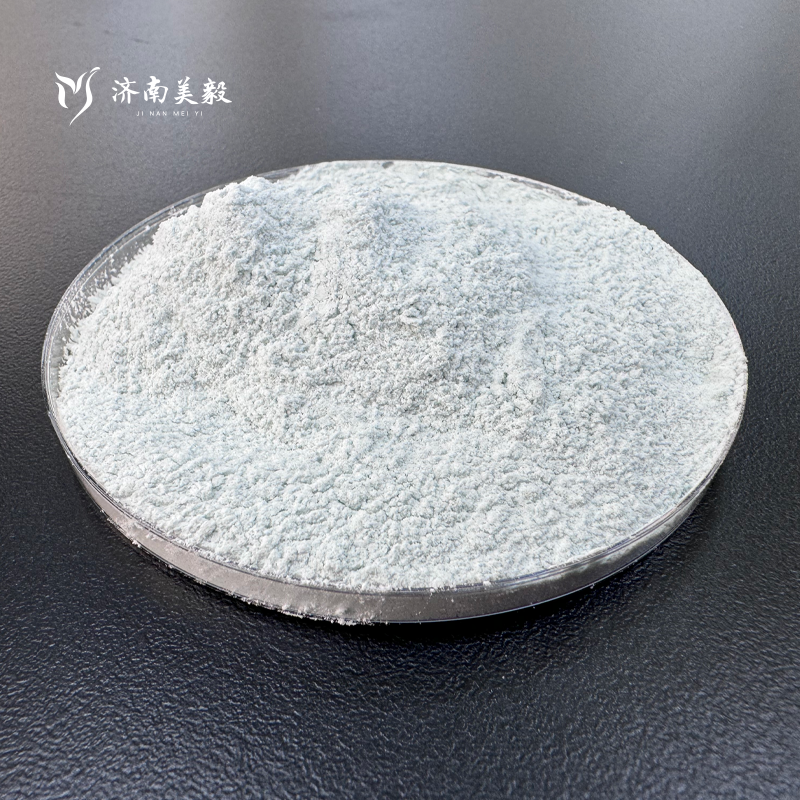
Hydroxyapatite (HAp) is a calcium phosphate biomaterial whose mineral composition is highly similar to the inorganic component of human bone and teeth. Because of its biocompatibility, mineral affinity and material stability, Hydroxyapatite has become an important raw material for medical devices, dental materials, biomaterial composites and advanced formulation development.
At Jinan Meiyi Biotechnology Co., Ltd., we provide Hydroxyapatite raw materials in different particle sizes and morphologies to support a wide range of R&D and product-development requirements.
Nano Hydroxyapatite
Nano Hydroxyapatite is designed for applications where high surface area, fine dispersion and close interfacial contact are important.
Compared with larger particles, nano-scale HAp can provide a larger effective contact area within a formulation or composite material system.
Typical development directions may include:
- Dental and oral-care materials
- Bone repair composites
- Biomimetic mineral systems
- Functional coatings
- Hydrogel and polymer composites
- Local delivery systems
Different nano particle-size options can be selected according to formulation requirements, dispersion behavior and target application.
Micro-Scale Hydroxyapatite
Micro-scale Hydroxyapatite provides another option for developers who require larger and more stable inorganic particles.
Depending on the product design, micro-scale HAp can be used as a functional mineral component in:
- Bone filling materials
- Dental formulations
- Composite biomaterials
- Implant-related materials
- Functional inorganic fillers
Particle size selection should be evaluated together with formulation viscosity, dispersion method, processing conditions and the intended final product.
Microspherical Hydroxyapatite
For projects requiring more advanced structural control, Microspherical Hydroxyapatite provides additional design possibilities.
By adjusting parameters such as particle size, porosity, pore structure, specific surface area and crystallinity, HAp microspheres can be developed for different functional requirements.
Potential development directions include:
- Bone repair materials
- Wound-care materials
- Hemostatic material systems
- Implant coatings
- Drug or active-ingredient delivery
- Sustained-release platforms
- Composite hydrogel systems
Microspherical HAp is particularly suitable for R&D projects where morphology and internal pore structure are important to material performance.
Hydroxyapatite Aqueous Suspension
For customers who prefer easier incorporation into liquid or semi-solid formulations, Hydroxyapatite can also be supplied in aqueous suspension form according to project requirements.
Compared with dry powder, an aqueous suspension may simplify dispersion during formulation development and help reduce additional powder-dispersion steps.
The appropriate concentration, particle size and dispersion system can be discussed according to the final application.
How to Select the Right Hydroxyapatite Grade
There is no single Hydroxyapatite specification suitable for every application.
When selecting an HAp raw material, developers should consider several factors together:
- Particle size
- Particle morphology
- Purity
- Crystallinity
- Dispersion performance
- Porosity
- Surface area
- Final formulation system
- Intended application
- Regulatory pathway
For example, a nano-grade material may be more suitable for applications requiring high interfacial contact, while microspherical HAp may offer greater flexibility for structural design, adsorption and delivery-system development.
Technical and Regulatory Documentation
For medical and biomaterial projects, raw-material evaluation is not limited to physical specifications.
Documentation, batch consistency and traceability are also important throughout product development and regulatory evaluation.
Depending on project requirements, Jinan Meiyi can provide supporting documentation including:
- COA
- MSDS
- Product specifications
- Third-party testing information
- Technical data
- Medical device master file-related documentation where applicable
Customized particle size, morphology and formulation formats can also be discussed for specific development projects.
Work with Jinan Meiyi
Whether you are developing a dental material, bone repair product, medical coating, composite biomaterial or local delivery system, selecting the appropriate Hydroxyapatite grade is an important first step.
Jinan Meiyi Biotechnology Co., Ltd. supports customers with Hydroxyapatite raw materials, technical documentation, sample evaluation and customized material development.
For specifications, COA, MSDS, samples or customized Hydroxyapatite solutions, please contact our






Please leave us a message.