

The Ultimate Guide to Ginseng Extract Benefits & Uses for Modern Product Development
2026-04-02

Introduction
Ginseng extract has evolved from a traditional herbal remedy into a high-value functional ingredient across modern industries. Derived primarily from the roots of the Panax species, it contains powerful bioactive compounds—most notably ginsenosides—that drive its wide-ranging health benefits.
Today, we see a surging demand for premium ginseng extract in nutraceuticals, functional foods, and skincare formulations. Brands are actively seeking scientifically supported, plant-based adaptogens that align with consumer expectations for clean labels. Whether you are developing energy supplements, functional beverages, or anti-aging skincare, ginseng extract offers both clinical performance and strong market appeal.
In this comprehensive guide, we will explore:
-
The core health benefits of ginseng extract
-
Its diverse applications across B2B industries
-
Key formulation and manufacturing insights
-
Practical sourcing and quality control considerations

What Is Ginseng Extract?
Types of Ginseng Used in Botanical Extracts
Choosing the right raw material is the first step in product development. The two most commonly used species in commercial extracts include:
| Ginseng Type | Botanical Name | Primary Effects | Best Used For |
| Asian Ginseng | Panax ginseng | Stimulating, energizing, warming | Pre-workout supplements, nootropics, energy drinks |
| American Ginseng | Panax quinquefolius | Calming, cooling, immune-regulating | Stress-relief formulas, wellness blends, immune support |
The choice between these types depends on your product’s desired functional outcome and target market positioning.
Key Active Compounds: The Power of Ginsenosides
The effectiveness of ginseng extract lies in its complex phytochemical composition:
-
Ginsenosides: The primary bioactive markers responsible for adaptogenic, anti-inflammatory, and antioxidant effects.
-
Polysaccharides: Complex carbohydrates that contribute heavily to immune system support.
-
Antioxidants: Flavonoids and phenolic compounds that help combat oxidative stress.
Formulator’s Note: Standardization is critical in B2B applications. High-quality extracts are often defined by their ginsenoside content (e.g., 5%, 10%, or 20% HPLC), ensuring consistent efficacy and batch-to-batch reliability.
Standard Extraction Methods
Different extraction techniques directly influence both the potency of the active compounds and the final application:
-
Water Extraction: Yields highly soluble powders; commonly used for food and beverage applications.
-
Ethanol Extraction: Yields higher concentrations of ginsenosides; ideal for potent dietary supplements.
-
Supercritical CO₂ Extraction: An advanced, eco-friendly method offering high purity, potent volatile oils, and zero solvent residue.
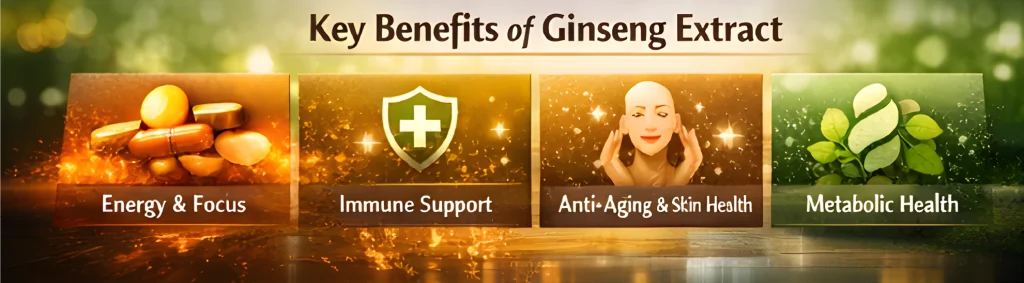
Top Health Benefits of Ginseng Extract
1. Energy & Cognitive Support
One of the most recognized benefits of ginseng extract is its adaptogenic effect, which helps the body maintain homeostasis during stress and fatigue. It is clinically supported to:
-
Enhance mental clarity and cognitive function
-
Improve focus, memory, and daily productivity
-
Reduce both physical and mental fatigue (burnout)
2. Immune System Enhancement
Ginseng extract supports immune function through a multi-targeted approach:
-
Modulating immune cell activity (macrophages and natural killer cells)
-
Providing strong anti-inflammatory properties
-
Enhancing the body’s natural resistance to environmental stressors
3. Anti-Aging & Skin Health
In the cosmetics industry, topical ginseng extract is prized for its ability to rejuvenate the skin at a cellular level:
-
Stimulates natural collagen production
-
Improves skin elasticity and firmness
-
Protects against UV-induced oxidative damage and photoaging
4. Metabolic & Functional Health
Emerging nutraceutical research highlights additional metabolic benefits, including:
-
Supporting healthy blood sugar balance and insulin sensitivity
-
Contributing to cardiovascular health by promoting healthy lipid profiles
Ginseng Extract Applications Across Industries
Dietary Supplements & Nutraceuticals
Ginseng extract is a staple ingredient in the supplement sector, commonly found in:
-
Capsules, tablets, and standardized powders
-
Energy and stress-relief (adaptogenic) formulations
-
It works synergistically with ingredients like Vitamin B-complex, L-Theanine, and Ashwagandha to enhance overall product efficacy.
Food & Beverage Industry
In F&B applications, water-soluble ginseng extract is increasingly used in:
-
Functional energy drinks and herbal teas
-
Wellness shots and fortified nutritional bars
-
Formulation Tip: Its natural bitterness requires strategic taste-masking, such as pairing with natural sweeteners (Stevia, Monk Fruit) or strong complementary flavors like citrus or ginger.
Cosmetics & Personal Care
Ginseng extract plays a key role in the “clean beauty” movement:
-
Anti-aging serums and revitalizing face creams
-
Scalp-stimulating hair care treatments
-
Its natural origin and proven efficacy align perfectly with consumer trends favoring plant-based, functional skincare.
Formulation Considerations for Product Developers
To ensure a successful product launch, R&D teams must consider several technical factors:
-
Recommended Dosage: Supplements require standardized extracts based on targeted ginsenoside content (often 100mg – 400mg per serving). Beverages use lower concentrations to maintain flavor balance.
-
Solubility & Stability: Water-soluble extracts are mandatory for clear beverages. Oil-compatible forms or liposomal delivery systems may be needed for specific cosmetic emulsions. Stability can be influenced by high heat, extreme pH, and UV light exposure.
-
Sensory Impact: In ingestible products, ginseng introduces earthy, herbal, and bitter notes, alongside slight color changes (usually yellow-brown).
How to Choose a High-Quality Ginseng Extract Supplier
Reliable sourcing is the backbone of product success. When evaluating botanical extract suppliers, use this checklist:
-
Standardization & Purity: Does the supplier provide accurate HPLC testing for ginsenoside content?
-
Certifications: Look for facilities with GMP, ISO, FDA-registration, or EFSA compliance. Organic and Non-GMO certifications offer a premium market advantage.
-
Traceability: Request a comprehensive Certificate of Analysis (COA), heavy metal testing, and pesticide residue reports.
Market Trends: Ginseng vs. Other Adaptogens
As the adaptogen market grows, how does ginseng compare to other popular ingredients?
| Adaptogen | Primary Market Focus | Best Application |
| Ginseng Extract | Energy, cognitive boost, anti-aging | Pre-workouts, focus nootropics, premium skincare |
| Ashwagandha | Calming, stress/cortisol reduction | Sleep aids, anxiety relief formulas |
| Rhodiola Rosea | Physical endurance, fatigue recovery | Sports nutrition, athletic recovery |
Frequently Asked Questions (FAQs)
What is ginseng extract used for in manufacturing? It is widely used as a functional active ingredient in dietary supplements, functional beverages, and cosmetic skincare products to provide energy, immunity, and anti-aging benefits.
Is ginseng extract safe for daily use in supplements? Yes, when formulated within recommended dosages and sourced from reputable, GMP-certified suppliers, it is highly safe and well-tolerated by consumers.
How is ginseng extract standardized? In B2B trading, it is typically standardized by measuring its ginsenoside content via HPLC (High-Performance Liquid Chromatography) to ensure consistent clinical potency.
Can Panax ginseng be used in clear beverages? Absolutely. Advanced water-extraction techniques provide highly soluble ginseng powders that integrate seamlessly into clear functional drinks and wellness shots.
Conclusion & Call to Action
Ginseng extract stands out as a multi-functional, market-ready ingredient that bridges high clinical performance with natural consumer appeal. From cutting-edge energy supplements to premium anti-aging skincare, its versatility and robust scientific backing make it an essential component in modern product development.
If your R&D team is looking to innovate with a proven, high-demand adaptogen, ginseng extract offers both technical value and immense commercial potential.
👉 Ready to elevate your product line? Contact our ingredient specialists today to request samples, access technical datasheets (TDS/COA), or discuss customized ginseng extract solutions tailored to your exact formulation needs.




Please leave us a message.