

Hydroxyapatite Powder Guide: Grades, Applications, Benefits and Supplier Selection
2026-03-11
Hydroxyapatite powder has become an important calcium phosphate material for dental care, bone repair, implant coatings, cosmetic formulations and biomaterial research. Because its mineral structure is closely related to the inorganic phase of human bones and teeth, hydroxyapatite is widely discussed by formulators, dental brands, medical material developers and R&D teams.
For brands and manufacturers, choosing hydroxyapatite is not only about finding a white powder raw material. The key is to understand its grade, purity, particle size, morphology, dispersion performance, application direction and supplier quality control. These factors directly affect formulation stability, product positioning and long-term development potential.
This guide explains what hydroxyapatite is, where it is used, what benefits it offers and how buyers can evaluate a suitable hydroxyapatite supplier.
What Is Hydroxyapatite?
Hydroxyapatite, often abbreviated as HAp or HA, is a calcium phosphate compound commonly represented as Ca₁₀(PO₄)₆(OH)₂. It is one of the main mineral components associated with bones and teeth, which is why it is frequently used in biomimetic and hard-tissue-related applications.
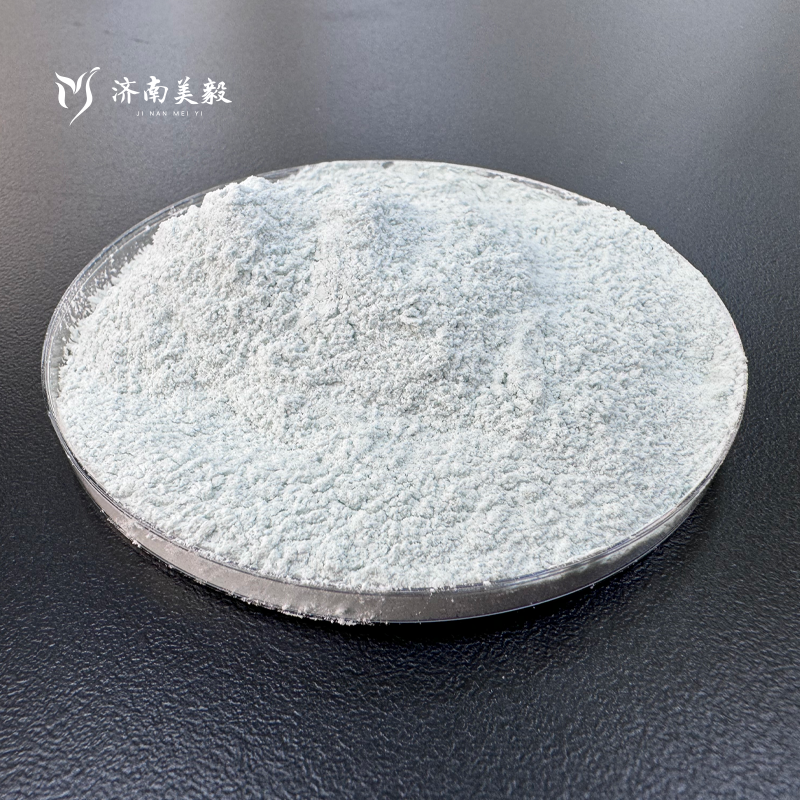
In raw material form, hydroxyapatite usually appears as a fine white or off-white powder. Depending on the production process and application requirements, it can be supplied in different particle sizes, purity levels, morphologies and surface characteristics.
For commercial product development, hydroxyapatite may be used in:
- Toothpaste and mouthwash
- Enamel care and sensitivity care products
- Dental materials
- Bone graft and bone repair materials
- Implant coating research
- Cosmetic and personal care concepts
- Laboratory and biomaterial R&D
Because the application range is broad, buyers should avoid treating all hydroxyapatite powder as the same material. A cosmetic oral care formulation, a dental material project and a medical biomaterial project may require very different specifications.
Why Hydroxyapatite Is Valued in Modern Formulation
Hydroxyapatite is valued because it combines mineral similarity, biocompatibility and formulation flexibility. In oral care, it is often used in fluoride-free toothpaste concepts, enamel-support formulations and sensitivity care products. In bone-related biomaterials, hydroxyapatite is studied and applied because of its similarity to the mineral phase of bone and its role in supporting osteoconductive material design.
From a product development perspective, hydroxyapatite offers several advantages:
1. Biomimetic Mineral Structure
Hydroxyapatite is structurally related to the mineral phase found in teeth and bone. This makes it attractive for brands that want to build a biomimetic product story, especially in oral care and dental materials.
2. Broad Application Potential
Unlike many ingredients that are limited to one category, hydroxyapatite can be used across oral care, dental, orthopedic, cosmetic and research fields. This makes it a flexible raw material for companies developing multiple product lines.
3. Suitable for Fluoride-Free Oral Care Concepts
Many oral care brands are exploring fluoride-free or biomimetic alternatives. Hydroxyapatite is often selected for toothpaste and mouthwash formulas aimed at enamel care, sensitivity support and daily mineral protection.
4. Customizable Particle Size and Morphology
Particle size and shape can affect dispersion, surface area, suspension stability and application performance. Nano hydroxyapatite, micro hydroxyapatite, rod-shaped particles and spherical particles may serve different formulation needs.
5. Strong B2B Market Potential
For raw material suppliers, hydroxyapatite is attractive because it connects with several growing markets: oral care, functional toothpaste, dental biomaterials, medical aesthetics, regenerative materials and advanced cosmetic ingredients.
Main Applications of Hydroxyapatite Powder
1. Hydroxyapatite in Oral Care Products
Oral care is one of the most active commercial application areas for hydroxyapatite. It can be used in toothpaste, mouthwash, oral gel, dental polishing products and enamel care formulations.
In toothpaste, hydroxyapatite is often positioned around:
- Enamel remineralization support
- Sensitivity care
- Fluoride-free formula concepts
- Daily mineral protection
- Biomimetic oral care
- Premium toothpaste formulations
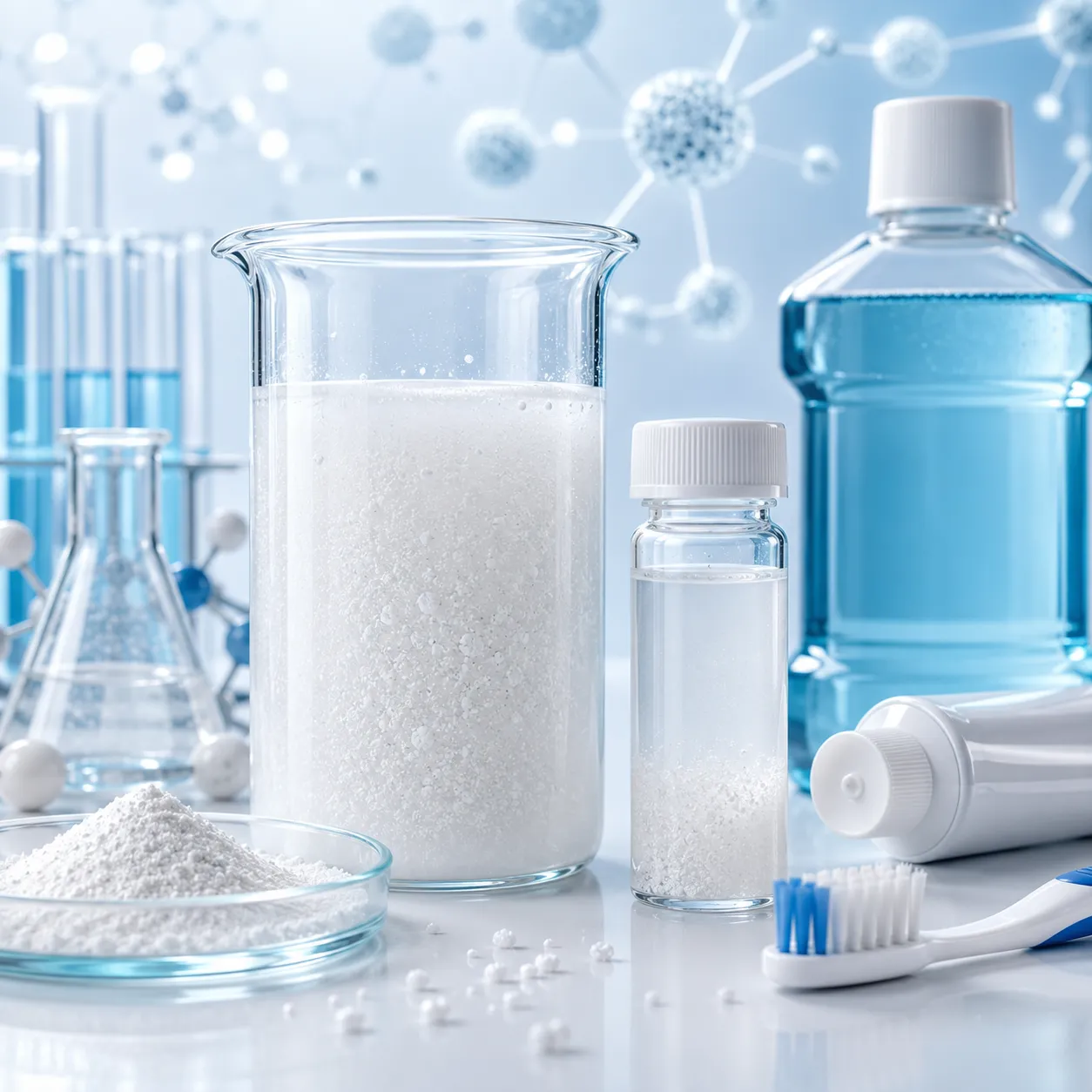
For mouthwash or water-based oral care systems, formulators need to pay attention to dispersion stability, sedimentation, pH compatibility and preservative systems. Hydroxyapatite is an inorganic mineral powder, so it does not dissolve like many active ingredients. A stable suspension system usually requires good dispersion technology and proper formula design.
Internal link suggestion:
Add a link here to your article about Hydroxyapatite Suspension for Mouthwash or Hydroxyapatite Stability in Water-Based Formulas.
2. Hydroxyapatite for Dental Applications
Hydroxyapatite is also important in dental material development. It may be used in dental repair materials, implant coatings, polishing systems, varnishes and bone-related dental applications.
In dental applications, buyers usually care more about:
- Particle size distribution
- Ca/P ratio
- Purity
- Crystallinity
- Heavy metal limits
- Microbial control
- Batch consistency
- Technical documentation
Compared with ordinary cosmetic-grade use, dental applications often require stricter quality control. If the material is intended for clinical, medical device or regulated dental use, buyers should confirm whether the supplier can provide the necessary technical documents and quality standards.
Internal link suggestion:
Add a link here to Hydroxyapatite Powder for Dental Applications.
3. Hydroxyapatite in Bone Repair and Orthopedic Materials
Hydroxyapatite is widely studied in bone repair and orthopedic biomaterials because of its relationship with calcium phosphate mineral structures in bone. It may be used in bone graft materials, bone cement systems, composite scaffolds and implant coating research.
For orthopedic and bone repair applications, hydroxyapatite selection is usually more technical. Developers may need to evaluate:
- Phase purity
- Crystallinity
- Porosity
- Sintering behavior
- Particle morphology
- Mechanical compatibility
- Biological performance
- Sterilization compatibility
Hydroxyapatite alone may not always provide the mechanical strength required for load-bearing applications, so it is often combined with other materials such as polymers, calcium phosphate phases or composite scaffold systems.
4. Hydroxyapatite in Cosmetic and Personal Care Formulations
Although hydroxyapatite is most strongly associated with oral care and bone-related materials, it is also used in certain cosmetic and personal care concepts. Depending on particle size and formula positioning, it may appear in products related to skin feel, mineral texture, brightening concepts, oil control or soft-focus effects.
For cosmetic applications, formulators should consider:
- Powder fineness
- Skin feel
- Whiteness
- Dispersibility
- Compatibility with emulsions
- Regulatory positioning
- Claim wording
Cosmetic brands should avoid making medical claims unless the product is properly registered for that purpose. For general cosmetic positioning, hydroxyapatite should be described carefully as a mineral-based functional raw material rather than a medical treatment ingredient.
Key Grades of Hydroxyapatite Powder
Hydroxyapatite powder can be divided into different grades depending on use case. The grade should match the final product application.
| Grade | Common Use | Key Concerns |
|---|---|---|
| Cosmetic grade | Toothpaste, mouthwash, personal care | Safety, whiteness, dispersion, particle size |
| Dental grade | Dental materials, enamel care, polishing systems | Purity, Ca/P ratio, particle size, documentation |
| Medical grade | Bone repair, implant coating, medical biomaterials | High purity, biocompatibility, strict QC, regulatory documents |
| Research grade | Lab research, material development | Specification flexibility, consistency, technical data |
For most commercial oral care brands, cosmetic grade or dental-grade hydroxyapatite may be sufficient, depending on local regulations and claim strategy. For medical device, orthopedic or injectable-related projects, the quality requirements become much stricter.
Internal link suggestion:
Add a link here to your existing article:
Medical Grade Hydroxyapatite: Purity Standards, Applications and Quality Requirements
What Specifications Should Buyers Check?
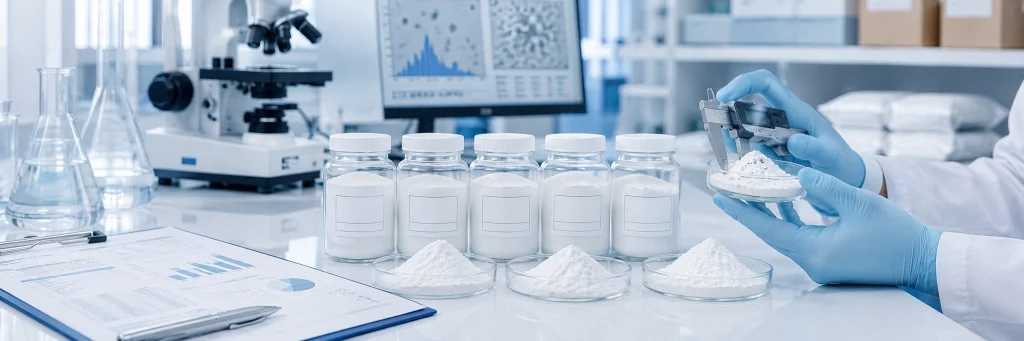
Before purchasing hydroxyapatite powder, buyers should ask for a complete specification sheet. A reliable supplier should be able to provide clear technical information rather than only a product name.
Important parameters include:
Particle Size
Particle size affects dispersion, surface area, mouthfeel, suspension stability and application performance. Nano hydroxyapatite and micro hydroxyapatite may behave differently in the same formulation.
Purity
Higher purity is important for dental, medical and advanced biomaterial applications. Buyers should check assay, impurity profile and production consistency.
Ca/P Ratio
The calcium-to-phosphorus ratio is an important indicator for hydroxyapatite quality. A ratio close to the theoretical value is often preferred for applications requiring material consistency.
Heavy Metals
Heavy metal limits should be controlled, especially for oral care, cosmetic and medical-related applications.
Microbial Limits
For personal care and oral care use, microbial control is important. Buyers should request microbial testing information when necessary.
Morphology
Particle shape may affect dispersion, texture, surface activity and performance. Rod-like, spherical or irregular particles may behave differently.
Documentation
A professional hydroxyapatite supplier should be able to provide documents such as COA, MSDS, specification sheet and basic technical support.
How to Choose a Hydroxyapatite Supplier
Choosing the right hydroxyapatite supplier is not only about price. A lower price may not be meaningful if the powder has unstable particle size, poor dispersion, weak documentation or inconsistent batches.
When evaluating a supplier, buyers should focus on the following points:
1. Application Matching
Ask whether the supplier understands your intended use. Hydroxyapatite for toothpaste, mouthwash, dental materials and medical biomaterials may require different specifications.
2. Stable Batch Quality
Batch consistency is critical for long-term formulation development. Ask for COA examples from different batches to compare key parameters.
3. Technical Support
A good supplier should be able to explain particle size, dispersion, pH compatibility, storage conditions and formulation precautions.
4. Customization Ability
For advanced projects, you may need customized particle size, morphology, surface treatment or suspension form. A supplier with R&D capability can better support these needs.
5. Export and Compliance Support
For international buyers, export documents, product classification, labeling information and compliance support can reduce purchasing risk.
Formulation Notes for Hydroxyapatite Powder
Hydroxyapatite powder is not a simple water-soluble active. It is an inorganic mineral powder, so formulators should pay attention to suspension and dispersion.
For toothpaste, common formulation concerns include:
- Abrasiveness balance
- Particle size and mouthfeel
- Compatibility with thickening systems
- Uniform dispersion
- Stability during storage
- Claim wording
For mouthwash or liquid systems, formulators should pay attention to:
- Sedimentation
- Re-dispersibility
- pH range
- Electrolyte compatibility
- Preservative compatibility
- Visual appearance
For cosmetic emulsions, formulators should evaluate:
- Powder dispersion
- Skin feel
- Formula viscosity
- Color impact
- Long-term stability
In many cases, pre-dispersed hydroxyapatite suspension may be easier to use than dry powder, especially for water-based products.
Common Mistakes When Buying Hydroxyapatite
Mistake 1: Only Comparing Price
Low price may hide problems such as poor purity, inconsistent particle size or weak documentation.
Mistake 2: Ignoring Particle Size
A powder that works in one formula may not perform well in another formula if the particle size is unsuitable.
Mistake 3: Using One Grade for Every Application
Cosmetic, dental and medical applications do not have the same quality requirements.
Mistake 4: Making Claims Before Confirming Regulations
Hydroxyapatite can support strong product positioning, but brands should check local cosmetic, oral care or medical device regulations before making claims.
Mistake 5: Not Testing Stability
Especially in water-based formulas, sedimentation and dispersion stability should be tested before commercial production.
FAQ About Hydroxyapatite Powder
Is hydroxyapatite the same as calcium hydroxyapatite?
They are closely related terms. Calcium hydroxyapatite is often used to describe the calcium phosphate mineral form of hydroxyapatite.
Is hydroxyapatite suitable for toothpaste?
Yes, hydroxyapatite is widely used in toothpaste and oral care formulations, especially in enamel care and fluoride-free product concepts. The final performance depends on particle size, formula design and dosage.
Can hydroxyapatite be used in mouthwash?
Yes, but mouthwash formulation is more challenging because hydroxyapatite is a mineral powder and may settle over time. Suspension stability, re-dispersibility and pH compatibility should be tested.
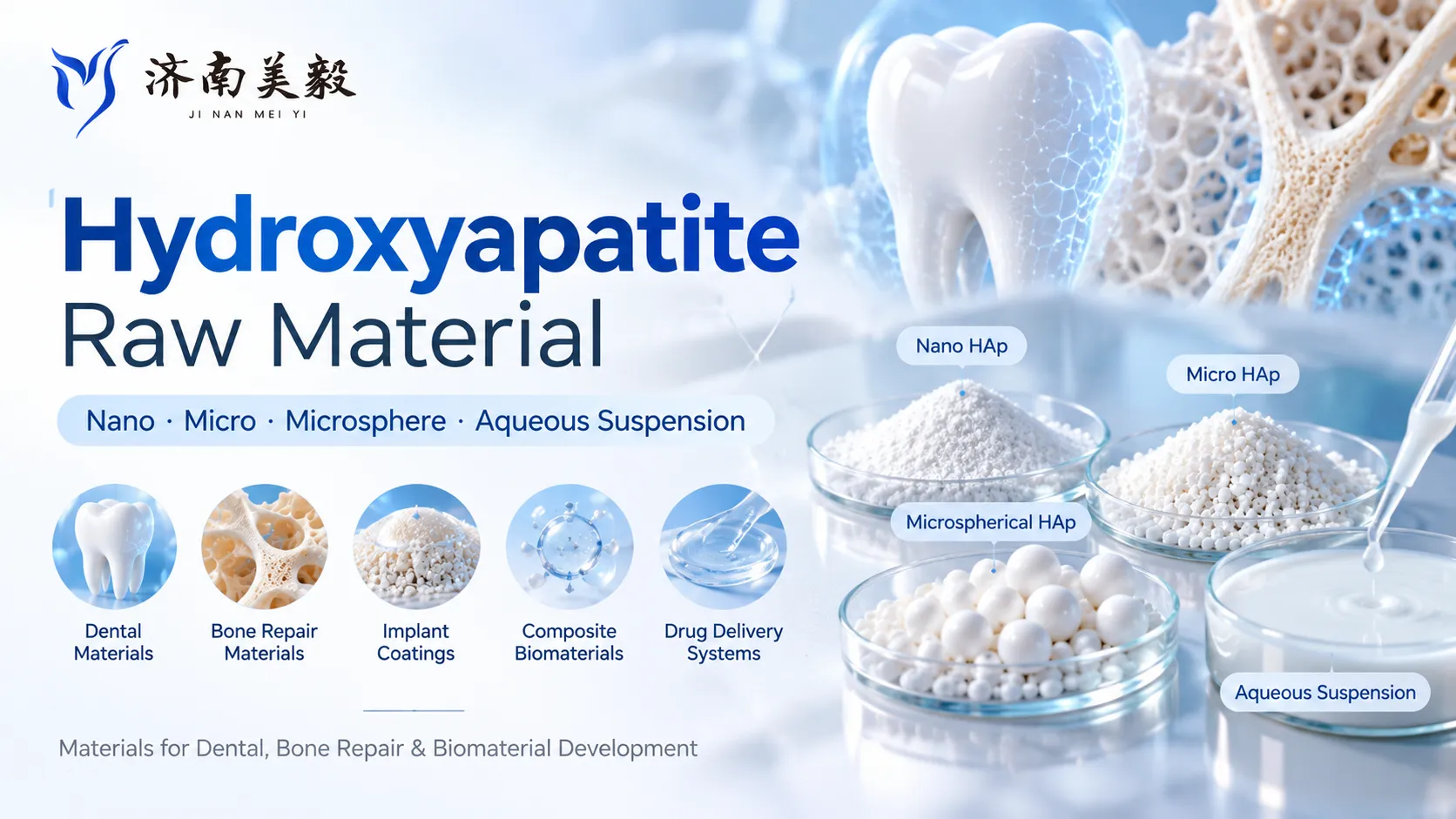
What is the difference between nano and micro hydroxyapatite?
Nano hydroxyapatite has smaller particle size and higher surface area, while micro hydroxyapatite has larger particles and may be easier to manage in some formulas. The best choice depends on the application and regulatory requirements.
What documents should a hydroxyapatite supplier provide?
Common documents include COA, MSDS, specification sheet, heavy metal test information, microbial test information and technical data related to particle size or purity.
Is medical grade hydroxyapatite different from cosmetic grade hydroxyapatite?
Yes. Medical grade hydroxyapatite usually requires stricter purity, documentation and quality control. It may also require additional testing depending on the intended application and regulatory pathway.
Conclusion
Hydroxyapatite powder is a versatile calcium phosphate material with strong potential in oral care, dental materials, bone repair, cosmetic formulations and biomaterial research. For brands and manufacturers, the key is not only choosing hydroxyapatite as an ingredient, but choosing the right grade, particle size, purity and supplier support.
A suitable hydroxyapatite supplier should provide stable quality, clear documentation, application-specific guidance and reliable batch consistency. Whether you are developing toothpaste, mouthwash, dental materials or advanced biomaterial products, technical matching is the foundation of successful hydroxyapatite formulation.
For buyers looking for high-quality hydroxyapatite powder, it is recommended to request samples, compare specifications, test formulation stability and confirm the supplier’s ability to support long-term product development.






Please leave us a message.