

Hydroxyapatite Powder for Oral Care and Skincare: Benefits, Applications and Quality Guide
2026-01-21
Introduction
As oral care and skincare brands move toward safer, more biomimetic and science-backed ingredients, hydroxyapatite powder has gained increasing attention in modern formulations. Known for its similarity to the mineral structure found in human teeth and bones, hydroxyapatite is widely used in toothpaste, desensitizing oral care products, advanced skincare, professional cosmetic formulations and biomaterial applications.
For formulators and brands, the value of hydroxyapatite is not only related to its biological similarity. Its performance also depends on purity, particle size, morphology, dispersion stability and supplier quality control. This is why choosing the right grade of hydroxyapatite powder is essential for product safety, stability and market competitiveness.
This article explains what hydroxyapatite powder is, how it works in oral care and skincare, what applications it supports, and how brands can evaluate a reliable hydroxyapatite raw material supplier.
What Is Hydroxyapatite Powder?
Hydroxyapatite is a naturally occurring calcium phosphate mineral with the chemical formula Ca₁₀(PO₄)₆(OH)₂. It is one of the main inorganic components of human bones and tooth enamel, which gives it excellent compatibility with biological hard tissues.
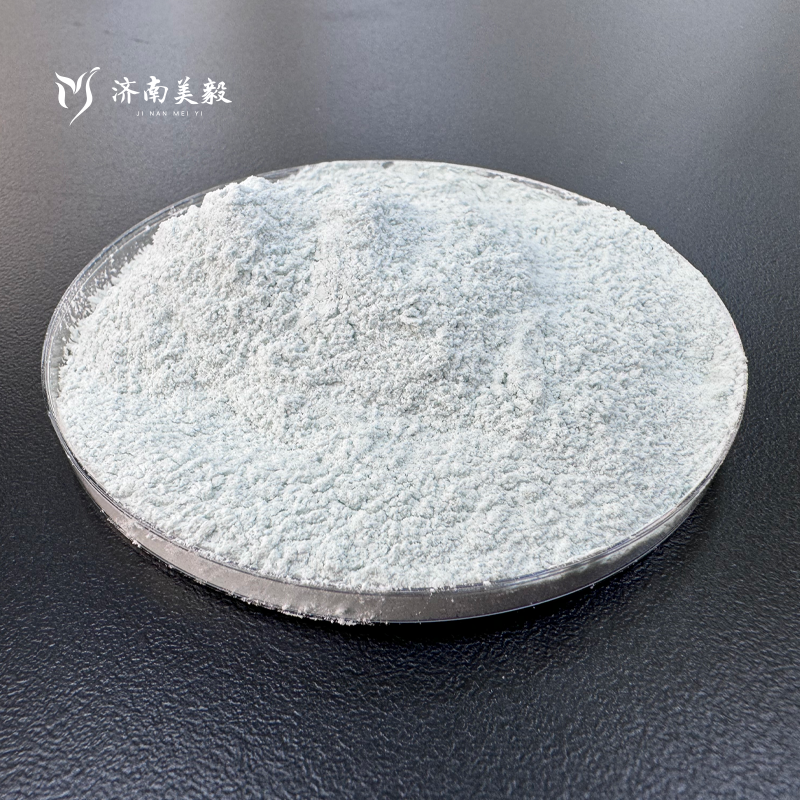
In cosmetic and oral care applications, hydroxyapatite is usually supplied as a fine white powder. Depending on the manufacturing process, it can be produced in different particle sizes, crystal structures and morphologies. These parameters influence how the ingredient performs in toothpaste, mouthwash, skincare creams, powders and other formulations.
Hydroxyapatite is often described as a biomimetic ingredient because its structure closely resembles natural tooth mineral. This makes it especially attractive for fluoride-free toothpaste, sensitive teeth products and premium oral care formulations. In skincare, high-purity hydroxyapatite can also be used for texture enhancement, oil control, soft-focus effects and barrier-supporting formulas.
Different Grades of Hydroxyapatite
Not all hydroxyapatite materials are the same. Based on purity, intended use and production standards, hydroxyapatite is commonly divided into three major grades.
Industrial-Grade Hydroxyapatite
Industrial-grade hydroxyapatite is mainly used in ceramics, coatings, catalysts and other non-biological applications. This grade is not suitable for products that come into direct contact with the mouth or skin.
Cosmetic-Grade Hydroxyapatite
Cosmetic-grade hydroxyapatite powder is designed for oral care products, skincare formulations and topical cosmetic applications. It offers a balance of purity, safety, performance and cost-effectiveness, making it suitable for daily consumer products such as toothpaste, mouthwash, repair creams, primers and powder cosmetics.
Medical-Grade Hydroxyapatite
Medical-grade hydroxyapatite is used in implants, bone repair materials, injectable products and other regulated medical applications. It usually requires stricter documentation, biocompatibility testing and regulatory compliance.
For most oral care and skincare brands, cosmetic-grade hydroxyapatite is the most practical choice because it provides suitable safety and performance for daily-use products while remaining commercially scalable.
Why Hydroxyapatite Works: Biocompatibility and Bioactivity
The performance of hydroxyapatite comes from two important characteristics: biocompatibility and bioactivity.
Because hydroxyapatite is similar to the mineral phase naturally present in bones and teeth, it has good compatibility with biological tissues. In oral care, this similarity allows hydroxyapatite particles to interact with the tooth surface and support enamel remineralization.
Hydroxyapatite is also bioactive. Its calcium and phosphate ions can participate in surface interactions, helping support mineral balance and surface repair. In professional biomaterial applications, hydroxyapatite is valued for its osteoconductive properties, meaning it can provide a supportive surface for bone-related applications.
In cosmetic and personal care formulations, these properties make hydroxyapatite a versatile ingredient that can be used not only for oral care performance, but also for texture improvement, skin feel and advanced formulation design.
Hydroxyapatite Powder in Oral Care Products
Oral care is one of the most important application areas for hydroxyapatite powder. As consumers look for fluoride-free, gentle and biomimetic alternatives, hydroxyapatite has become a popular ingredient in modern toothpaste and mouthwash formulations.
Enamel Remineralization Support
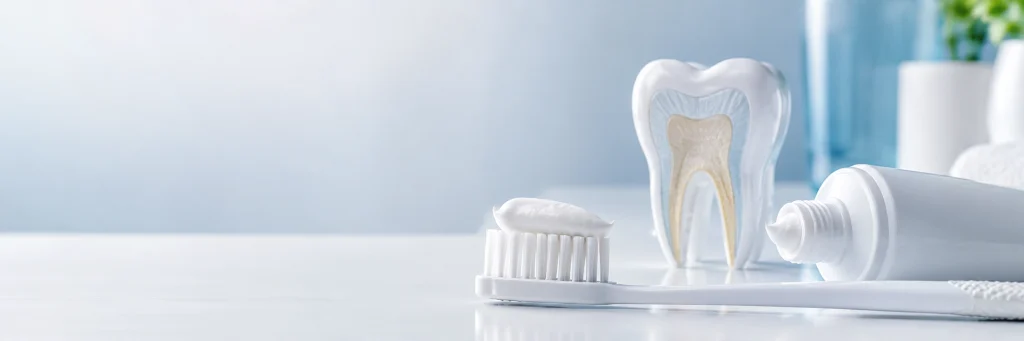
Tooth enamel is mainly composed of mineral structures similar to hydroxyapatite. When used in toothpaste, hydroxyapatite particles can help fill small surface irregularities and support the remineralization process. This makes it especially valuable in products designed for enamel care, daily tooth strengthening and sensitive teeth support.
For brands developing fluoride-free toothpaste, hydroxyapatite powder provides a science-backed alternative that aligns with consumer demand for gentle yet functional oral care.
Sensitive Teeth Formulations
Tooth sensitivity is often associated with exposed dentinal tubules and weakened enamel surfaces. Hydroxyapatite particles can help form a protective mineral-like layer on the tooth surface and assist in sealing exposed tubules. This makes hydroxyapatite suitable for desensitizing toothpaste and professional oral care formulas.
Compared with harsh abrasive whitening agents, hydroxyapatite supports a gentler oral care approach. It can help smooth the enamel surface while maintaining a mild formulation profile.
Whitening and Surface Polishing
Hydroxyapatite is also used in whitening toothpaste because it can help reduce surface roughness and improve light reflection on the enamel surface. Rather than relying only on strong abrasives, hydroxyapatite-based formulas can offer a smoother, more enamel-friendly polishing effect.
This makes it attractive for premium toothpaste brands that want to combine whitening, sensitivity relief and enamel care in one formulation.
Mouthwash and Daily Oral Care
Hydroxyapatite can also be used in mouthwash and rinse products, depending on particle size, suspension stability and formulation compatibility. In these systems, proper dispersion is very important to prevent sedimentation and ensure consistent product performance.
For children’s oral care, sensitive oral care and daily-use toothpaste, cosmetic-grade hydroxyapatite is often selected because of its mild profile, biocompatibility and consumer-friendly positioning.
Hydroxyapatite in Skincare and Cosmetic Formulations
Beyond oral care, hydroxyapatite is gaining attention as a functional cosmetic ingredient. Its porous structure, mineral composition and soft powder texture make it useful in several types of skincare and makeup formulations.
Skin Barrier Support
Calcium plays an important role in skin function and barrier homeostasis. In skincare formulations, hydroxyapatite can be positioned as a mineral-based ingredient that supports skin comfort, barrier care and post-treatment cosmetic formulas.
It is commonly considered for soothing creams, repair creams, sensitive-skin products and professional skincare lines. For brands developing advanced repair formulas, hydroxyapatite can be combined with ingredients such as hyaluronic acid, peptides, collagen and other skin-supporting actives.
Oil Control and Soft-Focus Effect
Thanks to its porous structure, hydroxyapatite can help absorb excess sebum and improve skin texture. This makes it useful in oil-control skincare, primers, loose powders, pressed powders and matte-finish products.
In makeup and hybrid skincare formulas, hydroxyapatite can create a soft-focus effect by improving surface smoothness and reducing unwanted shine. This supports a refined, natural-looking finish without relying only on traditional absorbent powders.
Anti-Aging and Advanced Skincare Formulas
High-purity hydroxyapatite can be used in advanced skincare concepts, especially when combined with peptides, hyaluronic acid, collagen or other biomimetic ingredients. In these formulas, it contributes to texture, skin feel and premium scientific positioning.
For brands targeting professional skincare, medical-aesthetic aftercare or high-end cosmetic lines, hydroxyapatite can strengthen the product story around biomimetic minerals, skin support and formulation innovation.
Professional and Biomaterial Applications
Although this article focuses mainly on oral care and skincare, hydroxyapatite also has broader professional applications.
In dentistry, hydroxyapatite is used in dental pastes, varnishes, implant coatings, bone graft materials and periodontal applications. Its similarity to natural hard tissue makes it valuable for mineral support and structural applications.
In aesthetic and biomaterial fields, hydroxyapatite can appear in injectable forms, composites, coatings and tissue-supporting materials. These uses usually require medical-grade materials and strict regulatory control.
For cosmetic brands, this wider application background helps strengthen hydroxyapatite’s credibility as a biomimetic material. However, when writing marketing claims for consumer products, brands should avoid exaggerated medical claims and focus on approved cosmetic or oral care benefits.
Why High-Purity Hydroxyapatite Matters
Purity is one of the most important factors when choosing hydroxyapatite powder. Low-quality materials may contain heavy metals, uncontrolled particle sizes, microbial contamination or unstable composition. These issues can affect product safety, texture, stability and regulatory compliance.
High-purity hydroxyapatite powder should offer:
- Stable calcium-to-phosphorus ratio
- Controlled particle size distribution
- Suitable whiteness and morphology
- Low heavy metal content
- Low microbial limits
- Good batch-to-batch consistency
- Strong dispersion performance
- Complete technical documentation
For global brands, consistency is especially important. A formulation that performs well in one batch but changes in the next can cause problems in product appearance, stability, efficacy perception and consumer experience.
How to Choose a Reliable Hydroxyapatite Powder Supplier
Choosing the right supplier is not only about price. For oral care and skincare brands, supplier evaluation should focus on technical quality, documentation, customization ability and export experience.
1. Check Purity and Composition
A qualified supplier should clearly provide purity data, calcium-to-phosphorus ratio and basic physicochemical specifications. For cosmetic-grade hydroxyapatite, purity and stability directly influence product safety and performance.
2. Review Particle Size Distribution
Particle size is critical for formulation performance. Toothpaste, mouthwash, skincare creams and powders may require different particle size ranges. Important indicators include D50, D90, morphology and whether the material is nano-sized or micron-sized.
Fine particles may improve surface interaction and smoothness, while larger particles may affect texture, suspension and abrasiveness. The right choice depends on the final application.
3. Ask for Heavy Metal and Microbial Testing
Hydroxyapatite used in oral care and skincare must meet strict impurity requirements. Reliable suppliers should provide test data for heavy metals, microbial limits and other safety-related indicators.
4. Request Complete Documents
A professional hydroxyapatite supplier should provide:
- COA
- MSDS / SDS
- TDS
- Heavy metal testing report
- Microbial testing report
- Particle size analysis
- Batch traceability information
- Formulation support when needed
These documents help brands complete internal quality checks, customer audits and regulatory preparation.
5. Evaluate Customization Ability
Different brands may need different specifications. For example, toothpaste manufacturers may focus on enamel interaction, sensitivity care and dispersion stability. Skincare brands may care more about skin feel, oil absorption, whiteness and smooth finish.
A strong supplier should be able to offer customized particle size, surface treatment or formulation recommendations based on the final product type.
Formulation Tips for Hydroxyapatite Powder
Hydroxyapatite powder can be used in various oral care and skincare systems, but formulation design should be tested carefully.
For toothpaste, the typical use level can vary depending on the desired function, texture and regulatory requirements. Some formulas may use hydroxyapatite as a key active-like ingredient for enamel care and sensitivity support.
For creams, serums, primers and powders, the use level depends on skin feel, stability, dispersion and product positioning. A lower addition level may improve texture and mineral positioning, while a higher level may be used for oil control or soft-focus effects.
General formulation suggestions include:
- Ensure full dispersion before adding to the final system
- Test compatibility with thickeners, surfactants and active ingredients
- Avoid aggregation in water-based systems
- Conduct stability testing under different temperatures
- Use moisture-resistant packaging where needed
- Confirm regulatory suitability for the target market
Because hydroxyapatite is a mineral powder, dispersion quality is especially important. Poor dispersion can lead to sedimentation, rough texture or inconsistent product performance.
Market Trends for Hydroxyapatite in Oral Care and Skincare
Hydroxyapatite is becoming more popular because it fits several important market trends.
First, fluoride-free oral care continues to grow. Many consumers are looking for toothpaste formulas that support enamel health while using biomimetic ingredients. Hydroxyapatite meets this demand by offering a mineral-based approach.
Second, sensitive teeth products are becoming more sophisticated. Brands are moving beyond basic desensitizing claims and focusing on enamel repair, surface protection and daily comfort.
Third, skincare brands are exploring more mineral-based and biomimetic ingredients. Hydroxyapatite offers a strong technical story for advanced skincare, oil-control products, repair creams and professional cosmetic formulas.
Finally, B2B buyers are paying more attention to raw material quality. Purity, documentation, safety testing and supplier reliability are now just as important as ingredient trends.
FAQ
What is hydroxyapatite powder used for?
Hydroxyapatite powder is used in toothpaste, mouthwash, desensitizing oral care products, skincare creams, primers, powders, biomaterials and professional cosmetic formulations.
Is hydroxyapatite suitable for toothpaste?
Yes. Cosmetic-grade hydroxyapatite powder is widely used in toothpaste to support enamel remineralization, reduce sensitivity and improve tooth surface smoothness.
What is the difference between cosmetic-grade and medical-grade hydroxyapatite?
Cosmetic-grade hydroxyapatite is designed for oral care and topical cosmetic products. Medical-grade hydroxyapatite is used in implants, injectables and regulated medical devices, requiring stricter testing and compliance.
Can hydroxyapatite be used in skincare?
Yes. Hydroxyapatite can be used in skincare for texture improvement, oil control, soft-focus effects and advanced repair-positioned formulations.
How do I choose a hydroxyapatite supplier?
Brands should evaluate purity, particle size distribution, heavy metal limits, microbial limits, COA, MSDS, TDS, batch traceability and export experience.
Conclusion
Hydroxyapatite powder is a versatile biomimetic ingredient with strong potential in oral care, skincare and advanced cosmetic formulations. Its similarity to natural tooth and bone minerals makes it especially valuable for toothpaste, enamel care, sensitive teeth products and professional oral care applications.
In skincare, high-purity hydroxyapatite can support texture improvement, oil control, soft-focus effects and premium biomimetic positioning. For brands and formulators, the key to successful application lies in selecting the right grade, particle size, purity level and supplier.
When sourcing hydroxyapatite powder, brands should look beyond price and focus on technical specifications, documentation, consistency and formulation support. A reliable supplier can help ensure product safety, stability and long-term market competitiveness.
Looking for cosmetic-grade hydroxyapatite powder for oral care or skincare formulations? Request COA, MSDS, TDS and particle size specifications to evaluate the right grade for your product development.






Please leave us a message.