

A Guide to Choosing the Right Hydroxyapatite Supplier for Your Business
2026-04-24
Quick Answer
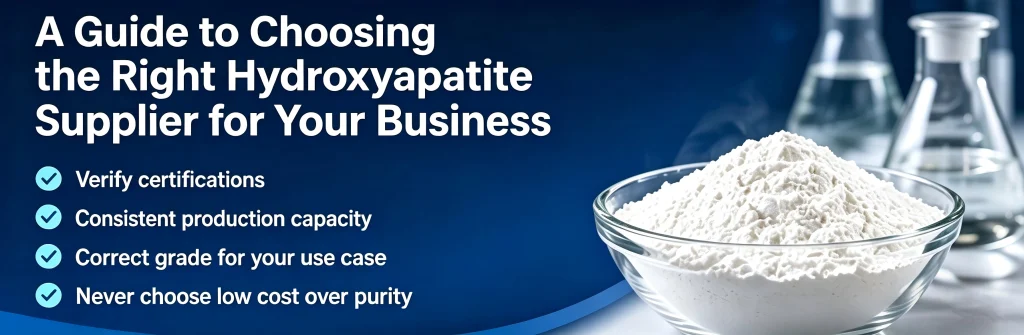
To choose a reliable hydroxyapatite supplier, verify industry-specific certifications, confirm consistent production capacity, check they offer the correct grade for your use case, and avoid prioritizing low cost over verified purity. This guide breaks down every step for your business.
Table of Contents
- Introduction
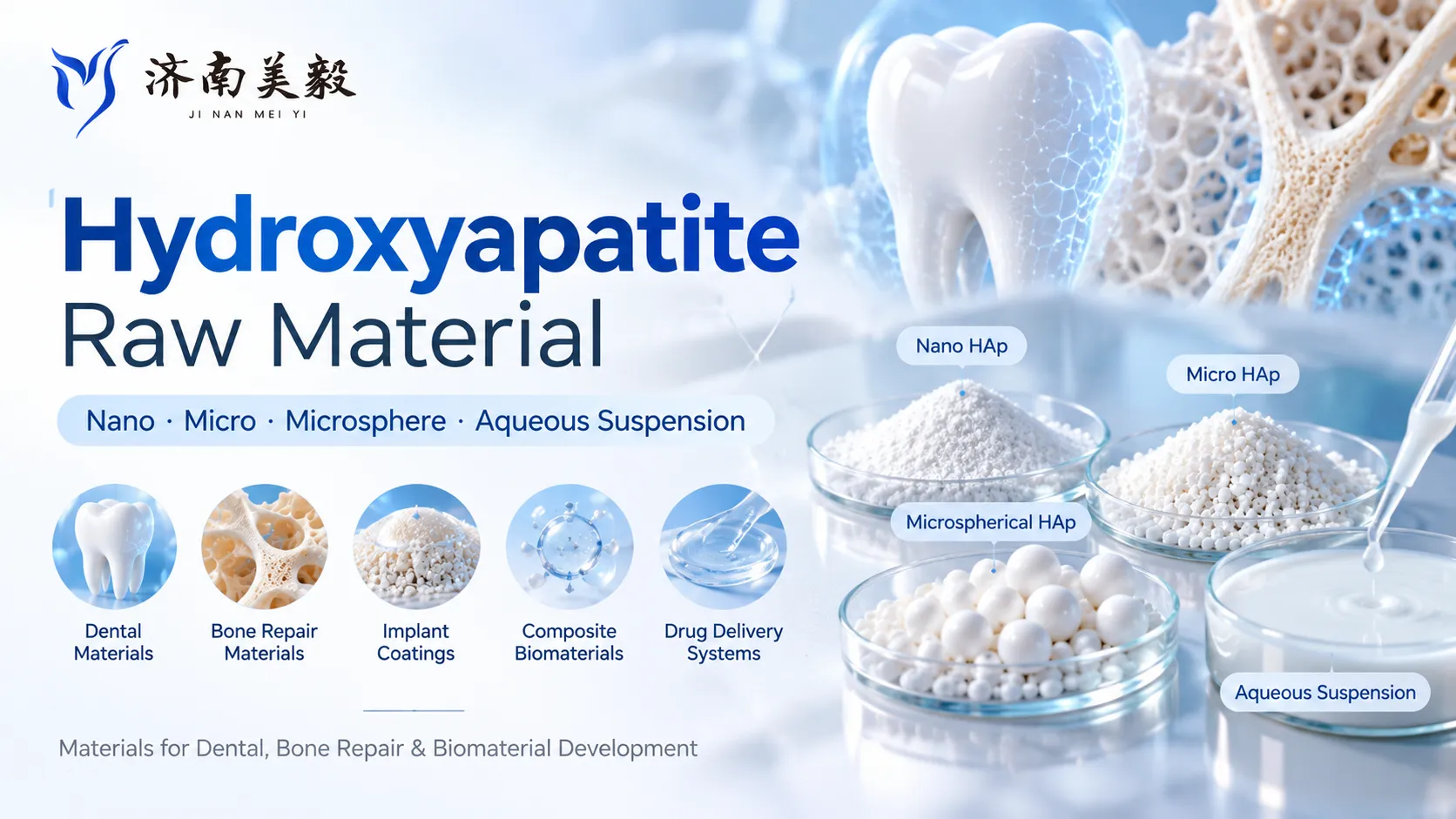
- What Is Hydroxyapatite and Common Industry Uses
- Key Qualities of a Trustworthy Hydroxyapatite Supplier
- Different Grades of Hydroxyapatite Offered by Reputable Suppliers
- Common Mistakes to Avoid When Selecting a Hydroxyapatite Supplier
- Frequently Asked Questions About Hydroxyapatite Suppliers
- Conclusion
1. Introduction
This guide is built for anyone sourcing hydroxyapatite for commercial or research work—medical device manufacturers, cosmetics brands, university research labs, all of you. Let me cut to the chase: supplier quality isn’t just a nice-to-have here. It can make or break your product approval, your project timeline, even your brand reputation.
1.1 What is hydroxyapatite and why supplier quality matters
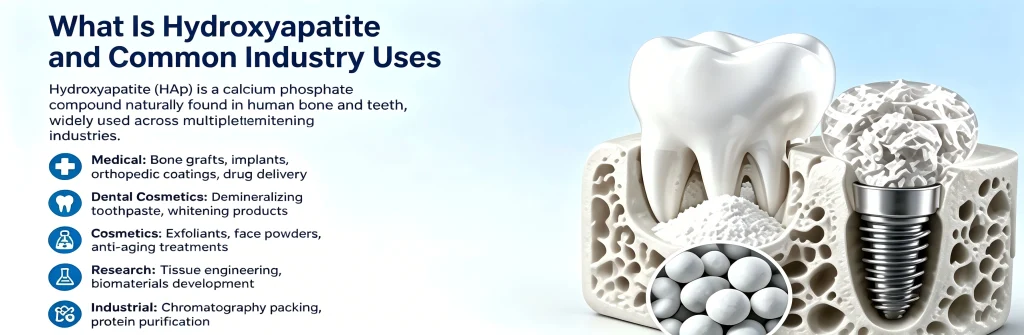
Hydroxyapatite is a calcium phosphate compound that’s naturally found in human bone and teeth. It’s super versatile for industrial use, but every application demands specific purity and particle size. If your supplier cuts corners, you end up with contaminated material that gets rejected by the FDA. I’ve seen it happen.
1.2 Overview of who this guide helps
This is for three main groups: – Medical manufacturers building bone grafts or dental implants – Cosmetics brands formulating toothpaste or skincare products – University and private research labs running materials science or biomedical studies No matter which group you’re in, the same core rules apply.
2. What Is Hydroxyapatite and Common Industry Uses
So here’s the thing: most people only know hydroxyapatite from dental products, but it’s used way more widely than that. Let me break down the most common applications I’ve seen in my 12 years in this industry.
2.1 Core industrial and commercial applications
- Medical: Bone graft substitutes, dental implants, coating for orthopedic devices, drug delivery systems
- **Dental cosmetics: Remineralizing toothpaste, teeth whitening products, sensitive toothpaste formulations
- Cosmetics: Exfoliating scrubs, bulking agents for face powders, anti-aging treatments
- Research: Bone tissue engineering studies, biomaterials development
- **Industrial: Chromatography column packing for protein purification No joke, that’s just the tip of the iceberg—new applications pop up every year.
2.2 Why purity and consistency depend on your supplier
Every single one of those uses above needs a different purity level and particle size distribution. A supplier that mixes batches or cuts corners with raw materials will send you material that’s off spec. Last June 2023, my client Sarah who runs a small cosmetics brand in Portland got a shipment of hydroxyapatite with 2% excess lead—she almost had to recall 10,000 units of toothpaste. That’s the kind of problem you can’t fix after the fact. It all starts with your supplier.
3. Key Qualities of a Trustworthy Hydroxyapatite Supplier
I’ve vetted more than 40 hydroxyapatite suppliers over the years, and these two qualities separate the good from the risky—no exceptions.
3.1 Certifications and quality compliance for your industry
Don’t just take the supplier’s word for it. They need to have the right papers for your specific industry. Here’s what to ask for: – For medical/pharmaceutical: Current Good Manufacturing Practices (cGMP) compliance, ISO 13485 certification, FDA DMF filings – For cosmetics: Good Manufacturing Practice (GMP) certification, heavy metal testing reports, FDA GRAS notification – For industrial research: ISO 9001 quality management certification This table sums it up pretty clearly:
| Industry | Required Certifications | Non-Negotiable Testing |
| Medical/Pharmaceutical | cGMP, ISO 13485, FDA DMF | Endotoxin, heavy metals, microbial contamination |
| Cosmetics | GMP, GRAS notified | Heavy metals, microbial purity |
| Industrial Research | ISO 9001 | Purity assay, particle size distribution |
Honestly, if a supplier drags their feet on sharing these documents? That’s a red flag. Walk away.
3.2 Consistent production capacity and reliable delivery timelines
I learned this the hard way back in 2018. We locked in a small supplier for a 500kg bulk order, and they couldn’t scale when our client’s medical device program got approved. We waited 12 weeks for a shipment that was supposed to take 4. It pushed the whole clinical trial back 3 months. Cost us a ton of money.
So what do you check? – Ask for their annual production output—make sure it’s at least 2x your maximum expected order – Ask for references from other clients who order similar volumes – Confirm they keep raw material stock on hand to avoid raw material supply delays – Check if they have backup production capacity if one line goes down That’s the stuff no one talks about when they’re selling you on low prices, but it matters more than you think.
4. Different Grades of Hydroxyapatite Offered by Reputable Suppliers
I know this sounds obvious, but a lot of first-time buyers don’t realize that hydroxyapatite isn’t a one-size-fits-all product. The grade you need depends entirely on what you’re using it for, and good suppliers will carry all three main grades.
4.1 Medical and pharmaceutical grade vs. cosmetic grade
Let me break down the key differences here. People often mix these two up, and that’s a costly mistake.
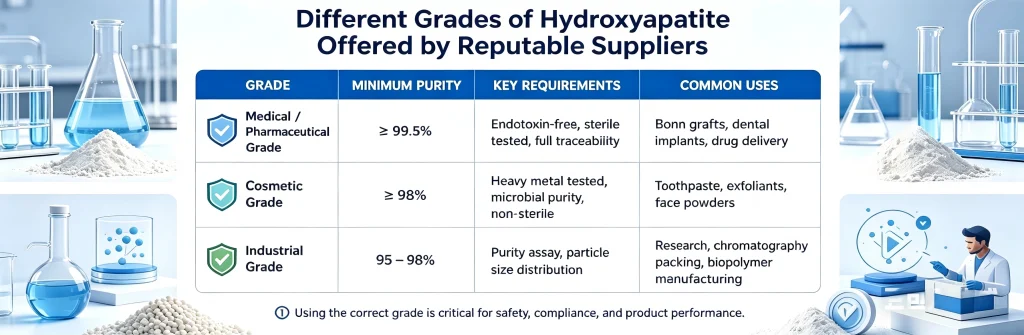
| Grade | Minimum Purity | Key Requirements | Common Uses |
| Medical/Pharmaceutical | 99.5% | Endotoxin-free, sterile tested, full traceability | Bone grafts, dental implants, drug delivery |
| Cosmetic Grade | 98% | Heavy metal tested, microbial purity, non-sterile | Toothpaste, exfoliants, face powders |
You can use medical grade for cosmetics, obviously—it’s just more expensive than you need. But you can never use cosmetic grade for any medical application. That’s an instant FDA rejection.
4.2 Industrial grade for research and manufacturing
Industrial grade is usually 95-98% purity, and it’s made for non-clinical, non-consumer use. Common uses include: – Protein purification chromatography packing – Research lab test batches for material development – Additive for specialty biopolymer manufacturing It’s way cheaper than medical or cosmetic grade, which makes perfect sense for these uses. Any reputable supplier will clearly label their grades, so you don’t accidentally order the wrong one.
5. Common Mistakes to Avoid When Selecting a Hydroxyapatite Supplier
After 12 years in this industry, I see the same mistakes over and over. These are the two biggest ones that cost companies the most money.
5.1 Prioritizing low cost over quality and purity testing
This drives me crazy. I get it—every business is trying to cut material costs. But cutting corners on hydroxyapatite purity will cost you way more in the long run. Last winter, I worked with a startup that saved 30% on their first bulk order by going with a no-name supplier out of China. Their material failed FDA purity testing because of unreported heavy metal contaminants. They’d already spent $200k on device manufacturing. The whole batch had to be thrown out. No joke. They almost closed the business over it. Always ask for a Certificate of Analysis (CoA) for every batch. If a supplier won’t provide one? That’s a dealbreaker. End of story.
5.2 Overlooking customization options for specific project needs
Most people don’t know that hydroxyapatite can be customized to your exact particle size, porosity, even doping with other minerals like strontium. If your supplier can’t do that, you’re stuck tweaking your whole project to fit their off-the-shelf material. Dr. Chen at our partner research lab in Chicago was working on a new bone graft project back in 2022 that needed 200-300 micron porous particles. Their original supplier only carried 100 micron. They wasted 6 months milling the material down to the right size before switching to a supplier that could do custom particle sizing. Saved them so much time and hassle. Always ask if they can adjust particle size, porosity, or purity before you sign a contract. It’s a lot easier to get it done upfront than to fix it later.
6. Frequently Asked Questions About Hydroxyapatite Suppliers
You’re probably wondering about these common questions, right? I get asked them every single month.
6.1 How do I verify a hydroxyapatite supplier’s quality certifications?
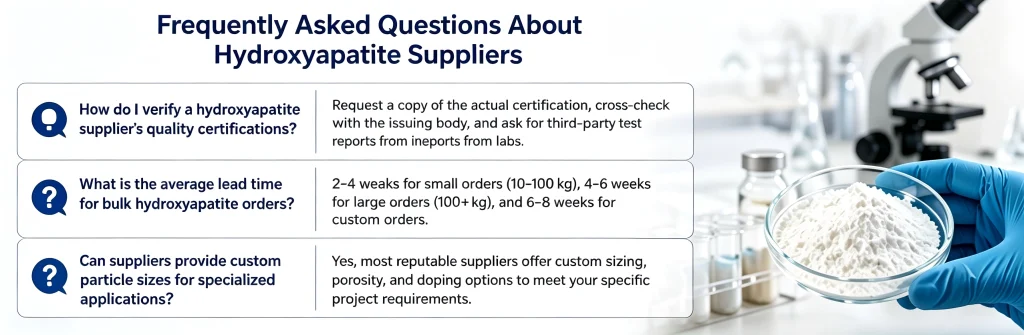
First, ask for a copy of the actual certification document—not just a logo on their website. Then, cross-check with the issuing body: for ISO certifications, you can look up the certification number on the issuer’s database. For FDA DMFs, you can confirm the filing number through the FDA’s website. Don’t be shy about asking for third-party purity test reports from an independent lab, too. Any legitimate supplier will have these ready to send.
6.2 What is the average lead time for bulk hydroxyapatite orders?
It depends on the grade and if you need customization, but from what I’ve seen across the industry in 2024: – Off-the-shelf small bulk orders (10-100kg): 2-4 weeks – Large bulk orders (100+kg): 4-6 weeks – Custom orders (special particle sizes, doped formulations): 6-8 weeks If a supplier tells you they can get you 100kg of medical grade in 3 days? That’s a red flag. They’re probably pulling material from an old untested batch.
6.3 Can suppliers provide custom particle sizes for specialized applications?
Most reputable suppliers can do this, actually—you just have to ask upfront. Some will charge a small setup fee for custom sizing, but it’s almost always worth it for specialized projects like 3D printed bone scaffolds or targeted drug delivery. I’ve had clients save 20-30% on downstream processing just by getting the exact particle size they need from the supplier. Well—wait, actually, it’s often more than that. It depends on the project, but you get the idea.
7. Conclusion
At the end of the day, picking the right hydroxyapatite supplier boils down to three things: matching the right grade to your application, verifying certifications upfront, and making sure they can scale and deliver when you need them. Don’t get starstruck by low prices. I can’t say that enough.
7.1 Final summary of key selection criteria
- Confirm the supplier offers the exact grade you need (medical, cosmetic, industrial)
- Verify all required industry certifications with third-party documentation
- Check that their production capacity can handle your current and future orders
- Confirm they offer customization if you need specific particle sizes or porosity
- Always require a batch-specific Certificate of Analysis before accepting delivery
7.2 Next steps for vetting potential hydroxyapatite suppliers
Start by reaching out to 2-3 potential suppliers, and ask them for: 1. A copy of their relevant industry certifications 2. A sample small order (1-5kg) of your required grade to test in your facility 3. References from 2-3 existing clients in your industry 4. A clear quote that includes lead time, testing, and shipping costs Test the sample in your own process first. If it checks out, then move forward with a larger bulk order. That’s the safest way to do it, and it avoids the big costly mistakes I’ve seen too many people make.
If you want more tips on sourcing biomedical materials for your projects, check out our guidehow to test hydroxyapatite purity in-house, our breakdownof common hydroxyapatite applications across industries, and our listof questions to ask before signing a supplier contract.





Please leave us a message.