

Onion Powder for Manufacturers: Quality That Drives Profits
2026-04-21
Introduction
In contemporary food production and formulation, minor decisions regarding ingredients can exert a substantial influence on the financial performance. Onion powder is one of those seemingly straightforward inputs that assumes a crucial role across diverse industries, ranging from food processing to health supplements and animal feed.
Nevertheless, numerous manufacturers continue to grapple with issues such as inconsistent quality, fluctuating pricing, and unreliable supply chains. These challenges not only impact flavor but also directly affect production efficiency, product consistency, and ultimately, profitability.
In this guide, we dissect the key factors that truly matter when sourcing onion powder. We will explore methods for evaluating quality, avoiding costly errors, and formulating a procurement strategy that fosters long – term growth and stable profit margins.
What Is Onion Powder and Why It Matters in Manufacturing
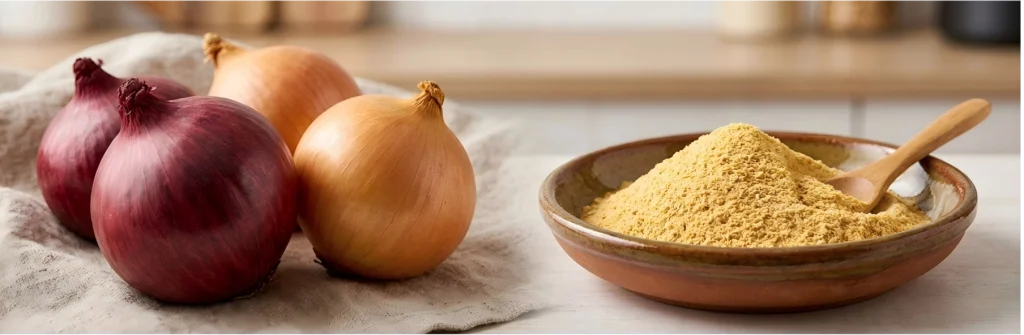
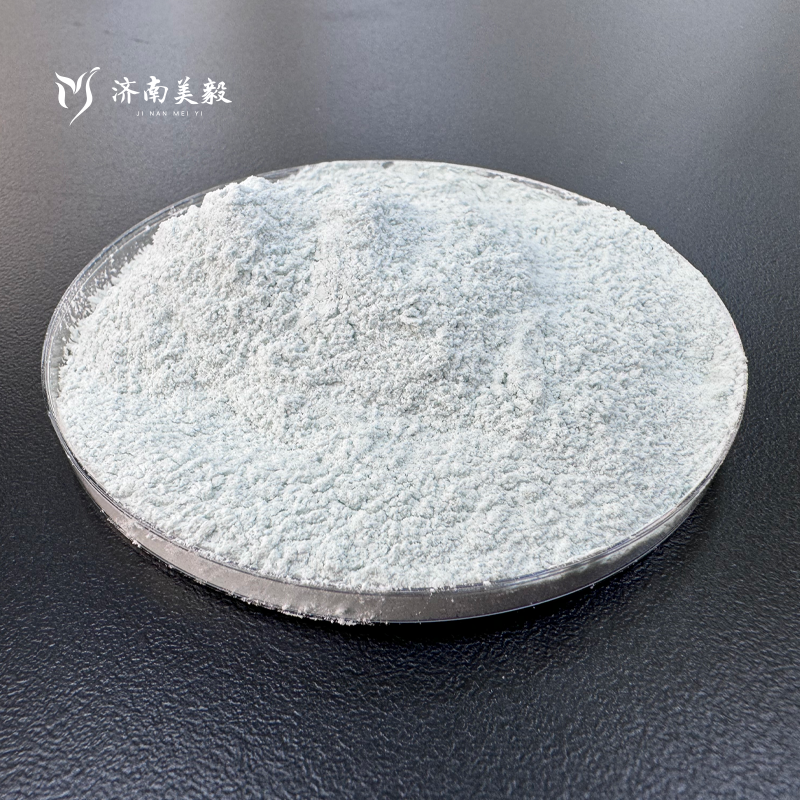
Onion powder is manufactured through the dehydration of fresh onions followed by grinding them into a fine and homogeneous powder. Although the process appears uncomplicated, disparities in raw materials and processing techniques can substantially influence the final product.
Key Characteristics
- -Flavor Concentration:Significantly more intense than that of fresh onions, enabling lower usage rates.
- -Shelf Stability:Exhibits a long storage lifespan with minimal deterioration when appropriately handled.
- – Ease of Handling:Eliminates the need for peeling, chopping, and concerns regarding spoilage.
- – Efficient Logistics:Features reduced weight and volume for
Why Manufacturers Prefer Onion Powder
In comparison to fresh onions, onion powder provides consistency, convenience, and cost – effectiveness. It eliminates labor – intensive preparation processes and reduces waste, rendering it a preferred option for large – scale production settings.
Key Industrial Applications of Onion Powder
Food Processing & Ready Meals
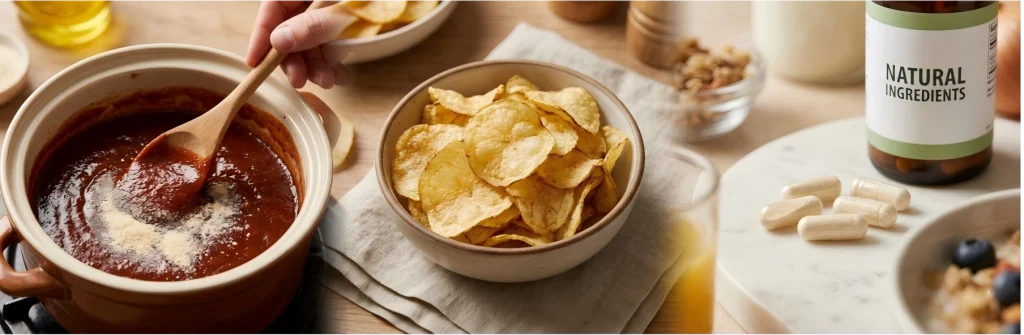
Onion powder finds extensive application in seasonings, sauces, snack foods, and frozen meals. Its uniformity guarantees consistent flavor across different batches, which is crucial for upholding brand standards.
Restaurant Chains & Central Kitchens
For multi – location restaurant operations, consistency is of utmost importance. Onion powder facilitates the establishment of standardized flavor profiles while reducing preparation time and labor costs in central kitchens.
Health Supplements
In health supplements, onion powder is frequently incorporated into functional blends or capsules. It supports the positioning of “natural ingredients” and aligns with clean – label trends.
Animal Feed Industry
In feed formulations, onion powder can enhance palatability and offer functional benefits, contingent upon the formulation strategy.
How Onion Powder Quality Directly Impacts Your Profit Margins
Ingredient quality isn’t just a technical concern—it’s a financial one.
Risks of Poor Quality
- Batch inconsistency leading to product rejection
- Customer complaints due to flavor variation
- Increased reformulation costs
- Higher waste and production inefficiencies
Benefits of High-Quality Onion Powder
- Lower usage rates:Stronger flavor reduces dosage requirements
- Improved consistency:Fewer deviations between batches
- Reduced waste:Better stability and shelf life
- Operational efficiency:Smoother production runs
In short, better onion powder translates directly into better margins.
Critical Quality Indicators to Evaluate Before Buying Onion Powder
Raw Material Source
The onion variety and growing region affect flavor intensity, color, and nutrient profile. Reliable sourcing starts with high-quality raw onions.
Processing Method
- Air-dried:Common and cost-effective
- Spray-dried:Finer particles, often used in specialized applications
- Freeze-dried:सर्वोच्च quality, but higher cost
Each method impacts flavor retention and solubility.
Particle Size & Mesh
Mesh size determines how well the powder blends into your product. Fine powders work better in sauces and beverages, while coarser grades suit seasoning blends.
Moisture Content
Low moisture levels are essential for longer shelf life and preventing microbial growth.
Color, Aroma, and Flavor Strength
A high-quality onion powder should have a consistent light color, strong aroma, and clean, pungent flavor. Dull color or weak smell often indicates degradation.
Microbiological & Purity Standards
Certifications such as ISO and HACCP signal that the supplier follows strict quality control processes. These are non-negotiable for most industrial buyers.
Common Sourcing Mistakes That Cost Manufacturers Money
Even seasoned purchasers may encounter avoidable pitfalls:
- Selecting solely based on price:Low-cost products frequently lead to elevated downstream costs.
- Neglectingbatch consistency: Variability has the potential to disrupt production
- Absenceof supplier audits: In the absence of verification, quality assertions are unreliable.
- Overlooking logistics:Delays and extended lead times can bring operations to a halt.
A short-term cost – saving measure can readily transform into a long – term loss.
How to Choose the Right Onion Powder Supplier
Supplier Reliability & Production Capacity
Ensure your supplier can meet your volume requirements consistently, especially during peak demand.
Quality Control Systems
Look for documented QC processes, including testing protocols and traceability systems.
Customization Capabilities
Different applications require different specifications. A good supplier should offer flexibility in mesh size, moisture levels, and packaging.
Documentation & Certifications
Verify certifications, technical data sheets, and compliance documentation to ensure regulatory alignment.
Global Export Experience
Suppliers with export experience are better equipped to handle international logistics, documentation, and compliance requirements.
Bulk Buying Strategies to Reduce Costs Without Sacrificing Quality
Smart procurement isn’t just about negotiation—it’s about strategy.
- Contract purchasing:Lock in pricing and ensure supply stability
- MOQ negotiation:Balance cost savings with inventory risk
- Inventory planning:Avoid overstocking or shortages
- Supplier partnerships:Long-term relationships often yield better pricing and priority supply
A strategic approach can significantly reduce total procurement costs.
Onion Powder vs. Fresh Onion: Cost and Efficiency Comparison
Storage Costs
Fresh onions require controlled environments and have limited shelf life. Onion powder is far easier to store long-term.
Labor Savings
Using onion powder eliminates peeling, cutting, and preparation—reducing labor expenses.
Yield and Waste Reduction
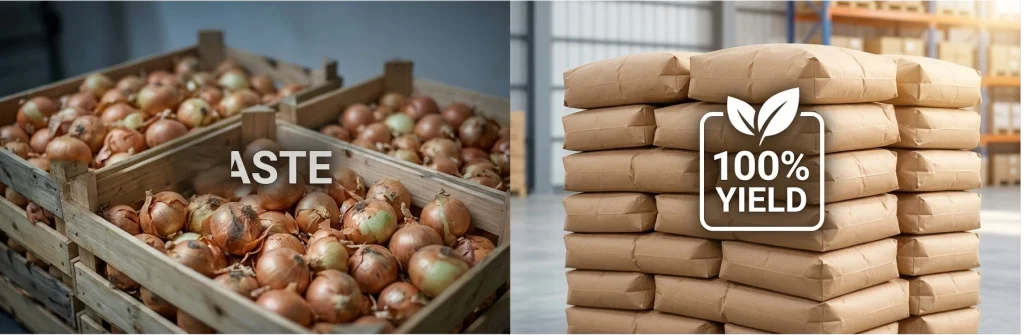
Fresh onions generate waste (skins, spoilage), while onion powder offers near 100% usable yield.
Year-Round Availability
Onion powder ensures consistent supply regardless of seasonal fluctuations.
Market Trends: Why Demand for Onion Powder Is Growing
Several industry trends are driving increased demand:
- Clean-label movement:Preference for recognizable, natural ingredients
- Convenience foods:Growth in ready-to-eat and processed foods
- Supply chain shifts:Manufacturers seek stable, shelf-stable ingredients
- Functional products:Increased use in supplements and specialized feed
These trends suggest continued long-term growth for onion powder across industries.
FAQs About Onion Powder for Industrial Buyers
What mesh size is best for my application?
It depends on your product. Fine mesh works well in liquids and uniform blends, while coarser grades suit dry seasonings.
How long does onion powder last in storage?
Typically 12–24 months if stored in a cool, dry environment with proper packaging.
Can onion powder replace fresh onion completely?
In many applications, yes. However, some products may still require fresh onion for texture.
What certifications should I require?
At minimum, ISO and HACCP. Additional certifications may be needed depending on your market.
Conclusion: Turning Ingredient Quality into Competitive Advantage
On a large scale, the quality of ingredients is not merely a technical nuance; rather, it represents a competitive edge. Appropriate onion powder can enhance consistency, minimize waste, and elevate overall production efficiency.
Through auditing existing suppliers, upgrading quality benchmarks, and formulating long – term sourcing strategies, we can transform a basic ingredient into a potent catalyst for profitability.
Call to Action
Looking to improve your sourcing strategy or upgrade your ingredient quality? We can help you find the right onion powder solution tailored to your application.
Get in touch with us today to request specifications, samples, or a customized quote—and take the next step toward more consistent production and stronger margins.






Please leave us a message.