

45S5 Bioactive Glass Powder Manufacturer | ISO Certified Factory
2026-09-28
- What is 45S5 Bioactive Glass Powder?
- Why Choose Our ISO-Certified Manufacturing Facility?
- Technical Specifications and Product Grades
- Key Applications of 45S5 Bioactive Glass Powder
- Manufacturing Process: From Raw Materials to Finished Powder
- About Jinan Meiyi Biotechnology: Your Strategic Supply Partner
- Comparative Analysis: 45S5 vs. Other Biomaterials
- How to Select the Right 45S5 Powder for Your Application
- Common Challenges and Solutions in Using 45S5 Powder
- Quality Assurance and Testing Protocols
- People Also Ask (PAA): Frequently Asked Questions
- Regulatory Landscape and Compliance
- Customization Services for B2B Partners
- Conclusion: Partner with a Trusted 45S5 Manufacturer
As a certified 45S5 bioactive glass powder manufacturer, we supply high-purity, ISO-compliant particulate materials engineered for bone tissue engineering, dental regeneration, and advanced wound care. Our 45S5 formulation strictly adheres to the classic Hench composition (45% SiO₂, 24.5% Na₂O, 24.5% CaO, 6% P₂O₅), ensuring predictable bioactivity and rapid hydroxyapatite formation. This page details our manufacturing capabilities, quality control protocols, particle size customization, and technical specifications for B2B procurement.
What is 45S5 Bioactive Glass Powder?
45S5 Bioglass is the first synthetic material discovered to bond directly with living bone and soft tissue. The “45” refers to the weight percentage of silica (SiO₂), and “S5” denotes the specific molar ratios of sodium, calcium, and phosphorus. When exposed to physiological fluids, this specific composition undergoes a series of surface reactions that lead to the formation of a biologically active hydroxycarbonate apatite (HCA) layer.
This HCA layer is chemically and structurally equivalent to the mineral phase of human bone. It allows for strong interfacial bonding, osteoconduction, and osteostimulation. As a specialized 45S5 bioactive glass powder manufacturer, we produce this material in various particle sizes and morphologies to suit diverse medical and cosmetic applications, from injectable fillers to 3D-printed scaffolds.
The Science Behind Bioactivity: How 45S5 Works
The efficacy of 45S5 bioactive glass relies on its controlled dissolution rate. Unlike inert biomaterials, 45S5 is designed to react. The process involves five critical stages:
- Ion Exchange: Rapid exchange of Na⁺ and Ca²⁺ ions from the glass surface with H⁺ or H₃O⁺ from the surrounding fluid.
- Silica Network Breakdown: Hydrolysis of Si-O-Si bonds, leading to the formation of silanol (Si-OH) groups.
- Polycondensation: Re-polymerization of silica into a porous gel layer rich in SiO₂.
- Crystallization: Incorporation of Ca²⁺ and PO₄³⁻ ions from the solution into the gel layer.
- HCA Formation: Crystallization of an amorphous calcium phosphate layer into hydroxycarbonate apatite (HCA).
This sequence typically occurs within minutes to hours, depending on the particle size and surface area. Our manufacturing process optimizes the surface energy of the powder to ensure consistent reaction kinetics across batches.
Why Choose Our ISO-Certified Manufacturing Facility?
Selecting a reliable 45S5 bioactive glass powder manufacturer is critical for medical device developers and research institutions. Variability in chemical composition or particle morphology can drastically alter biological performance. Our facility operates under strict ISO 13485 quality management systems, ensuring traceability, purity, and reproducibility.
Strict Composition Control
The bioactivity window for silicate glasses is narrow. Deviations in sodium or calcium content can render the glass inert or cause it to dissolve too rapidly. We utilize high-precision batch weighing systems and inductively coupled plasma optical emission spectrometry (ICP-OES) to verify elemental composition. Every batch is tested to ensure it meets the standard 45S5 stoichiometry:
| Oxide Component | Weight Percentage (wt%) | Molar Percentage (mol%) |
|---|---|---|
| Silica (SiO₂) | 45.0% | 46.1% |
| Sodium Oxide (Na₂O) | 24.5% | 24.4% |
| Calcium Oxide (CaO) | 24.5% | 26.9% |
| Phosphorus Pentoxide (P₂O₅) | 6.0% | 2.6% |
Advanced Particle Engineering
Bioactivity is surface-area dependent. Smaller particles react faster but may aggregate. Larger particles provide structural integrity but react slower. Our manufacturing capabilities include:
- Cryogenic Milling: Prevents thermal degradation during size reduction.
- Air Classification: Ensures tight particle size distribution (PSD) without sieving contamination.
- Surface Modification: Optional treatments to improve dispersibility in polymer matrices.
Traceability and Documentation
For regulatory submissions (FDA, CE Mark, NMPA), comprehensive documentation is non-negotiable. We provide:
- Certificate of Analysis (CoA) for every lot.
- Raw material source verification.
- Biocompatibility test reports (cytotoxicity, sensitization, irritation).
- Endotoxin testing data for injectable-grade powders.
Technical Specifications and Product Grades
As a leading 45S5 bioactive glass powder manufacturer, we offer multiple grades tailored to specific application requirements. The choice of grade depends on the intended use, such as composite reinforcement, paste formation, or scaffold fabrication.
Standard Medical Grade
This grade is suitable for non-implantable devices, topical wound care, and dental applications. It features high purity and consistent reactivity.
- Particle Size: D50 = 10–90 µm (customizable).
- Purity: >99.9% (excluding intentional dopants).
- Moisture Content: <0.5%.
- Packaging: Double-layer sterile bags or sealed drums.
Injectable & Micro-Sphere Grade
Designed for minimally invasive procedures and soft tissue augmentation. This grade requires stringent control over particle shape and endotoxin levels.
- Particle Size: D50 = 2–10 µm.
- Morphology: Spherical or near-spherical to prevent needle clogging.
- Endotoxin: <0.5 EU/mL.
- Sterility: Gamma irradiation or aseptic processing available.
3D Printing & Scaffold Grade
Optimized for additive manufacturing techniques, including binder jetting and stereolithography (SLA). This powder flows freely and packs densely.
- Particle Size: D50 = 20–50 µm.
- Flowability: High Hall Flowmeter values.
- Agglomeration: Minimal, ensured by anti-static treatment.
Key Applications of 45S5 Bioactive Glass Powder
The versatility of 45S5 allows it to be integrated into various medical and consumer health products. Understanding these applications helps buyers select the right specification from their 45S5 bioactive glass powder manufacturer.
1. Bone Graft Substitutes and Composites
45S5 powder is frequently mixed with polymers (such as PCL, PLGA, or collagen) to create composite scaffolds. The glass provides bioactivity and mechanical reinforcement, while the polymer offers flexibility and degradation control. These composites are used in:
- Spinal fusion cages.
- Craniofacial reconstruction.
- Long bone defect filling.
The presence of 45S5 stimulates osteoblast proliferation and upregulates genes related to bone formation, accelerating healing compared to inert fillers.
2. Dental Regeneration and Hypersensitivity Treatment
In dentistry, 45S5 bioactive glass is a gold standard for treating dentin hypersensitivity and promoting periodontal regeneration.
- Toothpaste Additive: Micronized 45S5 particles occlude open dentin tubules, blocking nerve transmission and reducing sensitivity.
- Periodontal Defects: Used in guided tissue regeneration (GTR) membranes to stimulate alveolar bone growth.
- Pulp Capping: Promotes dentin bridge formation due to its ability to release therapeutic ions (Ca, Si, P).
3. Wound Healing and Dermatology
Recent studies highlight the angiogenic properties of 45S5 dissolution products. Silicon ions released from the glass stimulate endothelial cell proliferation, promoting new blood vessel formation.
- Chronic Wounds: Diabetic ulcers and bedsores benefit from the antimicrobial and healing effects of bioactive glass dressings.
- Soft Tissue Augmentation: Injectable 45S5 microspheres are used for facial rejuvenation, stimulating collagen production around the injection site.
4. Drug Delivery Systems
The porous silica-rich layer formed on 45S5 can adsorb and release therapeutic agents. Researchers utilize our powder to load antibiotics, growth factors, or anticancer drugs. The release profile is controlled by the particle size and the degradation rate of the glass.
Manufacturing Process: From Raw Materials to Finished Powder
Transparency in manufacturing builds trust. As a professional 45S5 bioactive glass powder manufacturer, we employ a melt-quench method, which is the industry standard for producing homogeneous bioactive glass.
Step 1: Raw Material Selection and Mixing
High-purity raw materials (SiO₂, Na₂CO₃, CaCO₃, CaHPO₄) are weighed precisely. Carbonates are used instead of oxides for sodium and calcium to facilitate decomposition and gas release during melting. The mixture is homogenized in a planetary mixer to ensure uniform distribution.
Step 2: High-Temperature Melting
The batch is melted in a platinum-rhodium crucible at temperatures between 1300°C and 1400°C. This high temperature ensures complete dissolution of silica and eliminates bubbles. Temperature stability is critical to prevent crystallization (devitrification) within the melt, which would compromise bioactivity.
Step 3: Controlled Quenching
The molten glass is poured onto stainless steel plates or into water for quenching. Rapid cooling prevents crystal nucleation, resulting in an amorphous glass structure. This amorphous state is essential for the high reactivity of 45S5.
Step 4: Crushing and Milling
The resulting glass frit is crushed and then milled using ceramic media to avoid metal contamination. We use jet mills or ball mills depending on the target particle size. Ceramic liners and media ensure that no iron or other metallic impurities are introduced.
Step 5: Classification and Sieving
Milled powder is passed through air classifiers to separate particles by size. Oversized particles are returned to the mill. This closed-loop system ensures high yield and precise PSD control.
Step 6: Quality Control and Packaging
Final samples undergo rigorous testing for chemical composition, particle size, and sterility. Approved batches are packaged in cleanroom environments to maintain hygiene standards.
About Jinan Meiyi Biotechnology: Your Strategic Supply Partner
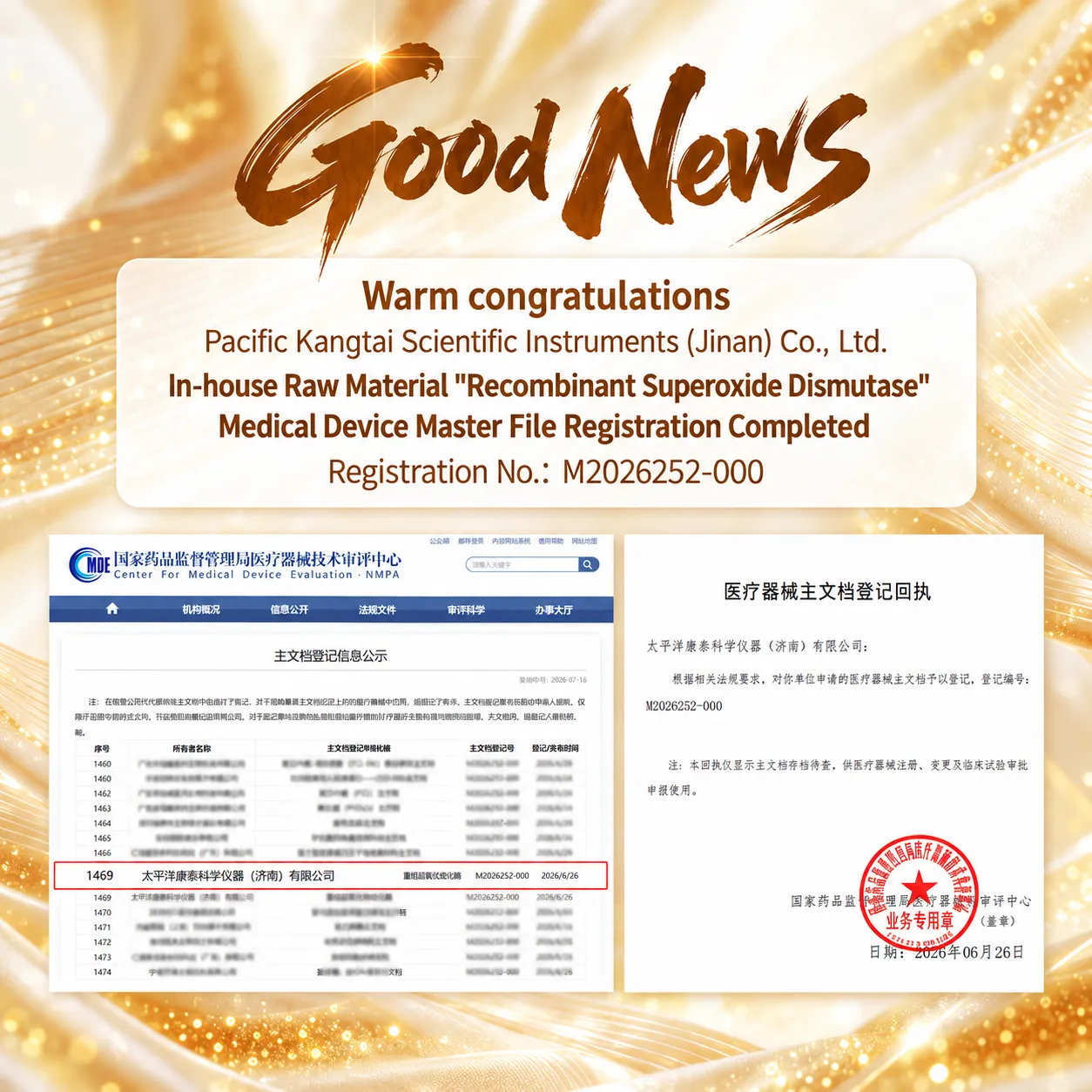
While the technical specifications of 45S5 are universal, the reliability of your supply chain is paramount. Jinan Meiyi Biotechnology Co., Ltd., headquartered in Jinan, Shandong Province, serves as a pivotal bridge between advanced bioactive manufacturing and global market needs. As a subsidiary of Pacific Kangtai Scientific Instruments (Jinan) Co., Ltd., we specialize in the research, development support, and commercialization of bioactive technologies, with a strong emphasis on applications in cosmetics, medical aesthetics, and regenerative medicine.
Unlike traditional manufacturers, Jinan Meiyi Biotechnology operates as a strategic sourcing and quality-assured distribution partner. We do not engage in direct raw material manufacturing; instead, we leverage a well-established global supply chain network to partner with internationally recognized, ISO-certified manufacturers. This model allows us to curate a portfolio of high-performance raw materials—such as the 45S5 bioactive glass detailed in this article—ensuring that every batch meets rigorous efficacy, stability, and regulatory standards.
Our core strength lies in our disciplined curation methodology and technical expertise. We serve R&D laboratories, CDMOs, and aesthetic clinics across Asia, Europe, and North America, providing not just materials, but comprehensive technical dossiers, regulatory intelligence, and collaborative problem-solving. By maintaining strict control over supplier qualification, documentation traceability, and logistics, we enable our clients to reduce sourcing complexity while maintaining full confidence in material consistency and regulatory readiness.
Comparative Analysis: 45S5 vs. Other Biomaterials
When sourcing materials, procurement managers often compare 45S5 with other bone graft substitutes. The following table highlights the distinct advantages of 45S5 bioactive glass powder.
| Feature | 45S5 Bioactive Glass | Hydroxyapatite (HA) | Beta-Tricalcium Phosphate (β-TCP) | Inert Bioceramics (Alumina) |
|---|---|---|---|---|
| Bioactivity Type | Bonding (Osteoproductive) | Osteoconductive | Osteoconductive | Inert |
| Bonding Strength | High (Direct chemical bond) | Moderate | Moderate | None (Fibrous encapsulation) |
| Dissolution Rate | Controlled, releases therapeutic ions | Very Slow | Fast | Negligible |
| Angiogenesis | Stimulates blood vessel growth | Limited | Limited | None |
| Antimicrobial Effect | Yes (via pH elevation) | No | No | No |
| Mechanical Strength | Brittle (usually composite) | High | Low | Very High |
While HA and TCP are excellent for space filling, 45S5 actively stimulates biological responses. This makes it superior for applications where rapid integration and soft tissue bonding are required.
How to Select the Right 45S5 Powder for Your Application
Choosing the right specification from a 45S5 bioactive glass powder manufacturer involves balancing reactivity, handling, and regulatory needs. Consider the following factors:
1. Particle Size Distribution (PSD)
For Composites: Use larger particles (45–90 µm) to maintain mechanical strength and reduce viscosity.
For Injectables: Use micronized particles (<10 µm) to ensure smooth extrusion through fine-gauge needles.
For Pastes: A bimodal distribution (mix of large and small particles) often provides the best packing density and workability.
2. Purity and Contaminants
Ensure the manufacturer uses ceramic-lined equipment. Metal contamination (Fe, Cr, Ni) can be cytotoxic and interfere with the bioactivity mechanism. Request ICP-MS data to verify trace element levels.
3. Sterility Assurance Level (SAL)
For implantable devices, the powder must be sterile. Ask about the sterilization method. Gamma irradiation is common but can sometimes affect polymer additives if pre-mixed. Ethylene oxide (EtO) is another option but requires careful aeration to remove residues.
4. Regulatory Support
Does the manufacturer provide a Drug Master File (DMF) or Technical File support? For medical device registration, having access to detailed manufacturing records and change control notifications is vital.
Common Challenges and Solutions in Using 45S5 Powder
Working with bioactive glass requires specific handling protocols. Here are common issues faced by R&D teams and how to address them.
Issue 1: Premature Reaction with Moisture
Problem: 45S5 is hygroscopic and reacts with atmospheric moisture, leading to clumping and loss of bioactivity before use.
Solution: Store powder in a desiccator or dry box. Use moisture-barrier packaging (aluminum foil bags with desiccant). Process in low-humidity environments (<40% RH).
Issue 2: Agglomeration in Polymers
Problem: Fine particles tend to agglomerate in viscous polymer melts, creating weak points in the composite.
Solution: Use surface-modified 45S5 powder with silane coupling agents. Optimize mixing shear rates to break up clusters without degrading the polymer.
Issue 3: pH Spike in Closed Systems
Problem: The ion exchange process releases Na⁺ and OH⁻, raising the local pH. In confined spaces, this can be cytotoxic.
Solution: Buffer the system or use lower concentrations of glass. Ensure adequate fluid exchange in vivo. For in vitro tests, use buffered media and regular changes.
Quality Assurance and Testing Protocols
Our commitment to quality is demonstrated through rigorous testing. Every batch of 45S5 bioactive glass powder undergoes the following checks:
- X-Ray Diffraction (XRD): Confirms the amorphous nature of the glass. Absence of crystalline peaks is mandatory.
- Fourier Transform Infrared Spectroscopy (FTIR): Verifies the silicate network structure and detects any organic contaminants.
- Scanning Electron Microscopy (SEM): Analyzes particle morphology and surface texture.
- In Vitro Bioactivity Test: Immersion in simulated body fluid (SBF) to confirm HCA layer formation within 24 hours.
- Heavy Metal Analysis: Ensures compliance with USP / limits for elemental impurities.
People Also Ask (PAA): Frequently Asked Questions
Is 45S5 bioactive glass safe for human use?
Yes, 45S5 bioactive glass has been used clinically since the 1980s. It is biocompatible, non-toxic, and non-carcinogenic. Numerous long-term studies confirm its safety in bone and dental applications. However, proper sterilization and handling are required to prevent infection.
What is the shelf life of 45S5 powder?
When stored in a cool, dry place in unopened, moisture-proof packaging, 45S5 powder has a shelf life of 2–3 years. Once opened, it should be used immediately or stored in a desiccator to prevent premature hydration.
Can 45S5 powder be mixed with antibiotics?
Yes, 45S5 can be loaded with antibiotics like gentamicin or vancomycin. The porous silica gel layer formed during dissolution can adsorb drugs, providing localized release. However, the high pH initial burst should be considered when selecting pH-sensitive antibiotics.
How does particle size affect bioactivity?
Smaller particles have a higher surface-area-to-volume ratio, leading to faster ion release and quicker HCA formation. However, extremely fine particles may dissolve too rapidly, compromising structural integrity. A balance must be struck based on the application’s healing timeline.
What is the difference between 45S5 and 13-93 bioactive glass?
45S5 forms a strong bond with soft tissue and bone but dissolves relatively quickly. 13-93 has a higher silica content and different modifiers, making it more durable and suitable for load-bearing applications where slower degradation is desired. 45S5 is preferred for rapid healing and soft tissue interfaces.
Regulatory Landscape and Compliance
As a global 45S5 bioactive glass powder manufacturer, we adhere to international regulatory standards. Our facilities are audited regularly to ensure compliance with:
- ISO 13485: Medical devices – Quality management systems.
- ISO 10993: Biological evaluation of medical devices.
- REACH: Registration, Evaluation, Authorisation and Restriction of Chemicals (EU).
- TSCA: Toxic Substances Control Act (USA).
We support our clients in preparing technical documentation for FDA 510(k) submissions and CE Marking under the Medical Device Regulation (MDR). Our transparent supply chain ensures that all raw materials are sourced from approved vendors with full traceability.
Customization Services for B2B Partners
We understand that off-the-shelf solutions do not fit every innovation. Our R&D team works closely with partners to develop customized 45S5 formulations.
Doped Bioactive Glass
We can incorporate therapeutic ions such as Strontium (Sr), Magnesium (Mg), Zinc (Zn), or Copper (Cu) into the glass network. These dopants enhance specific biological functions:
- Strontium: Enhances osteoblast activity and inhibits osteoclasts.
- Zinc: Provides antibacterial properties and promotes wound healing.
- Copper: Stimulates angiogenesis.
Composite Pre-Mixes
For manufacturers of bone cements or putties, we offer pre-mixed blends of 45S5 powder with biopolymers. This reduces processing steps and ensures homogeneous dispersion.
Conclusion: Partner with a Trusted 45S5 Manufacturer
45S5 bioactive glass remains a cornerstone material in regenerative medicine. Its unique ability to bond with living tissue and stimulate healing makes it indispensable for next-generation medical devices. However, the quality of the powder directly impacts clinical outcomes. Variability in composition or particle size can lead to inconsistent performance.
By choosing our ISO-certified facility, you gain access to:
- Consistent, high-purity 45S5 powder.
- Flexible particle size customization.
- Comprehensive regulatory support.
- Technical expertise in bioactive material applications.
Whether you are developing a new dental paste, a bone graft substitute, or a wound dressing, our team is ready to support your project from prototype to commercialization.
Ready to Source High-Quality 45S5 Bioactive Glass?
Contact our technical sales team today to request a sample, review our full specification sheet, or discuss your custom manufacturing needs. Let us help you accelerate your product development with reliable, high-performance biomaterials.
Explore our full range of bioactive materials and technical resources





Please leave us a message.