

High Purity 45S5 Bioactive Glass Manufacturer & Supplier
2026-09-28
- What is High Purity 45S5 Bioactive Glass?
- Manufacturing Process and Quality Control
- Key Properties of High Purity 45S5 Bioactive Glass
- Applications of 45S5 Bioactive Glass
- Technical Specifications and Parameter Guide
- Comparison: 45S5 vs. Other Biomaterials
- How to Choose the Right 45S5 Supplier
- Common Challenges and Solutions in Using 45S5
- FAQ: High Purity 45S5 Bioactive Glass
- Regulatory Landscape and Standards
- Future Trends in Bioactive Glass Technology
- Why Partner With Jinan Meiyi Biotechnology?
- Conclusion and Next Steps
High Purity 45S5 Bioactive Glass is a specialized silicate-based biomaterial composed of 45% SiO₂, 24.5% Na₂O, 24.5% CaO, and 6% P₂O₅ by weight. As a premier supplier of medical-grade materials, we provide 45S5 powder and granules engineered for bone regeneration, dental applications, and wound care. Our supply chain ensures strict stoichiometric control, low heavy metal content, and consistent particle size distribution, meeting ISO 13485 standards for implantable devices. This material exhibits rapid hydroxyapatite formation upon contact with physiological fluids, enabling strong chemical bonding with both hard and soft tissues.
What is High Purity 45S5 Bioactive Glass?
45S5 Bioglass®, originally developed by Professor Larry Hench in 1969, remains the gold standard in bioactive ceramics. The name “45S5” denotes its composition: 45 wt% silica (SiO₂) and a 5:1 molar ratio of calcium to phosphorus. Unlike inert biomaterials such as titanium or alumina, 45S5 is bioactive, meaning it initiates a specific biological response at the interface, resulting in bond formation between the material and living tissue.
High purity variants are critical for clinical applications where trace impurities can trigger inflammatory responses or inhibit osteogenesis. Our sourcing protocol focuses on eliminating metallic contaminants and ensuring homogeneity in the glass network. This consistency is vital for predictable degradation rates and ion release profiles, which directly influence cellular behavior and tissue integration.
The Unique Composition of 45S5
The efficacy of 45S5 lies in its specific oxide composition. This formulation places the glass within the “bioactive window” of the ternary diagram of SiO₂-Na₂O-CaO. Deviations from this precise ratio can render the material bioinert or resorbable without bonding capability.
- Silica (SiO₂): Forms the glass network backbone. At 45%, it provides sufficient stability while allowing rapid dissolution.
- Sodium Oxide (Na₂O): Acts as a network modifier, increasing solubility and facilitating ion exchange with body fluids.
- Calcium Oxide (CaO): Essential for hydroxyapatite formation and stimulating osteoblast activity.
- Phosphorus Pentoxide (P₂O₅): Provides phosphate ions necessary for the crystallization of carbonated hydroxyapatite.
Our high-purity selection ensures that these components are molecularly dispersed, preventing phase separation that could lead to uneven degradation in vivo.
Manufacturing Process and Quality Control
Producing high purity 45S5 bioactive glass requires advanced melting techniques and rigorous quality assurance. While Jinan Meiyi Biotechnology Co., Ltd. does not engage in direct manufacturing, we function as a strategic sourcing partner, collaborating exclusively with certified manufacturers that adhere to internationally accepted quality management systems. We employ partners who utilize sol-gel or melt-quench methods optimized for medical-grade output, ensuring the choice of method aligns with desired particle morphology and application requirements.
Melt-Derived Synthesis
The traditional melt-derived process involves heating raw materials to temperatures exceeding 1300°C. This method produces glass with high mechanical strength and uniform composition. Key steps monitored in our supply chain include:
- Raw Material Selection: Using analytical grade reagents to minimize impurities like iron, aluminum, or lead.
- Homogenization: Extended mixing to ensure atomic-level distribution of oxides.
- Melting: Controlled atmosphere melting to prevent volatilization of sodium.
- Quenching: Rapid cooling to freeze the amorphous structure, preventing crystallization.
- Milling and Sieving: Precision grinding to achieve target particle sizes, from sub-micron powders to macro-granules.
Sol-Gel Processing
For applications requiring higher surface area and lower processing temperatures, we source sol-gel synthesized 45S5. This chemical route allows for greater purity and homogeneity at the molecular level. Sol-gel derived 45S5 exhibits faster bioactivity kinetics due to its mesoporous structure and high specific surface area.
Quality Assurance Protocols
Trustworthiness in medical supply chains is built on transparency and verification. Jinan Meiyi Biotechnology’s quality assurance framework centers on supplier qualification, documentation traceability, and batch-level specification verification. Each raw material is accompanied by full technical dossiers, including:
- X-Ray Fluorescence (XRF): Verifies exact elemental composition against the 45S5 standard.
- Inductively Coupled Plasma Mass Spectrometry (ICP-MS): Detects trace heavy metals to ensure biocompatibility.
- Scanning Electron Microscopy (SEM): Analyzes particle morphology and surface texture.
- BET Surface Area Analysis: Measures specific surface area, a critical parameter for bioactivity rates.
- In Vitro Bioactivity Testing: Simulated Body Fluid (SBF) tests confirm hydroxyapatite layer formation within 24-48 hours.
Key Properties of High Purity 45S5 Bioactive Glass
Understanding the physicochemical properties of 45S5 is essential for engineers and product developers designing medical devices. These properties dictate how the material interacts with biological systems and how it should be processed during manufacturing.
Bioactivity and Bonding Mechanism
The defining characteristic of 45S5 is its ability to form a bond with living tissue. This process occurs in several stages:
- Ion Exchange: Rapid exchange of Na⁺ and Ca²⁺ ions from the glass with H⁺ or H₃O⁺ ions from the fluid.
- Silica Gel Formation: Hydrolysis of Si-O-Si bonds leads to the formation of a silica-rich gel layer on the surface.
- Amorphous Calcium Phosphate Layer: Migration of Ca²⁺ and PO₄³⁻ ions to the surface forms an amorphous calcium phosphate film.
- Crystallization: The amorphous layer crystallizes into carbonated hydroxyapatite (HCA), which is chemically similar to bone mineral.
- Protein Adsorption: The HCA layer adsorbs growth factors and proteins, facilitating cell attachment and differentiation.
Angiogenic and Osteogenic Stimulation
Beyond passive bonding, 45S5 actively stimulates tissue regeneration. Dissolution products from the glass, particularly silicon and calcium ions, upregulate gene expression in osteoblasts. Studies indicate that 45S5 enhances the production of vascular endothelial growth factor (VEGF), promoting angiogenesis. This dual action supports both bone formation and the blood supply necessary for tissue survival.
Antibacterial Properties
High pH levels generated during the initial ion exchange phase create a local environment that is hostile to bacteria. This alkaline surge, combined with the osmotic effect of released ions, provides inherent antibacterial activity. This property is particularly valuable in wound care applications and infected bone defect treatments, reducing the risk of post-operative infections without the use of antibiotics.
Applications of 45S5 Bioactive Glass
The versatility of high purity 45S5 allows it to be used across various medical, dental, and aesthetic fields. Its ability to bond with both hard and soft tissues expands its utility beyond traditional bone grafts, aligning with Jinan Meiyi Biotechnology’s focus on cosmetics and medical aesthetics industries.
Bone Grafting and Orthopedics
In orthopedics, 45S5 is used as a bone void filler and scaffold material. It is effective in treating critical-sized defects resulting from trauma, tumor resection, or revision arthroplasty. The material supports new bone ingrowth while gradually degrading, eventually being replaced by native bone tissue. Common forms include putties, cements, and porous scaffolds.
Dental Applications
Dentistry utilizes 45S5 for alveolar ridge preservation, periodontal repair, and pulp capping. Its bioactivity promotes the regeneration of cementum, periodontal ligament, and alveolar bone. In toothpaste and desensitizing agents, micronized 45S5 particles occlude dentinal tubules, providing immediate relief from sensitivity while forming a protective mineral layer.
Wound Care and Soft Tissue Repair
Recent advancements have highlighted the efficacy of 45S5 in soft tissue healing. Fibroblasts respond positively to the ionic environment created by the glass, accelerating collagen deposition and wound closure. Products incorporating 45S5 fibers or powders are used in chronic wound dressings, burn treatment, and surgical mesh coatings to reduce scarring and improve healing outcomes.
Drug Delivery Systems
The porous structure of sol-gel derived 45S5 makes it an excellent carrier for therapeutic agents. Antibiotics, growth factors, and anti-inflammatory drugs can be loaded into the glass matrix. The degradation rate of the glass controls the release kinetics of the drug, allowing for localized, sustained delivery directly at the site of injury or infection.
Technical Specifications and Parameter Guide
For procurement and R&D purposes, precise technical specifications are crucial. Below are the typical parameters for our high purity 45S5 bioactive glass products. Custom specifications are available upon request to meet specific device requirements.
| Parameter | Specification | Test Method |
|---|---|---|
| Chemical Composition | 45% SiO₂, 24.5% Na₂O, 24.5% CaO, 6% P₂O₅ | XRF / ICP-OES |
| Purity Level | > 99.9% (Medical Grade) | ICP-MS |
| Heavy Metals | < 10 ppm total | ICP-MS |
| Particle Size Range | 0.5 µm – 500 µm (Customizable) | Laser Diffraction |
| Specific Surface Area | 0.1 – 100 m²/g (Depending on process) | BET Nitrogen Adsorption |
| Crystallinity | Amorphous (> 98%) | XRD |
| Bioactivity Index | Class A (Forms HCA in < 24h in SBF) | FTIR / SEM-EDS |
| Sterility | SAL 10⁻⁶ (Optional Gamma/EtO Sterilization) | ISO 11137 / ISO 11135 |
Particle Size Selection Guide
Choosing the right particle size is critical for application performance:
- Nano/Micro Powder (< 5 µm): Ideal for dentifrices, composites, and injectable cements. High surface area ensures rapid reaction.
- Fine Granules (50 – 150 µm): Suitable for periodontal packs and coating implants. Balances reactivity and handling.
- Coarse Granules (150 – 500 µm): Used in bone void fillers and spinal fusion cages. Provides structural volume and space for bone ingrowth.
Comparison: 45S5 vs. Other Biomaterials
When selecting a biomaterial for regenerative medicine, understanding the differences between 45S5 and other common options is essential. The following comparison highlights why high purity 45S5 is often the preferred choice for active tissue regeneration.
| Feature | 45S5 Bioactive Glass | Hydroxyapatite (HA) | Beta-Tricalcium Phosphate (β-TCP) | Inert Ceramics (Alumina/Zirconia) |
|---|---|---|---|---|
| Bioactivity | High (Bonding + Stimulation) | Moderate (Osteoconductive) | Moderate (Osteoconductive) | None (Bioinert) |
| Bonding Strength | Strong Chemical Bond | Mechanical Interlock | Mechanical Interlock | Fibrous Encapsulation |
| Degradation Rate | Controlled, Matches Bone Growth | Very Slow | Fast | Non-degradable |
| Angiogenesis | Stimulates Blood Vessel Growth | Limited | Limited | None |
| Antibacterial Action | Yes (via pH elevation) | No | No | No |
| Mechanical Strength | Moderate (Brittle) | High | Low | Very High |
While HA and TCP are osteoconductive, they primarily serve as scaffolds. 45S5 is osteoinductive, actively signaling cells to regenerate tissue. Inert ceramics are suitable for load-bearing joints but do not integrate biologically, often leading to long-term loosening.
How to Choose the Right 45S5 Supplier
Selecting a reliable partner for high purity 45S5 bioactive glass involves evaluating several critical factors. The quality of the raw material directly impacts the safety and efficacy of the final medical device. This is where Jinan Meiyi Biotechnology Co., Ltd. distinguishes itself.
Certification and Compliance
Ensure the supplier operates under a certified Quality Management System. ISO 13485 certification is mandatory for medical device manufacturers. Additionally, check for compliance with FDA regulations (21 CFR Part 820) and EU MDR requirements if you intend to market products in Europe. Jinan Meiyi Biotechnology ensures all sourced materials come from partners who strictly adhere to these international standards.
Consistency and Batch Traceability
Medical manufacturing requires absolute consistency. Ask potential suppliers about their batch-to-batch variability data. Reliable partners provide Certificates of Analysis (CoA) for every batch, detailing composition, particle size distribution, and sterility status. Full traceability from raw material sourcing to final packaging is non-negotiable. Our operational model prioritizes reliability and transparency, enabling clients to reduce sourcing complexity while maintaining full confidence in material consistency.
Technical Support and Customization
A superior supplier offers more than just off-the-shelf powder. Look for partners who can customize particle size, provide surface modification services, or assist with formulation development. Technical support during the regulatory submission process can also be invaluable. Jinan Meiyi Biotechnology’s service philosophy is rooted in partnership rather than transaction: technical consultation, regulatory intelligence sharing, and collaborative problem-solving are integral to client engagement.
Production Capacity and Lead Times
Assess the supplier’s production capacity to ensure they can meet your scaling needs. Long lead times can disrupt supply chains, so inquire about inventory levels of standard grades and flexibility in production scheduling. Leveraging a well-established global supply chain network, we maintain long-term cooperative relationships with internationally recognized suppliers, ensuring consistent access to technically advanced materials.
Common Challenges and Solutions in Using 45S5
Working with bioactive glass presents unique engineering challenges. Understanding these issues helps in designing better products and avoiding common pitfalls.
Handling Hygroscopicity
45S5 is hygroscopic and reacts with moisture in the air. Premature exposure to humidity can cause the glass to degrade before intended use, affecting its bioactivity and handling properties.
Solution: Store 45S5 in hermetically sealed containers with desiccants. Use dry rooms or glove boxes during processing. Packaging should be moisture-barrier compliant, such as aluminum foil bags with vacuum sealing. Jinan Meiyi Biotechnology maintains strict control over storage conditions and shipping protocols to ensure product integrity from origin to end-user.
Brittleness and Mechanical Integrity
Like most ceramics, 45S5 is brittle and has low tensile strength. This limits its use in load-bearing applications without composite reinforcement.
Solution: Combine 45S5 with polymers (e.g., PCL, PLGA, Collagen) to create composite scaffolds. The polymer matrix provides toughness and flexibility, while the glass provides bioactivity. Optimizing the glass-to-polymer ratio is key to balancing mechanical properties and biological performance.
Processing Temperature Sensitivity
When creating composites, high processing temperatures can cause the glass to crystallize or react with the polymer matrix, reducing bioactivity.
Solution: Utilize low-temperature processing techniques such as solvent casting, electrospinning, or 3D printing with bio-inks. If sintering is required, carefully control the temperature profile to stay below the crystallization temperature of 45S5 (approx. 600-700°C).
FAQ: High Purity 45S5 Bioactive Glass
What is the shelf life of 45S5 bioactive glass?
When stored in a cool, dry place in unopened, moisture-proof packaging, high purity 45S5 bioactive glass has a shelf life of typically 24 to 36 months. Once opened, it should be used immediately or stored in a desiccator to prevent premature hydration and loss of bioactivity.
Is 45S5 bioactive glass safe for human use?
Yes, 45S5 is biocompatible and has been used in clinical applications for over three decades. It is approved by the FDA and CE marked for various medical and dental indications. However, safety depends on the purity of the material and the specific application design. Always use medical-grade materials from certified suppliers like Jinan Meiyi Biotechnology, where all raw materials undergo comprehensive evaluation prior to inclusion in the portfolio.
Can 45S5 be used in 3D printing?
Yes, 45S5 is increasingly used in additive manufacturing. It can be incorporated into bio-inks for extrusion-based printing or used as a powder in binder jetting processes. The challenge lies in maintaining the amorphous structure and achieving sufficient green strength before sintering or cross-linking.
What is the difference between melt-derived and sol-gel 45S5?
Melt-derived 45S5 is produced by high-temperature melting, resulting in a denser glass with lower surface area. Sol-gel 45S5 is synthesized chemically at lower temperatures, producing a mesoporous structure with significantly higher surface area and faster bioactivity kinetics. Sol-gel is preferred for drug delivery and rapid bonding applications, while melt-derived is often used for structural composites.
Does 45S5 dissolve completely in the body?
Yes, 45S5 is bioresorbable. It dissolves over time, releasing ions that stimulate tissue regeneration. The rate of dissolution depends on particle size, porosity, and the local biological environment. Eventually, the material is completely replaced by natural bone tissue, leaving no foreign residue.
Regulatory Landscape and Standards
Navigating the regulatory environment is crucial for commercializing products containing 45S5 bioactive glass. Manufacturers and device makers must adhere to international standards to ensure market access.
ISO Standards
ISO 13485 specifies requirements for a quality management system where an organization needs to demonstrate its ability to provide medical devices and related services that consistently meet customer and applicable regulatory requirements. ISO 10993 covers biological evaluation of medical devices, ensuring biocompatibility through cytotoxicity, sensitization, and irritation tests.
FDA Regulations
In the United States, 45S5 bioactive glass is generally regulated as a Class II medical device. Premarket Notification (510(k)) may be required for new indications or significant modifications to existing devices. Demonstrating substantial equivalence to predicate devices is a common pathway for approval.
EU Medical Device Regulation (MDR)
The EU MDR imposes stricter clinical evaluation requirements. Manufacturers must provide robust clinical data demonstrating safety and performance. Post-market surveillance and vigilance reporting are also mandatory. Ensuring your supplier provides comprehensive technical documentation facilitates compliance with these rigorous standards.
Future Trends in Bioactive Glass Technology
The field of bioactive glass is evolving, with research focusing on enhancing functionality and expanding applications. As a knowledge-driven bridge between upstream innovation and downstream application, Jinan Meiyi Biotechnology stays at the forefront of these developments to offer next-generation solutions.
Doping with Therapeutic Ions
Researchers are exploring the substitution of network modifiers with therapeutic ions such as strontium, magnesium, zinc, and boron. These doped glasses offer enhanced biological effects, such as improved osteoporosis treatment (strontium) or increased antibacterial activity (zinc/silver). We offer access to custom doping services for specialized R&D projects through our partner network.
Composite Materials
The integration of 45S5 with natural polymers like chitosan, alginate, and collagen is gaining traction. These composites mimic the natural extracellular matrix, providing better cell adhesion and mechanical properties. Hybrid scaffolds are showing promise in cartilage repair and soft tissue engineering, areas of particular interest to the medical aesthetics industry.
Smart Implants
Combining 45S5 with sensors or conductive materials creates smart implants capable of monitoring healing progress. The bioactive glass provides the regenerative environment, while embedded sensors track parameters like pH, temperature, and strain, providing real-time data to clinicians.
Why Partner With Jinan Meiyi Biotechnology?
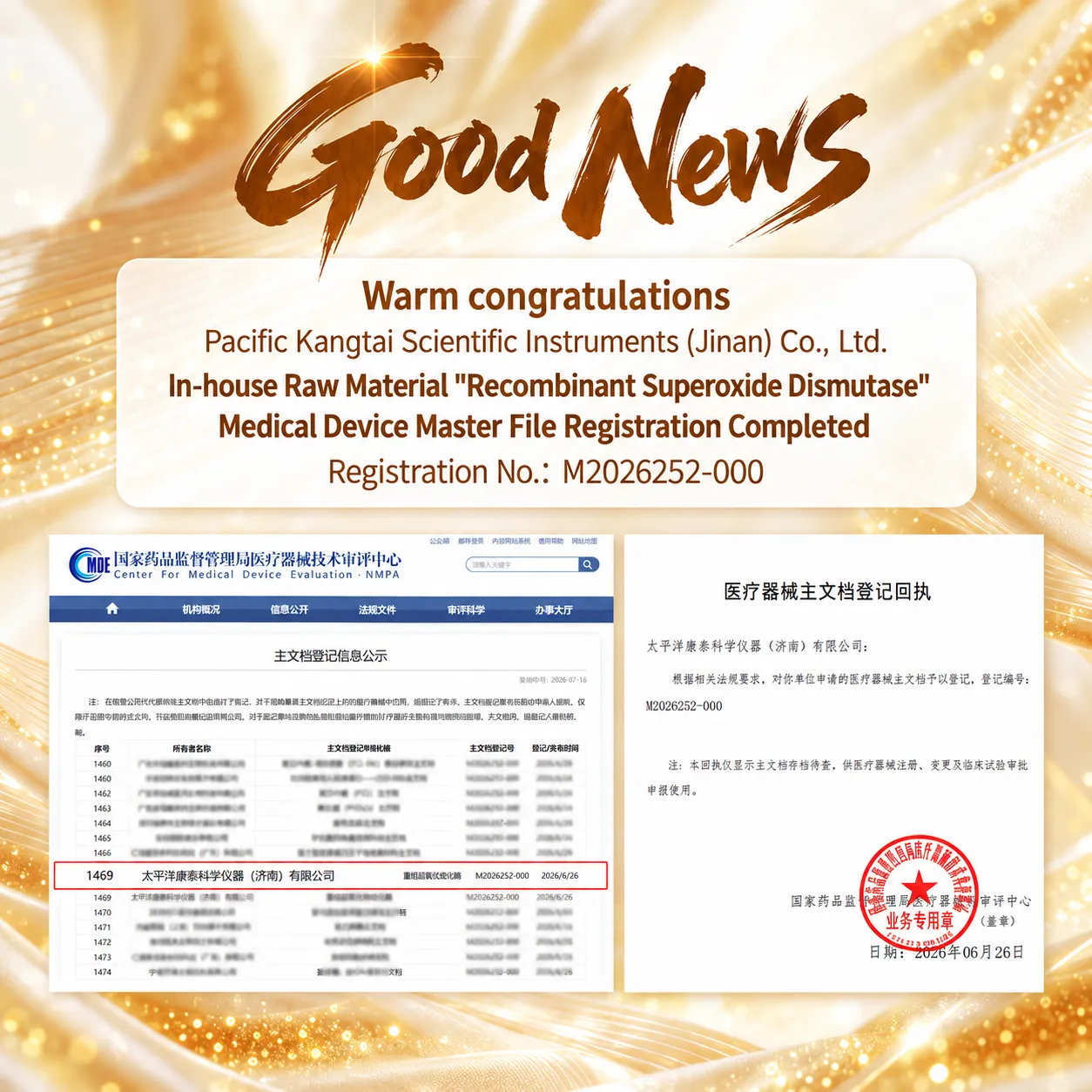
Headquartered in Jinan, Shandong Province, China, and operating as a subsidiary of Pacific Kangtai Scientific Instruments (Jinan) Co., Ltd., Jinan Meiyi Biotechnology Co., Ltd. is dedicated to the research, development support, and commercialization of bioactive technologies. We position ourselves at the intersection of scientific rigor and market responsiveness—serving as a trusted enabler for innovation across the global personal care and aesthetic medicine value chain.
Our core business is structured around two complementary pillars: the supply of cosmetic and bioactive raw materials, and the distribution of premium cosmetics and medical aesthetic products. Within the raw materials segment, we focus exclusively on active ingredients and functional components used in formulation development. We do not engage in manufacturing raw materials ourselves but function as a strategic sourcing and quality-assured distribution partner.
- Uncompromising Purity & Selection: Our rigorous selection criteria are grounded in efficacy data, stability profiles, and compatibility with modern formulation standards. We ensure minimal impurities, maximizing biocompatibility and bioactivity.
- Global Supply Chain: Leveraging long-term cooperative relationships with internationally recognized suppliers, we ensure consistent access to technically advanced, regulatory-compliant, and scientifically validated materials.
- Technical Expertise: Our team of materials scientists and engineers provides expert consultation on formulation and processing. We actively monitor emerging trends in bioactive ingredient science and dermatological research.
- Partnership-Oriented Service: We serve clients across Asia, Europe, and North America, with particular strength in supporting R&D laboratories, CDMOs, and aesthetic clinics. Our service philosophy emphasizes technical collaboration, regulatory awareness, and agile responsiveness.
- Global Compliance: Our products are sourced from manufacturers in compliance with international standards, facilitating global market access. Each material is accompanied by full technical dossiers, including certificates of analysis and safety data sheets.
Conclusion and Next Steps
High Purity 45S5 Bioactive Glass represents a cornerstone material in modern regenerative medicine. Its unique ability to bond with tissue, stimulate regeneration, and resist infection makes it indispensable in orthopedics, dentistry, and wound care. Selecting the right supplier is critical to ensuring the success of your medical device or therapeutic product.
Whether you are developing a novel bone graft substitute, a desensitizing toothpaste, or an advanced wound dressing, our high-quality 45S5 materials provide the foundation for innovation. We invite you to leverage Jinan Meiyi Biotechnology’s expertise and global supply chain capabilities to bring your next-generation healthcare solutions to market.
For detailed technical datasheets, sample requests, or custom quotation inquiries, please contact our sales engineering team. We are ready to support your R&D efforts with premium materials and professional service.
Explore our full range of Bioactive Glass products and technical resources





Please leave us a message.