

Medical Grade Hydroxyapatite: Purity Standards, Applications and Supplier Guide
2026-02-13
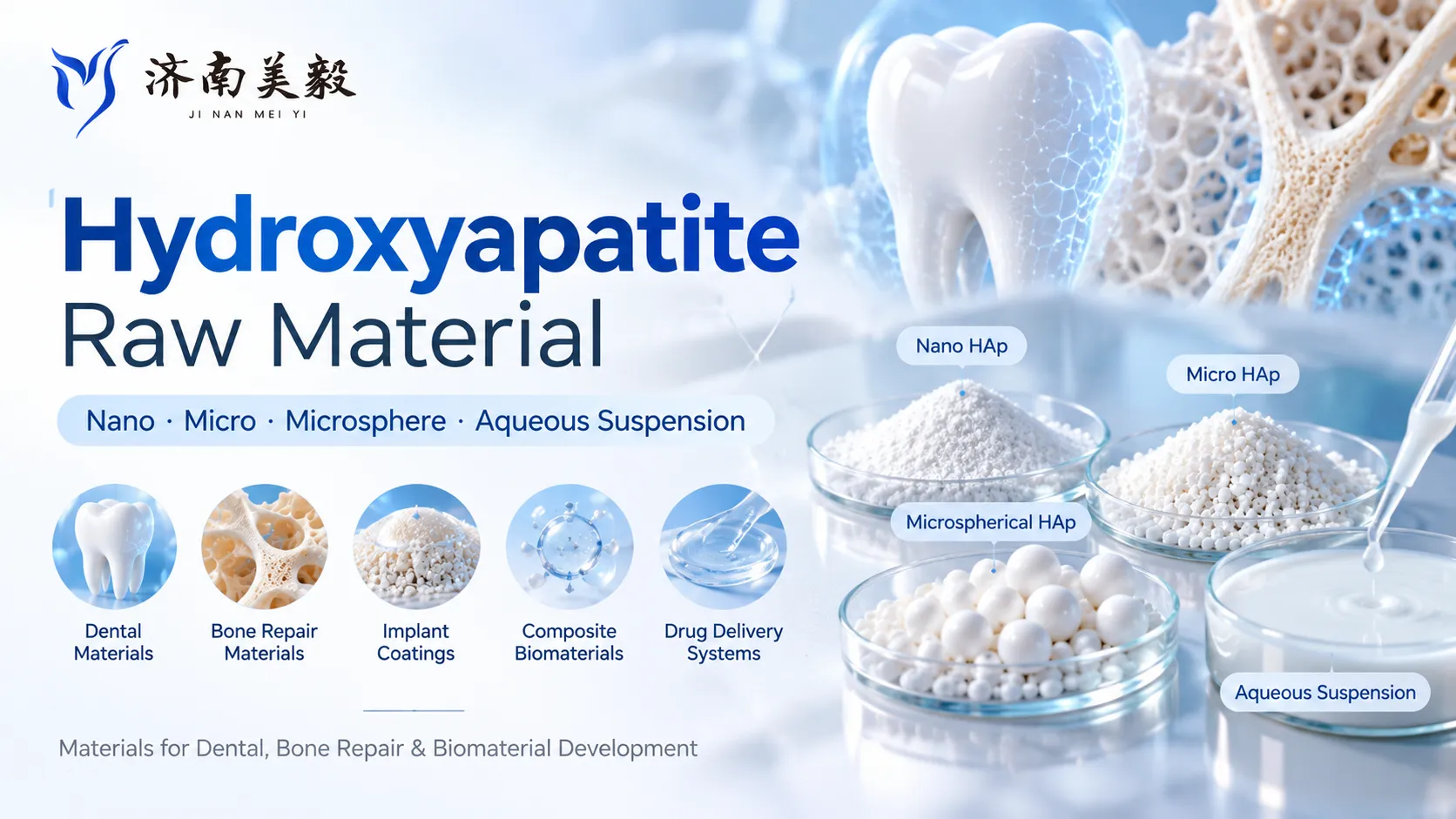
Medical Grade Hydroxyapatite is a high-purity calcium phosphate biomaterial widely used in orthopedic, dental, regenerative and aesthetic medical applications. With a chemical structure similar to the mineral phase of human bone and teeth, hydroxyapatite has become one of the most important biomaterials for bone repair materials, implant coatings, dental care systems and advanced medical device development.
However, not all hydroxyapatite powder is suitable for medical use. For surgical implants, dental biomaterials or other regulated applications, buyers must evaluate purity, crystal structure, particle size, trace elements, biocompatibility documentation and supplier quality systems before selecting a material.
This guide explains what medical grade hydroxyapatite means, how it differs from industrial or cosmetic grades, why synthetic hydroxyapatite is widely used in regulated applications, and how product developers can choose the right grade for different medical, dental and OEM requirements.
What Is Medical Grade Hydroxyapatite?
Medical grade hydroxyapatite refers to hydroxyapatite material manufactured and characterized for use in medical or implant-related applications. It is not simply a marketing term. In professional use, medical grade hydroxyapatite should be supported by clear material specifications, quality documentation and application-appropriate testing.
Hydroxyapatite has the chemical formula Ca₁₀(PO₄)₆(OH)₂. Its calcium-to-phosphorus ratio is close to 1.67, which is similar to the mineral component of natural bone. This biomimetic structure is one reason hydroxyapatite is widely studied and used in bone repair, dental materials and implant surface technologies.
For medical applications, buyers should not only confirm the chemical formula. They should also review phase purity, trace element control, crystallinity, particle size distribution and batch-to-batch consistency.
Key quality indicators may include:
- Hydroxyapatite content
- Calcium-to-phosphorus ratio
- XRD phase analysis
- Heavy metal limits
- Particle size distribution
- Crystallinity
- Microbial or bioburden control, when required
- COA, TDS and SDS documentation
- Application-specific regulatory support
The final suitability of a material depends on the intended use. A hydroxyapatite powder used for toothpaste or cosmetic applications may not meet the requirements for implantable or surgical applications.
Medical Grade vs Industrial Grade Hydroxyapatite
The difference between medical grade and industrial grade hydroxyapatite lies in quality control, documentation and intended use.
Industrial grade hydroxyapatite may be used in research, adsorption, ceramics, filtration or non-medical applications. These uses may not require the same level of impurity control, biological evaluation or regulatory documentation.
Medical grade hydroxyapatite requires a higher level of material verification. For applications involving surgical implants or medical devices, buyers may need to review standards related to composition, trace metals, phase purity and biocompatibility evaluation.
Typical differences include:
| Comparison Item | Medical Grade Hydroxyapatite | Industrial Grade Hydroxyapatite |
|---|---|---|
| Intended use | Medical devices, bone repair, dental biomaterials, implant coatings | Ceramics, filtration, research, industrial additives |
| Purity control | Strict and documented | May vary by supplier |
| Trace elements | Controlled and tested | May not be fully controlled |
| Phase analysis | Usually required | Not always required |
| Documentation | COA, TDS, SDS, regulatory support | Basic specification may be enough |
| Supplier qualification | Important for OEM and regulated markets | Less demanding |
| Application risk | High | Lower |
For medical device companies, using a clearly defined grade is essential because material quality can influence safety evaluation, regulatory submission and final product performance.
Why Synthetic Hydroxyapatite Is Widely Used in Medical Applications
Synthetic hydroxyapatite is produced through controlled chemical processes using calcium and phosphate sources. Compared with animal-derived hydroxyapatite, synthetic hydroxyapatite offers stronger batch consistency and clearer control over composition.
This is important for medical device manufacturers because regulated applications require reproducibility. A consistent synthetic process can help control:
- Ca/P ratio
- Particle size distribution
- Phase purity
- Trace impurities
- Crystallinity
- Porosity
- Surface properties
Animal-derived hydroxyapatite, such as bovine-derived material, may contain natural mineral structures, but it can also raise additional concerns related to source traceability, biological residue control and regulatory acceptance in certain markets.
Synthetic hydroxyapatite is often preferred when manufacturers need a predictable material platform for bone graft substitutes, implant coatings, injectable biomaterials, dental materials or custom OEM formulations.
Synthetic Hydroxyapatite vs Bovine-Derived Hydroxyapatite
The choice between synthetic and bovine-derived hydroxyapatite depends on the application, regulatory pathway and product positioning.
Synthetic hydroxyapatite is produced under controlled manufacturing conditions. It can be customized for particle size, porosity, crystallinity and surface characteristics. This makes it suitable for OEM projects where reproducibility and specification control are important.
Bovine-derived hydroxyapatite is obtained from biological sources and processed to remove organic components. It may retain a natural bone-like mineral structure, but buyers should carefully evaluate source control, processing conditions, impurity profile and regulatory requirements.
From a supplier selection perspective, synthetic hydroxyapatite may offer advantages such as:
- No animal-derived source concerns
- Better batch-to-batch consistency
- Easier control of particle size and purity
- Customizable morphology and porosity
- Clearer suitability for vegan or non-animal-origin product claims
- Stronger flexibility for OEM development
For medical device or dental material manufacturers, the best choice should be based on the final product design, target market and required regulatory documentation.
Nano Hydroxyapatite for Advanced Medical and Dental Applications
Nano hydroxyapatite usually refers to hydroxyapatite particles with dimensions in the nanometer range. Because smaller particles provide higher surface area, nano hydroxyapatite can show stronger surface interaction in suitable systems.
In dental and oral care applications, nano hydroxyapatite is widely used as a biomimetic mineral ingredient. It can be formulated into toothpaste, gels or other oral care products designed for enamel care, dentin tubule occlusion and fluoride-free positioning.
In medical and regenerative applications, nano hydroxyapatite is studied in composite scaffolds, hydrogels, injectable systems and drug delivery research. Its high surface area may support protein adsorption and cell-material interaction depending on formulation design and application conditions.
Common application areas include:
- Enamel care toothpaste
- Sensitive teeth formulations
- Dental material composites
- Bone tissue engineering scaffolds
- Injectable biomaterial systems
- Drug delivery research
- Bioactive polymer composites
However, nano hydroxyapatite is not automatically better for every application. For structural bone repair or granule-based graft materials, micron-scale hydroxyapatite may provide better handling, volume stability or slower resorption. Buyers should select particle size based on final product requirements rather than marketing trends.
Medical Grade Hydroxyapatite for Orthopedic Applications
Orthopedics is one of the most established application areas for medical grade hydroxyapatite. Because hydroxyapatite resembles the mineral phase of bone, it is widely used in bone repair materials and bone graft substitute systems.
Possible orthopedic applications include:
- Bone defect filling
- Spinal fusion support materials
- Trauma-related bone void repair
- Composite bone graft substitutes
- Porous ceramic scaffolds
- Calcium phosphate-based injectable pastes
In these applications, hydroxyapatite can provide an osteoconductive mineral framework that supports bone tissue interaction. However, the final clinical performance depends on the full product design, including porosity, mechanical strength, degradation profile, sterilization method and surgical indication.
For orthopedic product development, buyers should evaluate:
- Granule size
- Porosity and pore interconnectivity
- Mechanical strength
- Resorption behavior
- Phase composition
- Sterilization compatibility
- Biocompatibility data
- Regulatory documentation
Hydroxyapatite is often combined with other materials such as collagen, tricalcium phosphate, polymers or bioactive glass to improve handling and balance biological and mechanical performance.
Medical Grade Hydroxyapatite for Dental Applications
Dental applications are another major field for hydroxyapatite. Medical grade or dental grade hydroxyapatite may be used in materials for maxillofacial repair, implant surface treatment, periodontal applications and enamel care formulations.
Typical dental applications include:
- Alveolar ridge preservation
- Sinus augmentation materials
- Periodontal defect repair
- Dental implant coatings
- Tooth enamel care products
- Hydroxyapatite toothpaste and gel formulations
For implant and grafting applications, medical grade hydroxyapatite must be evaluated as a regulated biomaterial. For toothpaste and oral care applications, cosmetic or oral care grade hydroxyapatite may be more appropriate, depending on the market and product claims.
Dental manufacturers should pay attention to:
- Particle size and morphology
- Dispersion behavior
- Heavy metal limits
- Microbial specifications
- Taste and texture impact for toothpaste
- Compatibility with abrasives, humectants and surfactants
- Documentation for target market compliance
When hydroxyapatite is used in oral care products, claims should be aligned with local regulations and supported by appropriate testing.
Hydroxyapatite Implant Coatings
Hydroxyapatite coatings are widely used on metallic implants, especially titanium orthopedic and dental implants. The purpose is to combine the mechanical strength of metal with the bioactive surface characteristics of hydroxyapatite.
A hydroxyapatite coating can create a more bone-like surface interface on an implant. This may support bone-implant interaction when the coating is properly designed and validated.
Important coating quality parameters include:
- Coating thickness
- Adhesion strength
- Phase purity
- Crystallinity
- Surface roughness
- Dissolution behavior
- Coating uniformity
- Sterilization compatibility
Hydroxyapatite coating quality depends not only on the raw material, but also on the coating process. Plasma spraying, sol-gel methods, electrophoretic deposition and other techniques may create different coating structures and performance profiles.
Manufacturers should treat hydroxyapatite coatings as a complete surface engineering system, not just as a powder application.
Calcium Hydroxylapatite in Aesthetic Medicine
Calcium hydroxylapatite, often abbreviated as CaHA, is also used in aesthetic medicine, especially in dermal filler products designed for volume support and collagen biostimulation.
This application should be clearly distinguished from bulk hydroxyapatite powder used in bone grafts or implant coatings. Aesthetic filler systems are complex finished medical products, not simply raw hydroxyapatite powders.
For companies developing CaHA-based aesthetic products, important factors include:
- Particle size control
- Suspension stability
- Carrier gel system
- Sterility requirements
- Injectable safety evaluation
- Rheological properties
- Biocompatibility testing
- Finished product regulatory pathway
Raw material quality is important, but final safety and performance depend on the complete formulation and device design.
Safety, Regulatory and Quality Standards
Medical grade hydroxyapatite is used in applications where safety and quality control are critical. Buyers should evaluate not only the material specification, but also the documentation and testing strategy behind the product.
Commonly referenced areas include:
- Composition and phase purity requirements
- Biological evaluation of medical devices
- Hydroxyapatite coating characterization
- Trace metal analysis
- Sterility or bioburden control
- Endotoxin testing, when applicable
- Stability and packaging validation
- Quality management system support
For implantable or surgical applications, biological evaluation is usually considered within a risk management process. This may involve cytotoxicity, sensitization, irritation, systemic toxicity and other endpoints depending on the device category and exposure type.
For hydroxyapatite coatings, manufacturers may need additional data related to coating adhesion, crystallinity, phase composition and coating durability.
Because regulations vary by market, buyers should confirm documentation requirements for the target region before selecting a supplier.
What Buyers Should Request from a Medical Grade Hydroxyapatite Supplier
For B2B procurement and OEM development, choosing a hydroxyapatite supplier should involve more than comparing price. A qualified supplier should provide technical transparency and application-specific support.
Buyers should request:
- Certificate of Analysis
- Technical Data Sheet
- Safety Data Sheet
- Ca/P ratio data
- XRD phase purity report
- Particle size distribution
- Heavy metal testing data
- Microbial limits or bioburden data, when required
- Endotoxin data, when applicable
- Information on manufacturing process
- Batch traceability
- Packaging specification
- Shelf-life and storage recommendations
- Regulatory support documents, when available
For medical device or dental material development, buyers may also need customized testing, sterilization compatibility data, and documentation aligned with their regulatory submission strategy.
How to Select the Right Hydroxyapatite for Your Application
Hydroxyapatite is not a single universal raw material. Different applications require different grades, particle sizes and quality controls.
1. Define the Intended Use
First, identify whether the material will be used for a bone graft, implant coating, dental material, toothpaste, aesthetic filler, tissue engineering scaffold or research application. This determines the required grade and documentation level.
2. Choose the Right Particle Size
Nano hydroxyapatite is often selected for high surface area and dispersion needs. Micron-scale hydroxyapatite may be preferred for structural applications, granules or slower resorption profiles.
3. Review Purity and Phase Composition
For medical applications, purity and phase consistency are critical. Buyers should review XRD data, Ca/P ratio and impurity profile.
4. Check Trace Element Control
Heavy metals and other impurities should be tested and controlled, especially for medical, dental and oral care applications.
5. Evaluate Processing Compatibility
The powder should be compatible with the intended manufacturing process, such as sintering, coating, blending, granulation, sterilization or dispersion in liquid systems.
6. Confirm Documentation Support
A reliable supplier should provide clear technical documents and support buyers with product development, quality review and regulatory preparation.
7. Consider Long-Term Supply Stability
For commercial products, batch consistency and stable bulk supply are essential. Buyers should confirm production capacity, lead time and packaging options.
Emerging Trends in Medical Grade Hydroxyapatite
Medical grade hydroxyapatite continues to evolve from a passive mineral material into a platform for advanced biomaterial innovation.
Important development trends include:
Drug Delivery Systems
Hydroxyapatite’s porous structure and mineral surface make it useful in research involving local drug delivery, especially in bone-related or dental environments.
Ion-Doped Hydroxyapatite
Hydroxyapatite can be modified with ions such as strontium, zinc, magnesium or silicon to adjust biological, mechanical or antibacterial properties. These materials are still application-dependent and require proper safety evaluation.
3D Printed Bone Scaffolds
Hydroxyapatite can be incorporated into 3D printing systems to create patient-specific or defect-matched scaffold structures. This area is especially relevant for tissue engineering and advanced orthopedic research.
Composite Biomaterials
Hydroxyapatite is often combined with collagen, chitosan, PLGA, PCL or other polymers to improve toughness, flexibility, handling and biological performance.
High-Purity Synthetic Platforms
More manufacturers are focusing on synthetic hydroxyapatite with controlled particle size, low impurity levels and stronger documentation support for OEM customers.
FAQ
What is Medical Grade Hydroxyapatite?
Medical grade hydroxyapatite is hydroxyapatite material manufactured and documented for medical or implant-related applications. It usually requires stricter control of purity, phase composition, trace elements and quality documentation than industrial or cosmetic grades.
What is the main use of Medical Grade Hydroxyapatite?
It is commonly used in bone repair materials, dental biomaterials, implant coatings, tissue engineering scaffolds and other medical device applications. Suitability depends on final product design and regulatory requirements.
Is synthetic hydroxyapatite better than bovine-derived hydroxyapatite?
Synthetic hydroxyapatite offers strong batch consistency, controlled composition and no animal-origin source concerns. Bovine-derived hydroxyapatite may retain natural bone-like mineral structure, but it requires careful source traceability and processing evaluation.
What is nano hydroxyapatite used for?
Nano hydroxyapatite is used in enamel care products, sensitive teeth formulations, composite biomaterials, tissue engineering research and drug delivery systems. Its high surface area can be useful, but it is not required for every application.
What documents should a hydroxyapatite supplier provide?
A supplier should provide COA, TDS, SDS, particle size data, Ca/P ratio, XRD phase analysis and heavy metal testing. For medical applications, additional biocompatibility, sterility, endotoxin or regulatory support documents may be required.
Can the same hydroxyapatite powder be used for toothpaste and implants?
Usually no. Toothpaste-grade hydroxyapatite and implant-related medical grade hydroxyapatite may have different purity, particle size, microbial control and regulatory documentation requirements. Buyers should select the grade based on intended use.
What is the best particle size for hydroxyapatite?
There is no single best particle size. Nano hydroxyapatite is useful for high surface area and dispersion, while micron-scale hydroxyapatite may be better for structural scaffolds, granules or slower resorption applications.
Conclusion
Medical Grade Hydroxyapatite is a strategic biomaterial for orthopedic, dental, regenerative and aesthetic medical applications. Its value comes from its similarity to natural bone and tooth mineral, as well as its ability to be engineered into powders, granules, coatings, composites and advanced delivery systems.
For buyers and product developers, the most important point is that hydroxyapatite should not be selected as a generic commodity. Particle size, Ca/P ratio, phase purity, crystallinity, trace elements, documentation and regulatory fit all affect its suitability for final use.
Synthetic hydroxyapatite offers strong consistency and customization potential. Nano hydroxyapatite provides high surface activity for advanced applications. Medical grade hydroxyapatite provides the quality foundation required for regulated medical, dental and OEM development.
If you are evaluating hydroxyapatite for bone repair materials, implant coatings, dental applications, aesthetic medicine or custom biomaterial development, choose a supplier that can provide stable quality, application-specific grades, technical documentation and long-term bulk supply support.







Please leave us a message.