

Hydroxyapatite for Dental Implant Coating: OEM Supplier
2026-09-19
- Why Hydroxyapatite is the Gold Standard for Dental Implant Coatings
- Technical Specifications and Manufacturing Processes
- OEM Capabilities: Customization and Scalability
- About Jinan Meiyi Biotechnology: Your Strategic Partner in Bioactive Solutions
- Regulatory Compliance and Quality Assurance
- Comparative Analysis: HA-Coated vs. Uncoated Implants
- Common Challenges and Engineering Solutions
- Applications Beyond Standard Dental Implants
- How to Choose the Right HA Coating Supplier
- Frequently Asked Questions (FAQ)
- Future Trends in Dental Implant Surface Technology
- Conclusion: Partnering for Clinical Excellence
Hydroxyapatite for dental implant coating serves as the critical bioactive interface between titanium implants and human bone tissue. As a specialized supply partner, we provide high-purity, nano-structured hydroxyapatite (HA) coatings engineered to accelerate osseointegration, enhance mechanical stability, and meet stringent ISO 13485 medical device standards. Our advanced plasma spray and sol-gel technologies ensure uniform layer thickness, optimal crystallinity, and superior adhesion strength, directly addressing the clinical need for faster healing times and long-term implant success rates in modern restorative dentistry.
Why Hydroxyapatite is the Gold Standard for Dental Implant Coatings
Titanium and its alloys have long been the material of choice for dental implants due to their excellent mechanical properties and biocompatibility. However, pure titanium is bioinert, meaning it does not actively stimulate bone growth. It relies on passive osseointegration, a process that can take several months. This is where hydroxyapatite for dental implant coating transforms the clinical outcome.
Hydroxyapatite (Ca10(PO4)6(OH)2) is the primary mineral component of natural bone and teeth. When applied as a coating on titanium implants, it creates a bioactive surface that mimics the body’s own skeletal structure. This biomimetic property triggers a biological response, encouraging osteoblasts (bone-forming cells) to adhere, proliferate, and deposit new bone matrix directly onto the implant surface.
For dental professionals and implant manufacturers, the shift from bioinert to bioactive surfaces represents a significant leap in patient care. The use of HA coatings reduces the healing period, allows for earlier loading of the prosthetic crown, and improves the long-term stability of the implant, particularly in patients with compromised bone quality or density.
The Biological Mechanism of Osseointegration
Understanding the mechanism behind HA coatings requires looking at the cellular level. When an HA-coated implant is placed in the jawbone, the following sequence occurs:
- Protein Adsorption: Immediately upon insertion, blood proteins adsorb onto the HA surface. The chemical composition of HA favors the adsorption of vitronectin and fibronectin, which are crucial for cell attachment.
- Cell Attachment and Differentiation: Mesenchymal stem cells and osteoprogenitor cells migrate to the implant surface. The nano-topography of the HA coating provides physical cues that guide these cells to differentiate into osteoblasts.
- Bone Matrix Deposition: Osteoblasts begin secreting collagen and non-collagenous proteins, forming the organic matrix of bone. The HA coating dissolves slightly, releasing calcium and phosphate ions that supersaturate the local environment, promoting the precipitation of new biological apatite.
- Mineralization and Bonding: Over time, this new bone mineralizes and forms a direct structural and functional connection with the implant surface, known as osseointegration. Unlike fibrous encapsulation seen with failed implants, HA promotes direct bone-to-implant contact.
This biological synergy is why hydroxyapatite for dental implant coating is not just a surface treatment but a functional biological enhancer. For OEM partners, delivering a coating that consistently facilitates this process is the key to product differentiation and clinical trust.
Technical Specifications and Manufacturing Processes
Not all hydroxyapatite coatings are created equal. The performance of the coating is heavily dependent on the manufacturing method, particle size, crystallinity, and adhesion strength. As a specialized supply partner, we utilize advanced deposition techniques through our certified manufacturing network to ensure that every batch meets rigorous engineering standards.
Plasma Spray Coating Technology
Plasma spraying is one of the most widely used industrial methods for applying HA coatings to titanium implants. In this process, HA powder is injected into a high-temperature plasma jet, where it melts and is propelled onto the substrate at high velocity.
Advantages of Plasma Spraying:
- High Deposition Rate: Suitable for large-scale production runs.
- Thick Coatings: Can achieve coating thicknesses ranging from 50 to 200 microns, providing a robust reservoir of bioactive material.
- Strong Mechanical Interlocking: The high-velocity impact creates a rough surface texture that enhances mechanical bonding with the surrounding bone.
Technical Challenges and Solutions:
A common issue with plasma spraying is the potential decomposition of HA into other calcium phosphate phases like tricalcium phosphate (TCP) or tetracalcium phosphate due to high temperatures. These phases have different solubility rates and mechanical properties. To mitigate this, our process controls the plasma temperature and particle residence time precisely. We also employ post-spray heat treatments to restore crystallinity and ensure the coating remains predominantly stoichiometric hydroxyapatite.
Sol-Gel and Electrochemical Deposition
For applications requiring thinner, more uniform coatings with precise chemical control, we offer sol-gel and electrochemical deposition services. These methods operate at lower temperatures, preserving the structural integrity of the HA crystals.
- Sol-Gel Process: Involves the transition of a solution into a solid “gel” phase. This allows for molecular-level mixing of precursors, resulting in highly pure and homogeneous coatings. It is ideal for creating nano-structured HA layers that mimic the natural bone mineral scale.
- Electrochemical Deposition: Uses an electric current to deposit HA from a supersaturated solution onto the conductive titanium substrate. This method allows for excellent control over coating thickness and morphology, even on complex implant geometries with threads and undercuts.
These alternative methods are particularly valuable for next-generation implants where surface topography plays a crucial role in cell signaling. By offering multiple deposition technologies, we provide OEM partners with the flexibility to choose the right process for their specific product design and clinical indications.
Key Quality Parameters for HA Coatings
When sourcing hydroxyapatite for dental implant coating, several technical parameters must be strictly monitored. These parameters determine the safety, efficacy, and regulatory compliance of the final medical device.
| Parameter | Standard Range | Impact on Performance |
|---|---|---|
| Crystallinity | 60% – 90% | Determines solubility rate. Higher crystallinity offers greater stability; lower crystallinity dissolves faster, releasing ions rapidly. |
| Coating Thickness | 50 – 150 µm | Affects mechanical stability and bioactivity. Too thin may lack bioactivity; too thick may risk delamination. |
| Adhesion Strength | > 15 MPa | Critical for preventing coating failure during implant insertion and functional loading. |
| Surface Roughness (Ra) | 1 – 5 µm | Influences cell attachment and mechanical interlocking with bone tissue. |
| Ca/P Ratio | 1.67 (Stoichiometric) | Ensures chemical similarity to natural bone mineral. Deviations can alter solubility and biological response. |
| Purity | > 99% | Prevents inflammatory responses caused by impurities or secondary phases. |
Our quality control protocols include X-ray diffraction (XRD) to verify crystallinity and phase purity, scanning electron microscopy (SEM) to analyze surface morphology, and tensile testing to measure adhesion strength. Every batch is documented to support our clients’ regulatory submissions.
OEM Capabilities: Customization and Scalability
As a strategic partner in the bioactive technology ecosystem, we understand that dental implant manufacturers have diverse needs. Some require standard off-the-shelf solutions, while others need highly customized coatings for proprietary implant designs. Leveraging our globally integrated supply chain, we connect clients with certified manufacturers equipped to handle both scenarios with precision and efficiency.
Custom Geometry and Surface Topography
Dental implants come in various shapes—cylindrical, tapered, with varying thread pitches and depths. Applying a uniform HA coating to these complex geometries is challenging. Our rotational plasma spray systems and multi-axis electrochemical cells ensure that even the deepest threads receive consistent coverage. We can tailor the surface topography by adjusting process parameters to create micro-roughness or nano-features that further enhance osteoblast activity.
Composite Coatings and Dopants
Beyond pure hydroxyapatite, we develop composite coatings to address specific clinical challenges. For instance:
- HA-Titanium Composites: Graded coatings that transition from pure titanium at the substrate to pure HA at the surface. This gradient minimizes thermal expansion mismatch stresses, significantly improving adhesion strength and reducing the risk of delamination.
- Ion-Doped HA: Incorporating trace elements like strontium, magnesium, or zinc into the HA lattice. Strontium-doped HA, for example, has been shown to stimulate bone formation while inhibiting bone resorption, offering therapeutic benefits for osteoporotic patients.
- Antibacterial Coatings: Integrating silver or zinc ions into the HA structure to provide localized antibacterial properties, reducing the risk of peri-implantitis, a leading cause of implant failure.
These customizations allow our partners to differentiate their products in a crowded market, offering unique value propositions to clinicians and patients.
Scalability and Supply Chain Reliability
Consistency is paramount in medical device manufacturing. Our production lines are designed for scalability, capable of handling small prototype batches for R&D purposes as well as large-volume commercial orders. We maintain strict inventory control of raw materials, ensuring that the HA powder used is sourced from certified suppliers with full traceability. Our lean manufacturing principles minimize lead times without compromising quality, enabling our partners to respond quickly to market demands.
About Jinan Meiyi Biotechnology: Your Strategic Partner in Bioactive Solutions
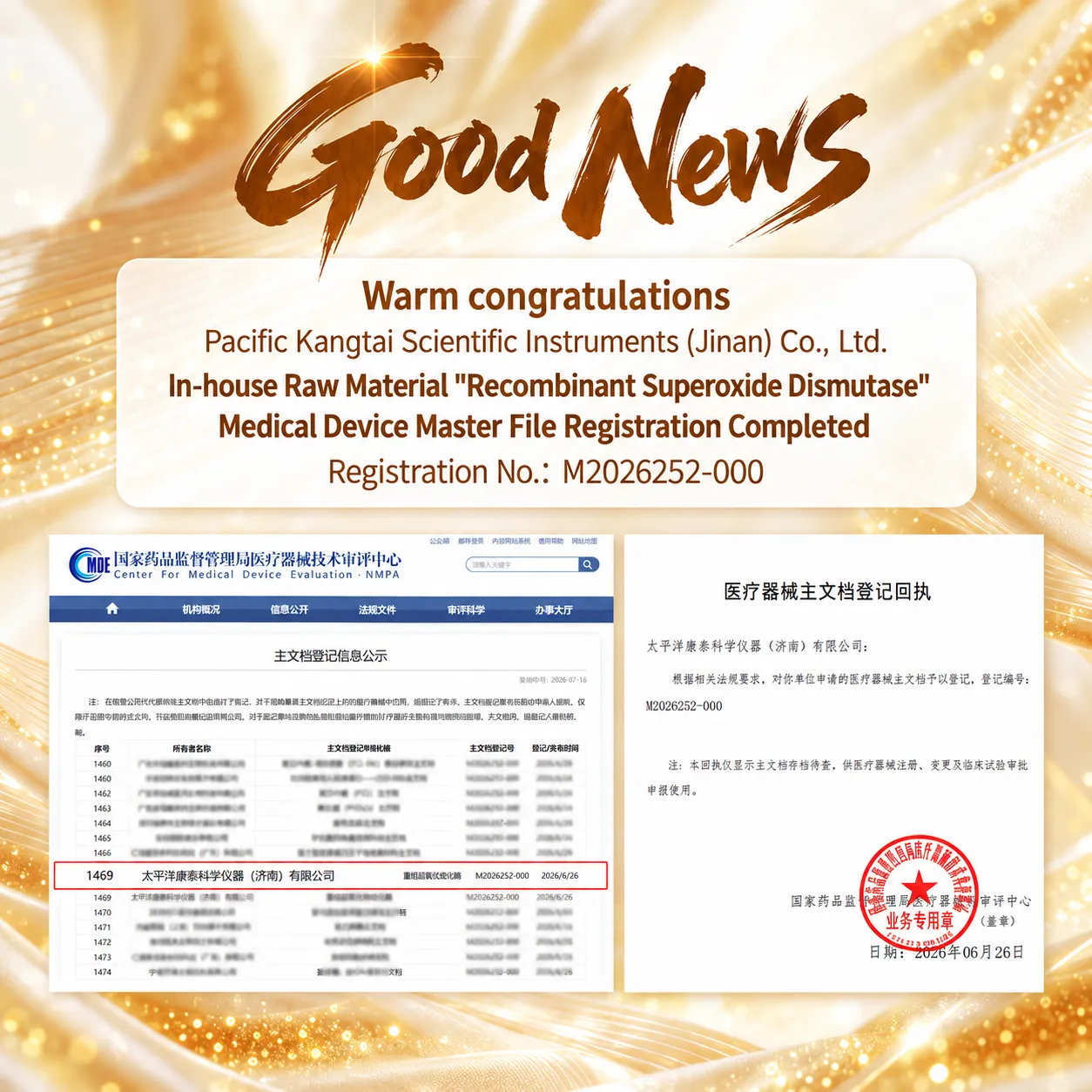
At the heart of our operations is Jinan Meiyi Biotechnology Co., Ltd., a professional enterprise headquartered in Jinan, Shandong Province, China, and a subsidiary of Pacific Kangtai Scientific Instruments (Jinan) Co., Ltd. While our roots are deeply embedded in the cosmetics and medical aesthetics industries, our commitment to scientific rigor and high-performance bioactive materials extends seamlessly to advanced medical applications such as dental implant coatings.
Jinan Meiyi Biotechnology positions itself at the intersection of scientific innovation and market responsiveness. Although we do not engage in direct manufacturing, we function as a strategic sourcing and quality-assured distribution partner. We leverage a well-established global supply chain network to maintain long cooperative relationships with internationally recognized suppliers. This ensures that our clients—ranging from R&D laboratories to CDMOs and aesthetic clinics—have consistent access to technically advanced, regulatory-compliant, and scientifically validated materials.
Our operational model is built on four key strengths:
- Deep Specialization: Our scientifically trained team stays at the forefront of international research in bioactive technologies, ensuring that every material we supply meets the highest standards of efficacy and safety.
- Global Supply Chain Integrity: We provide reliable access to high-integrity ingredients backed by robust documentation, including certificates of analysis and regulatory status summaries.
- Rigorous Curation: We prioritize clinically meaningful innovation and regulatory clarity, selecting only those materials that demonstrate proven stability and compatibility with modern formulation and application standards.
- Partnership-Oriented Service: We believe in collaboration over transaction. Our service philosophy includes technical consultation, regulatory intelligence sharing, and agile problem-solving to support your specific development needs.
By choosing Jinan Meiyi Biotechnology, you are not just sourcing a material; you are gaining a knowledge-driven bridge between upstream innovation and downstream application. We facilitate the faster, safer, and more effective translation of bioactive science into real-world clinical benefits, ensuring that your dental implant solutions are backed by unwavering scientific integrity.
Regulatory Compliance and Quality Assurance
The medical device industry is heavily regulated. Any supplier of hydroxyapatite for dental implant coating must adhere to stringent international standards. We are fully committed to supporting our clients in achieving and maintaining regulatory compliance.
ISO 13485 Certification
Our quality management system is certified to ISO 13485, the international standard for medical devices. This certification ensures that our processes are designed to consistently meet customer and regulatory requirements. It covers every aspect of our operation, from design and development to production, storage, and distribution.
Biocompatibility Testing
All our HA coatings undergo rigorous biocompatibility testing in accordance with ISO 10993 standards. This includes:
- Cytotoxicity Testing: Ensuring the coating does not harm living cells.
- Sensitization and Irritation Tests: Verifying that the material does not cause allergic reactions or tissue irritation.
- Genotoxicity Assays: Confirming that the material does not damage genetic information.
We provide comprehensive test reports and certificates of analysis (CoA) with every shipment, facilitating our clients’ regulatory filings with agencies such as the FDA (USA), CE (Europe), and NMPA (China).
Traceability and Documentation
Full traceability is essential for risk management and recall procedures. We maintain detailed batch records for every production run, linking the final coated implants back to the raw material lots, process parameters, and quality inspection results. This level of documentation is crucial for audits and incident investigations, providing our partners with peace of mind and regulatory security.
Comparative Analysis: HA-Coated vs. Uncoated Implants
To understand the value proposition of hydroxyapatite for dental implant coating, it is useful to compare it with traditional uncoated titanium surfaces. The following table highlights the key differences in performance and clinical outcomes.
| Feature | Uncoated Titanium (Sandblasted/Acid-Etched) | HA-Coated Titanium |
|---|---|---|
| Biological Activity | Bioinert (Passive integration) | Bioactive (Active bone bonding) |
| Osseointegration Speed | 3-6 months | 2-4 months (Accelerated) |
| Bone-to-Implant Contact (BIC) | High (50-70%) | Very High (>70-80%) |
| Performance in Poor Bone Quality | Moderate | Superior (Enhanced stability) |
| Mechanical Interlocking | Micro-mechanical | Chemical + Micro-mechanical |
| Risk of Peri-implantitis | Standard | Reduced (with antibacterial dopants) |
| Cost | Lower | Higher (due to processing) |
While uncoated implants remain a viable option for many cases, HA-coated implants offer distinct advantages in challenging clinical scenarios. Patients with low bone density, smokers, or those requiring immediate loading protocols benefit significantly from the accelerated healing and stronger initial stability provided by HA coatings. For manufacturers, offering HA-coated options expands their market reach to include these high-need patient segments.
Common Challenges and Engineering Solutions
Despite its benefits, the application of hydroxyapatite coatings is not without challenges. Addressing these issues requires deep engineering expertise and process optimization.
Coating Delamination
Delamination, or the separation of the coating from the substrate, is a critical failure mode. It can occur during implant insertion if the adhesion strength is insufficient or due to residual stresses from thermal expansion mismatches.
Solution: We employ graded interlayers and optimize the surface preparation of the titanium substrate through grit blasting and acid etching before coating. This creates a micro-mechanical anchor for the HA layer. Additionally, controlling the cooling rate after plasma spraying minimizes residual thermal stresses.
Inconsistent Crystallinity
Variations in crystallinity can lead to unpredictable dissolution rates. Amorphous phases dissolve too quickly, potentially causing inflammation, while highly crystalline phases may not release ions effectively.
Solution: Precise control of plasma power, gas flow, and powder feed rate ensures consistent particle melting. Post-deposition annealing treatments are used to standardize crystallinity across batches, ensuring predictable biological performance.
Thickness Uniformity on Complex Geometries
Achieving uniform coating thickness on implants with deep threads and sharp edges is difficult. Shadowing effects in plasma spraying can lead to thin spots or uncovered areas.
Solution: Our multi-axis robotic spraying systems allow for dynamic adjustment of the spray angle and distance. We use computational fluid dynamics (CFD) modeling to optimize spray paths for specific implant geometries, ensuring complete and uniform coverage.
Applications Beyond Standard Dental Implants
While dental implants are the primary application, hydroxyapatite for dental implant coating technology extends to other areas of oral and maxillofacial surgery.
- Bone Screws and Plates: HA coatings on fixation devices enhance stability in fracture repair and reconstructive surgery, promoting faster bone healing around the hardware.
- Sinus Lift Augmentation: HA-coated meshes or membranes can be used to guide bone regeneration in sinus lift procedures, providing a scaffold for new bone growth.
- Periodontal Regeneration: Nano-HA particles or coatings on periodontal guides can stimulate cementum and alveolar bone regeneration in patients with severe periodontal disease.
These expanded applications demonstrate the versatility of HA coating technology and offer OEM partners opportunities to diversify their product portfolios.
How to Choose the Right HA Coating Supplier
Selecting the right OEM partner for hydroxyapatite for dental implant coating is a strategic decision. Here are key factors to consider:
- Technical Expertise: Does the supplier have deep knowledge of surface engineering and biology? Look for a team with backgrounds in materials science and biomedical engineering.
- Process Control: Are the manufacturing processes validated and controlled? Ask for details on quality control measures, including XRD, SEM, and adhesion testing.
- Regulatory Support: Can the supplier provide the necessary documentation for regulatory submissions? ISO 13485 certification is a minimum requirement.
- Customization Capability: Can the supplier tailor coatings to your specific implant design and clinical needs? Flexibility is key for innovation.
- Track Record: Look for a supplier with a proven history in the medical device industry. Experience matters in navigating the complexities of biomedical coatings.
By prioritizing these factors, you can establish a partnership that drives product quality, regulatory compliance, and market success.
Frequently Asked Questions (FAQ)
What is the typical lifespan of a hydroxyapatite coating on a dental implant?
The HA coating is designed to integrate with the bone. Over time, the coating may partially dissolve and be replaced by natural bone tissue. This is a desired outcome, as it results in a direct biological bond. The structural integrity of the implant itself is maintained by the titanium substrate, which has a proven long-term track record.
Does HA coating increase the risk of infection?
No, pure hydroxyapatite is biocompatible and does not increase infection risk. In fact, some studies suggest that the smoother surface of HA compared to roughened titanium may reduce bacterial adhesion. Furthermore, antibacterial agents can be incorporated into the coating to actively combat bacteria.
Can HA-coated implants be removed if necessary?
Yes, HA-coated implants can be removed, although the strong osseointegration may make the procedure more complex than with uncoated implants. Specialized tools and techniques are used by surgeons to safely explant HA-coated devices when required.
How does the cost of HA coating affect the final implant price?
HA coating adds a premium to the manufacturing cost due to the specialized equipment and quality control involved. However, this cost is often justified by the clinical benefits, such as faster healing and higher success rates in compromised bone, allowing manufacturers to position the product in the premium segment of the market.
Is hydroxyapatite coating suitable for immediate loading protocols?
Yes, HA coatings are particularly beneficial for immediate loading. The enhanced initial stability and accelerated osseointegration reduce the risk of micromotion-induced failure, making them a preferred choice for protocols where the prosthetic crown is placed shortly after implant insertion.
Future Trends in Dental Implant Surface Technology
The field of implant surface engineering is evolving. Future developments in hydroxyapatite for dental implant coating include:
- Nano-Structured Surfaces: Creating nano-scale features on HA coatings to further enhance protein adsorption and cell signaling at the molecular level.
- Smart Coatings: Developing coatings that release therapeutic agents (e.g., antibiotics, growth factors) in response to specific environmental triggers, such as pH changes associated with infection.
- 3D Printed Implants with Integrated HA: Combining additive manufacturing with HA incorporation to create implants with porous structures that mimic cancellous bone, allowing for deep bone ingrowth.
Staying ahead of these trends requires a supplier who is not just a manufacturer but a research partner. We are continuously investing in R&D to bring these next-generation solutions to market.
Conclusion: Partnering for Clinical Excellence
Hydroxyapatite for dental implant coating is more than a surface modification; it is a biological bridge that connects synthetic materials with living tissue. For dental implant manufacturers, partnering with a specialized supplier like Jinan Meiyi Biotechnology ensures access to high-quality, compliant, and innovative coating solutions that enhance clinical outcomes.
Our commitment to precision engineering, regulatory compliance, and customer customization makes us the ideal partner for your dental implant projects. Whether you are launching a new product line or optimizing an existing one, our HA coating technologies provide the competitive edge needed in today’s demanding market.
Ready to elevate your implant portfolio?
Contact our engineering team today to discuss your specific requirements, request sample coatings, or schedule a technical consultation. Let us help you deliver superior dental solutions to clinicians and patients worldwide.





Please leave us a message.