

Salmon PDRN vs Vegan PDRN: Source, Claims and Formulation Differences
2026-06-18
Introduction
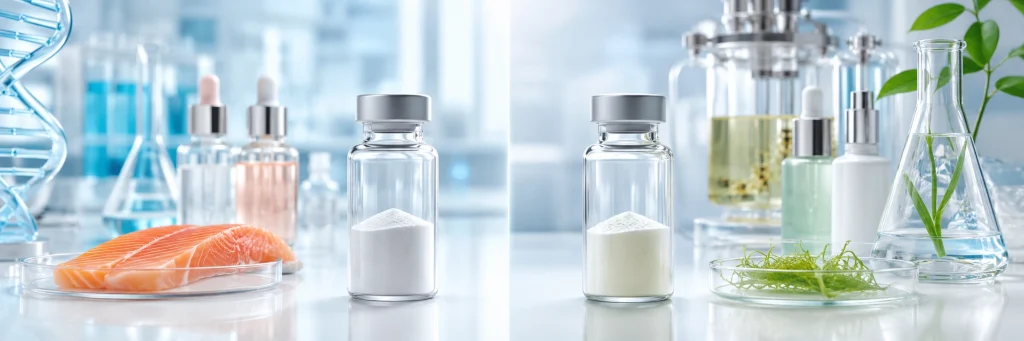
PDRN has become one of the most discussed ingredients in advanced skincare, especially in repair-focused serums, ampoules, masks, creams and post-treatment care formulas. As brands look for more innovative active ingredients, two terms are appearing more often in product development discussions: salmon PDRN and vegan PDRN.
For cosmetic formulators and raw material buyers, the difference is not only about marketing. The source of PDRN can affect product positioning, ingredient claims, documentation requirements, consumer acceptance, and formulation strategy. Salmon-derived PDRN has a longer history of use and stronger market recognition, while vegan PDRN or plant-based PDRN alternatives are gaining attention due to clean beauty, animal-free and sustainability trends.
This article explains the key differences between salmon PDRN and vegan PDRN, including source, claims, formulation considerations and supplier evaluation points.
What Is PDRN?
PDRN stands for Polydeoxyribonucleotide, a DNA-derived ingredient composed of deoxyribonucleotide fragments. In skincare and aesthetic formulations, PDRN is usually positioned as a repair-supporting, rejuvenating and skin-conditioning ingredient.
In the cosmetic market, PDRN is often associated with:
- Skin repair-focused formulas
- Anti-aging skincare concepts
- Post-treatment soothing products
- Hydrating and barrier-support formulas
- Premium ampoules and serums
- K-beauty inspired skincare products
From a raw material perspective, brands should pay attention to the ingredient name, source, purity, molecular weight range, solubility, safety documents and recommended use level before choosing a PDRN supplier.
What Is Salmon PDRN?
Salmon PDRN refers to PDRN derived from salmon DNA, commonly extracted from salmon reproductive cells through purification and processing. It is the most widely recognized form of PDRN in the beauty and aesthetic market.
Salmon PDRN has strong market awareness because many consumers and skincare professionals already associate “PDRN” with salmon DNA skincare. This makes it easier for brands to communicate the ingredient story, especially in premium repair, anti-aging and K-beauty inspired product lines.
Common advantages of salmon PDRN
Salmon PDRN is suitable for brands that want to emphasize:
- Established PDRN concept
- Premium skincare positioning
- Repair and rejuvenation story
- K-beauty inspired formula concept
- Ingredient familiarity among consumers
- Strong association with existing PDRN skincare trends
For B2B buyers, salmon PDRN is often preferred when the brand wants a more traditional and recognizable PDRN raw material.
What Is Vegan PDRN?
Vegan PDRN usually refers to plant-based, microbial-derived or non-animal DNA-based ingredients that are positioned as alternatives to traditional salmon-derived PDRN. In some cosmetic products, vegan PDRN may also be described as plant-based Sodium DNA, phyto-PDRN, botanical DNA extract, microbial-derived PDRN or PDRN-like active.
This category is still developing, so the exact meaning of “vegan PDRN” depends on the supplier’s raw material source, processing method and technical documents.
Common sources of vegan PDRN alternatives
Vegan PDRN or PDRN-like ingredients may come from:
- Plant-derived DNA sources
- Botanical callus culture
- Fermentation-derived DNA fragments
- Microbial sources
- Biotech production systems
Because the term “vegan PDRN” is not always used consistently, cosmetic brands should not rely only on the marketing name. They should ask the supplier for clear source information, INCI name, specification, test method and claim support.
Salmon PDRN vs Vegan PDRN: Key Differences
| Comparison Point | Salmon PDRN | Vegan PDRN |
|---|---|---|
| Source | Usually derived from salmon DNA | Plant-based, microbial-derived or biotech-derived |
| Market recognition | Higher, widely linked with PDRN skincare | Growing, especially in vegan and clean beauty |
| Claim direction | Repair, rejuvenation, anti-aging, skin recovery support | Vegan, sustainable, animal-free, clean beauty, skin conditioning |
| Consumer perception | Premium but animal-derived | Ethical and animal-free but may need more education |
| Documentation focus | Source, purity, molecular weight, fish-origin safety | Vegan declaration, source traceability, claim substantiation |
| Formulation fit | Serums, ampoules, masks, creams, post-treatment skincare | Vegan skincare, clean beauty, sensitive skin formulas, sustainable brands |
| Main challenge | Not suitable for vegan positioning | Needs clear proof of equivalence or PDRN-like activity |
Source Difference: Why It Matters for Brands
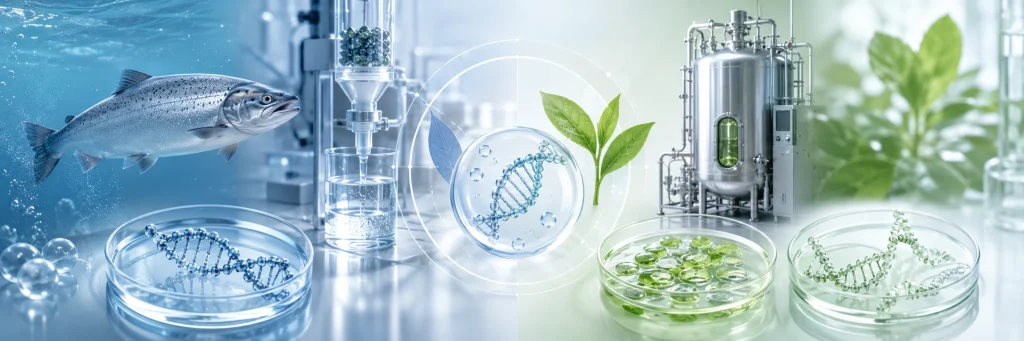
The source of PDRN affects how a brand can position the final product. Salmon PDRN is more suitable for brands that want to follow the established PDRN skincare trend. Vegan PDRN is more suitable for brands that focus on animal-free, sustainable or clean beauty concepts.
However, vegan positioning should be handled carefully. If the ingredient is not chemically identical to traditional salmon PDRN, brands should avoid claiming that it is exactly the same unless the supplier provides strong technical proof.
A safer approach is to use language such as:
- Vegan PDRN alternative
- Plant-based PDRN-inspired ingredient
- PDRN-like skin-conditioning ingredient
- Botanical DNA-based skincare active
- Animal-free DNA-derived ingredient
This helps brands communicate the ingredient clearly while reducing the risk of misleading claims.
Claims Difference: What Can Brands Say?
Claims are one of the biggest differences between salmon PDRN and vegan PDRN.
Salmon PDRN claim direction
Salmon PDRN is often used in formulas that focus on:
- Skin repair support
- Skin renewal
- Barrier care
- Improved skin texture
- Anti-aging skincare
- Post-treatment care
- Soothing and hydration support
For cosmetic use, claims should stay within skincare language. Avoid medical terms such as treating wounds, curing skin disease or regenerating damaged tissue unless the product is registered for that purpose in the target market.
Vegan PDRN claim direction
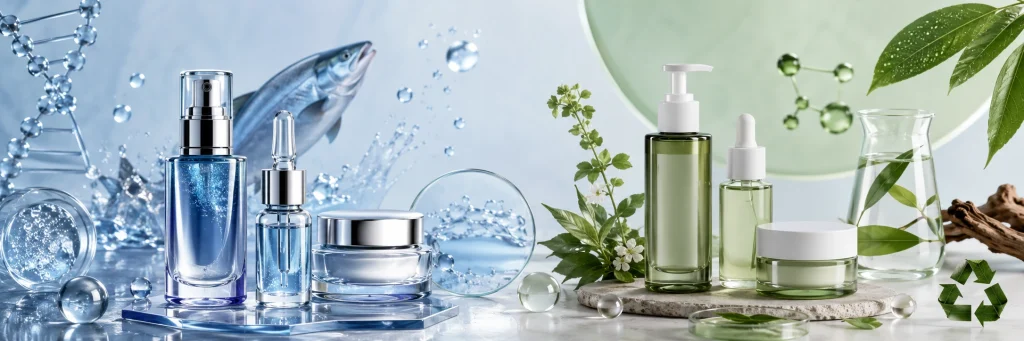
Vegan PDRN can be positioned around:
- Animal-free skincare
- Sustainable beauty
- Vegan repair-focused formulation
- Clean beauty active ingredient
- Sensitive skin-friendly concept
- Skin conditioning and hydration support
- Modern biotech skincare
For vegan PDRN, claim support is especially important. Buyers should check whether the supplier has in vitro data, antioxidant testing, cell viability data, molecular size analysis, safety testing or formulation compatibility data.
Formulation Differences
Both salmon PDRN and vegan PDRN are commonly used in water-based skincare formulas. However, their formulation behavior may vary depending on molecular weight, purity, salt form, concentration and processing method.
Suitable product formats
PDRN raw materials are commonly used in:
- Facial serum
- Repair ampoule
- Hydrating toner
- Essence
- Sheet mask solution
- Cream and lotion
- Eye care formula
- Scalp care serum
- Post-treatment soothing skincare
Formulation tips
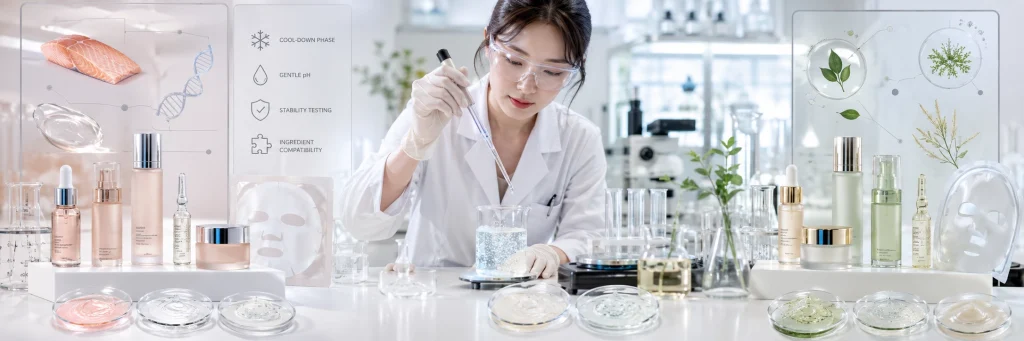
When developing formulas with PDRN or vegan PDRN alternatives, formulators should consider:
- Add during the cool-down phase
DNA-based ingredients may be sensitive to high temperature. It is usually better to add them during the low-temperature stage of production. - Use a mild pH system
A skin-friendly pH range is generally more suitable for PDRN skincare formulas. The exact pH should follow the supplier’s technical data sheet. - Avoid aggressive processing conditions
Strong acids, strong alkalis, high heat or excessive shear may affect ingredient stability. - Pair with complementary ingredients
PDRN can be combined with hyaluronic acid, peptides, panthenol, ectoin, beta-glucan, ceramides, amino acids and soothing botanical extracts to build a more complete repair-focused formula. - Verify compatibility before scale-up
Always run stability testing, compatibility testing and microbial challenge testing before commercial production.
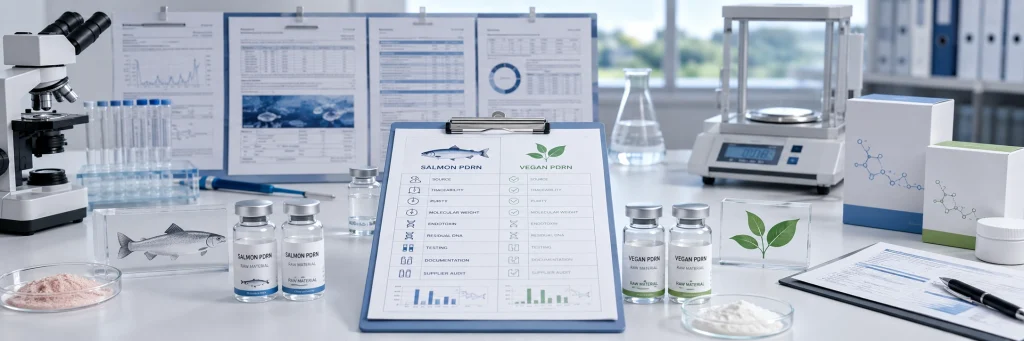
Quality Documents Buyers Should Request
Whether choosing salmon PDRN or vegan PDRN, raw material buyers should not evaluate the ingredient based on name alone. A reliable PDRN supplier should provide complete documentation.
Recommended documents include:
- COA
- TDS
- SDS
- INCI name
- Source declaration
- Purity data
- Molecular weight range
- Heavy metal test
- Microbial test
- Residual solvent test if applicable
- Allergen statement if applicable
- Vegan declaration for vegan PDRN
- Non-GMO statement if applicable
- Stability and storage information
- Recommended use level
- Formulation guidance
For salmon PDRN, buyers should pay special attention to fish source traceability and allergen-related documentation. For vegan PDRN, buyers should confirm the source, production method and whether the ingredient is truly animal-free.
Which One Is Better for Skincare Brands?
There is no single answer. The better choice depends on the brand positioning and formula concept.
Choose salmon PDRN if your brand wants:
- Strong PDRN market recognition
- A premium repair skincare concept
- K-beauty inspired product positioning
- A traditional PDRN raw material story
- Clear connection with existing PDRN trends
Choose vegan PDRN if your brand wants:
- Vegan skincare positioning
- Animal-free ingredient claims
- Sustainability-focused marketing
- Clean beauty product development
- A modern biotech or plant-based concept
If the target market is highly focused on vegan and cruelty-free beauty, vegan PDRN may be more attractive. If the target market already understands salmon PDRN and values the established ingredient story, salmon PDRN may be easier to communicate.
Common Mistakes When Choosing PDRN Raw Material
1. Treating all PDRN ingredients as the same
Different PDRN raw materials may vary in source, molecular weight, purity and processing method. These differences can affect formulation performance and claim support.
2. Using medical claims in cosmetic marketing
PDRN has a strong scientific background, but cosmetic brands should avoid medical claims unless the product is registered under the correct category.
3. Calling an ingredient “vegan PDRN” without proof
If a supplier cannot provide a vegan declaration or source documentation, the claim may create compliance risks.
4. Ignoring molecular weight
Molecular weight can influence solubility, stability and potential skin feel. Buyers should ask for molecular weight data when comparing suppliers.
5. Choosing only by price
PDRN is a high-value active ingredient. Low price without proper documentation may increase quality and compliance risks.
How to Choose a PDRN Supplier
A good PDRN raw material supplier should not only offer powder or solution. The supplier should also help brands understand quality, formulation and documentation requirements.
When evaluating a PDRN supplier, ask these questions:
- What is the source of the PDRN?
- Is it salmon-derived, plant-derived or microbial-derived?
- What is the INCI name?
- What is the purity?
- What is the molecular weight range?
- Is the ingredient suitable for cosmetic use?
- Can the supplier provide COA, TDS and SDS?
- Are allergen, vegan or non-GMO statements available?
- What is the recommended use level?
- What is the best storage condition?
- Does the supplier provide formulation support?
These questions help brands reduce risk and choose a raw material that fits both formulation needs and marketing strategy.
Conclusion
Salmon PDRN and vegan PDRN both have strong potential in modern skincare formulation, but they are suitable for different brand strategies.
Salmon PDRN has stronger market recognition and is closely linked with premium repair and rejuvenation skincare. Vegan PDRN, on the other hand, fits the growing demand for animal-free, sustainable and clean beauty products.
For cosmetic brands and formulators, the key is not simply choosing between salmon and vegan sources. The most important step is to verify the raw material’s source, INCI name, purity, molecular weight, safety data and claim support.
As the PDRN skincare trend continues to grow, brands that choose well-documented, high-quality PDRN raw materials will be better positioned to create trustworthy, differentiated and market-ready skincare products.
FAQ
Is salmon PDRN better than vegan PDRN?
Not always. Salmon PDRN has stronger market recognition, while vegan PDRN may be better for animal-free and sustainability-focused brands. The best choice depends on formula positioning, target market and supplier documentation.
Is vegan PDRN the same as salmon PDRN?
Not necessarily. Vegan PDRN may come from plant, microbial or biotech sources. Brands should check whether the ingredient is chemically equivalent to PDRN or positioned as a PDRN-like alternative.
Can PDRN be used in serums and creams?
Yes. PDRN is commonly used in serums, ampoules, masks, creams, lotions and post-treatment skincare formulas. Formulators should follow the supplier’s recommended use level and processing conditions.
What documents should I request before buying PDRN raw material?
Buyers should request COA, TDS, SDS, INCI name, source declaration, purity data, molecular weight range, microbial test, heavy metal test and storage information. For vegan PDRN, a vegan declaration is also important.
What ingredients work well with PDRN?
PDRN can be paired with hyaluronic acid, peptides, panthenol, ceramides, beta-glucan, ectoin and amino acids to create repair-focused skincare formulas.





Please leave us a message.